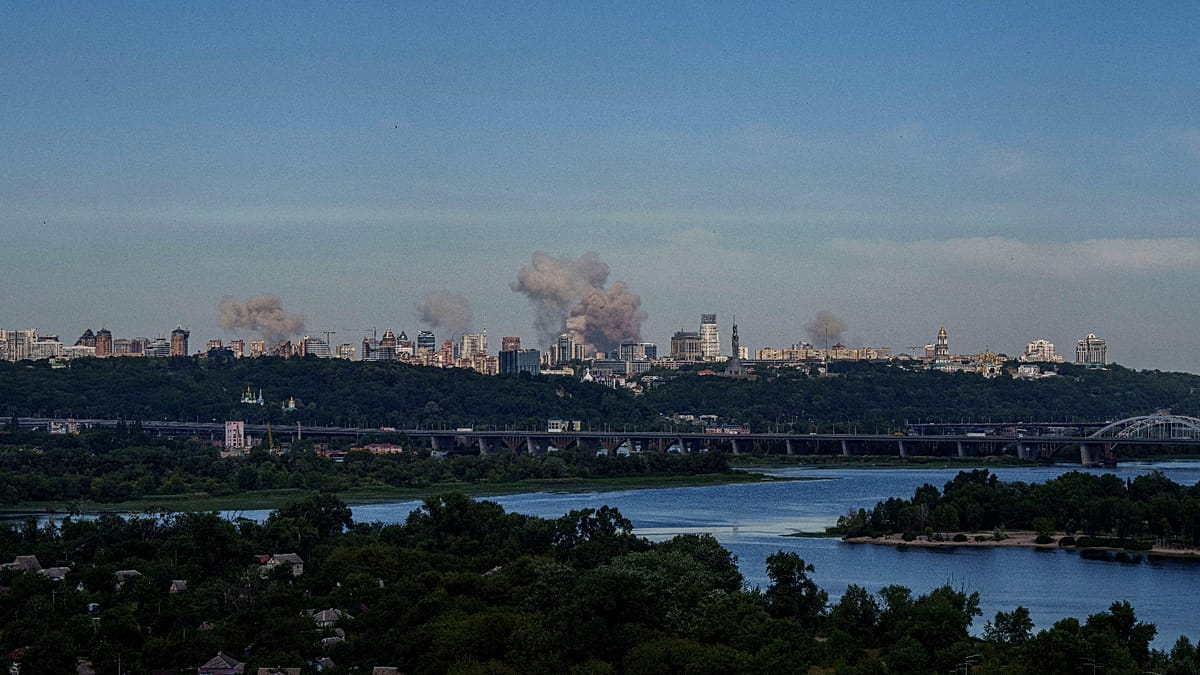
Overnight Russian strikes on the Kyiv region left five people injured and damaged a bridge and energy infrastructure, according to Ukrainian authorities. The attacks also affected the neighbouring Zhytomyr region, compounding pressure on the country's already strained power grid.
Kyiv Mayor Vitali Klitschko said on Telegram that the capital's energy situation was "extremely difficult," with disruptions to both heating and water supply systems. He confirmed that energy infrastructure in the Kyiv and Zhytomyr regions had been hit, and that the Pivnichnyi Bridge—a key crossing over the Dnipro River—had been damaged and closed to traffic in both directions while engineers assessed its structural integrity.
In a video posted from the bridge, Klitschko showed damage to the road surface, the trolleybus overhead lines, and the power lines. Five vehicles parked nearby were also damaged by the blast wave. The mayor added that five people, including a child, had been wounded in the attack on the capital.
Zelenskyy warns of more strikes on energy grid
President Volodymyr Zelenskyy had warned on Friday night that further strikes on Ukraine's energy sector and civilian infrastructure were likely, as he renewed his appeal for Patriot interceptor missiles. In a video update shared on social media, he said: "Russia's tactics are aimed at destroying power grids, transformers and switchgear. That is why even when we have enough generating capacity, some regions unfortunately still face shortages."
The United States recently approved a $2.1 billion package of Patriot PAC-3 interceptors for Ukraine, but Zelenskyy has cautioned that delivery could take years. He has repeatedly stressed that these missiles are vital for Ukraine's air defences, especially as winter approaches and Russia historically targets the power grid during the coldest months.
The Patriot system is among the most advanced air defence platforms in the world, capable of intercepting aircraft and ballistic missiles. Ukraine has been pressing its European allies and Washington to expedite deliveries, arguing that every delay costs lives and leaves critical infrastructure exposed.
Moscow has consistently denied targeting civilians, but its strikes have repeatedly hit residential areas and critical facilities. The latest attacks come as Ukraine and its partners discuss deepening energy and defence ties with other countries, and as the EU continues to grapple with how to handle Russian military personnel within its borders.
The damage to the Pivnichnyi Bridge is a significant logistical blow, as it is one of the main arteries connecting the city's left and right banks. Engineers are working to determine whether the structure can be repaired quickly or if a longer closure is needed. In the meantime, traffic is being diverted to other crossings, adding to congestion in the capital.
Energy experts warn that repeated strikes on transformers and switchgear could lead to prolonged blackouts, even if generation capacity remains sufficient. Ukraine's grid operator has already introduced emergency shutdowns in some regions to stabilise the system.
International partners have pledged additional air defence support, but the pace of deliveries remains a point of contention. Ukrainian officials have called for a more coordinated European response, noting that energy security is a continent-wide concern, as demonstrated by protests over Big Tech's power consumption in Switzerland.
As the war enters another winter, the resilience of Ukraine's energy infrastructure will be tested again. The government is working to repair damaged facilities and protect critical nodes, but the need for advanced air defence systems has never been more urgent.