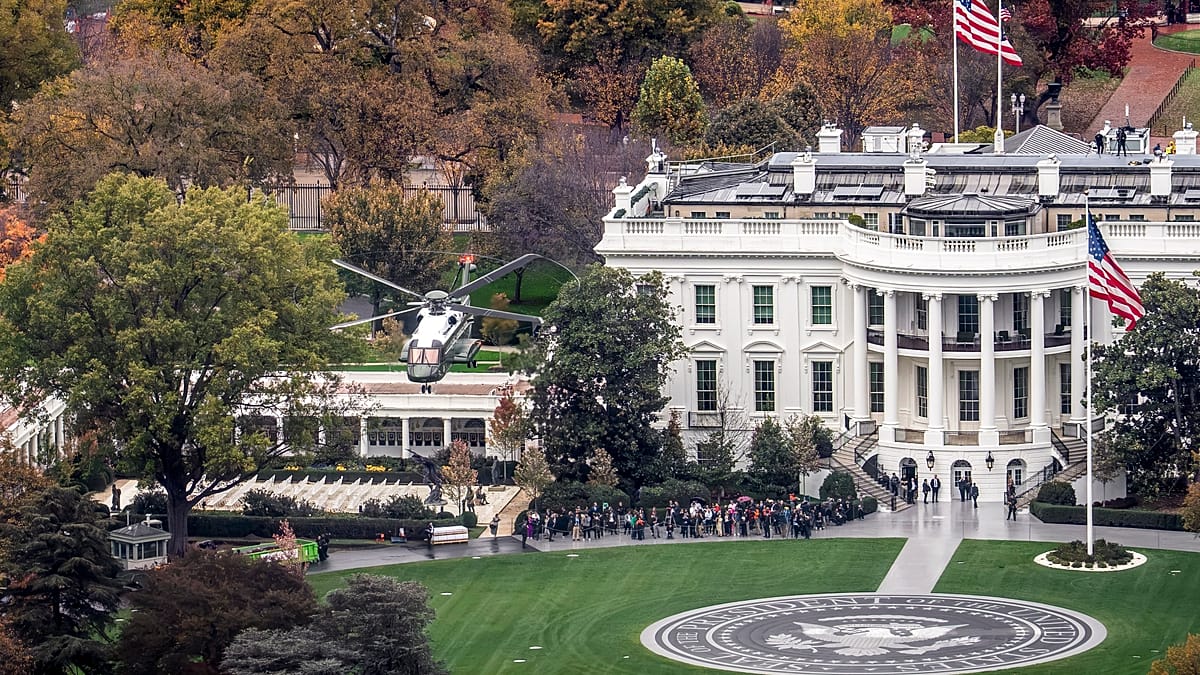
Washington's security perimeter was tested again on Thursday evening when US Secret Service officers arrested a man parked on Constitution Avenue, just blocks from the White House, after he allegedly voiced an intention to kill President Donald Trump. The suspect, identified as Venezuelan national Ronny Yordrix Guanipa Chrinos, was taken into custody without incident, according to the Department of Homeland Security (DHS).
Officers on routine patrol noticed Chrinos behaving suspiciously in his car and approached him. During the encounter, he reportedly told them that he had been hearing voices in his head instructing him to kill the president. A subsequent check revealed that the vehicle had been reported stolen, and Chrinos admitted to having weapons inside. A search uncovered three firearms, including a rifle, along with dozens of rounds of ammunition.
Chrinos has been charged with multiple offences, including possession of dangerous weapons and theft, and is now in the custody of the US Marshals Service. DHS confirmed that he had entered the United States illegally through Texas in March 2024.
Heightened threat environment
The arrest is the latest in a series of incidents involving individuals making threats against President Trump since his return to the White House in January 2025. Secret Service Director Sean Curran acknowledged the growing challenge, stating: "This incident reflects the heightened threat environment in which we operate, as well as the continued number of armed individuals who are drawn to the White House complex."
Curran added: "While our personnel are trained to respond to situations like this and we remain confident in our tactics, we are alarmed by the increase in threat cases that continue to arise."
The incident underscores the persistent security concerns surrounding the US presidency, a topic that resonates across the Atlantic. European security agencies have long monitored similar patterns, particularly in countries with high-profile political figures. The recent US midterm elections highlighted the volatile political climate, and European observers have noted the ripple effects on transatlantic relations.
While this case is a domestic US matter, it touches on broader issues of political violence and the protection of public officials—concerns that European nations, from Hungary's recent opening of secret police files to ongoing debates in France and Germany about security protocols, grapple with as well.
The DHS statement did not provide details on Chrinos's mental health status, but the mention of auditory hallucinations raises questions about the intersection of mental illness and security threats. European mental health experts have long argued for better support systems to prevent such escalations, a point that resonates in the wake of similar incidents across the continent.
As the investigation continues, the Secret Service has reiterated its commitment to protecting the White House and its occupants. The agency's training and rapid response were credited with preventing a potential tragedy, but the frequency of such incidents is a reminder of the persistent dangers faced by public figures worldwide.
For European readers, this story is a reminder of the shared challenges in safeguarding democratic institutions. Whether it's the EU's efforts to shield households from energy price spikes or the opening of Copenhagen's new water house, Europe's focus remains on stability and well-being—values that are tested when political violence makes headlines.