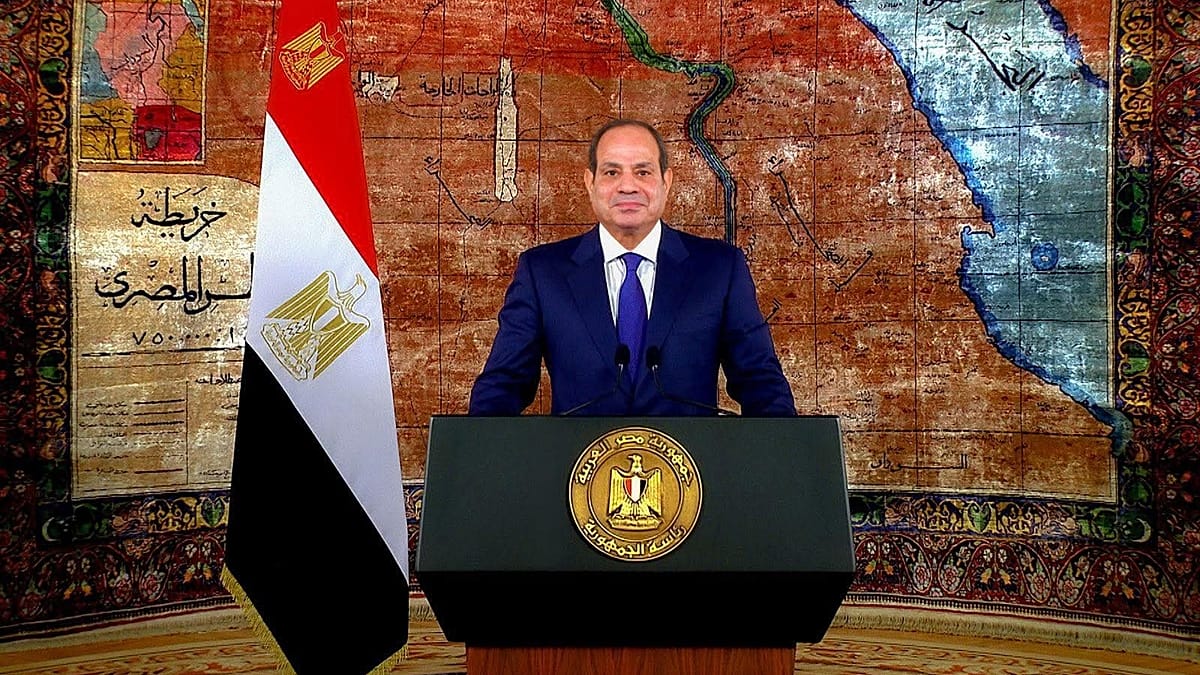
Egyptian President Abdel Fattah el-Sisi has warned that the Middle East is entering a critical phase marked by what he described as “deliberate attempts” to reshape its map under extremist ideological pretexts. Speaking on Saturday during a televised address marking Sinai Liberation Day, el-Sisi stressed the need to respect state sovereignty and territorial integrity, and rejected efforts to fragment countries or seize their resources.
His remarks come amid heightened regional tensions linked to the ongoing Iran war and its wider impact on stability, maritime navigation, and global supply chains. El-Sisi argued that political solutions and negotiations remain the only viable path to stability, urging cooperation and reconstruction over continued conflict.
Gulf Security and the Iran Deal
A day earlier, in the Cypriot capital Nicosia, el-Sisi participated in a consultative meeting between Arab and EU leaders focused on the fallout from the Iran war. There, he insisted that any potential deal with Iran must take into account the security concerns of Gulf states. He said recent developments carry serious implications for regional stability, maritime navigation, and the global economy—particularly energy supplies and supply chains.
Egypt, he added, rejects attacks on Arab countries and supports efforts to contain escalation. The president emphasized that a political path remains the only way forward, echoing calls from other regional leaders for de-escalation. The meeting in Nicosia was part of broader EU efforts to coordinate responses to the crisis, as EU leaders gathered in Cyprus for crisis talks on energy, defence, and the Middle East.
Gaza Ceasefire and Humanitarian Concerns
In his televised remarks, el-Sisi also called for the full implementation of the second phase of the Gaza ceasefire, including unhindered humanitarian aid and the immediate start of reconstruction. He reiterated Egypt’s rejection of any attempts to displace Palestinians and called for an end to repeated attacks in the occupied West Bank.
Qatari officials also urged the full opening of crossings to allow the flow of humanitarian aid and civilian movement, warning of serious humanitarian consequences if access remains restricted. The situation in Gaza remains a flashpoint, with European leaders increasingly concerned about the broader regional implications. Spanish Prime Minister Pedro Sánchez has warned that the EU’s inaction on Israel undermines its credibility on Ukraine, as Sánchez warns EU's Israel inaction undermines Ukraine credibility.
The European Central Bank is also grappling with the economic fallout, as the Iran war complicates rate decisions amid a stagflation dilemma, as reported in ECB Faces Stagflation Dilemma as Iran War Complicates Rate Decision.
El-Sisi’s warnings reflect a broader anxiety across the region that the current conflict could lead to permanent border changes and the erosion of state sovereignty. His call for Gulf involvement in any Iran deal underscores the complex web of alliances and rivalries that shape Middle Eastern politics, and the need for a coordinated international response.