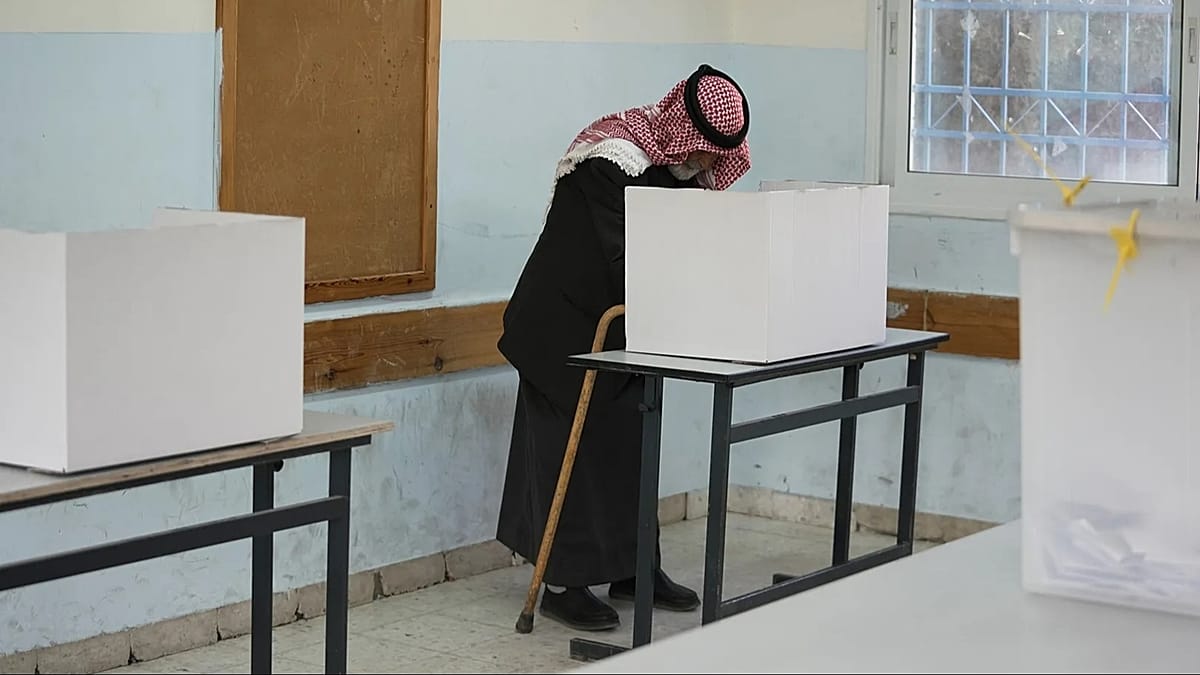
On Saturday, Palestinians in the Israeli-occupied West Bank and the central Gaza Strip city of Deir al-Balah went to the polls for municipal elections, the first such vote in Gaza since Hamas won the 2006 parliamentary elections. The exercise, organized by the Ramallah-based Central Elections Commission, is a rare moment of political participation in a territory where national elections have been repeatedly postponed for nearly two decades.
Nearly 1.5 million voters were registered in the West Bank, alongside 70,000 in the Deir al-Balah area. By early afternoon, turnout stood at 24.53%, according to the commission, with many polling stations across the West Bank reported as nearly empty by AFP. Foreign diplomats monitored the process, underscoring international interest in the Palestinian Authority's (PA) governance.
Why These Elections Matter
Municipal councils, elected for four-year terms, handle basic services such as water supply, sanitation, and local infrastructure. While they lack legislative power, they remain one of the few democratic mechanisms under the PA, which has faced widespread criticism over corruption, stagnation, and declining legitimacy. For many Palestinians, these elections offer a limited but tangible form of political expression.
“We must see change every four years through elections... We can't change the situation but we hope to replace people... people who might be better and help develop the community,” one voter told AFP. Another described the vote as largely symbolic but a sign of the “will to live.”
The European Union called the vote an “important step towards broader democratisation and strengthened local governance... in line with the ongoing reforms process.” The EU and several Arab nations continue to support the PA as a legitimate governing body for a future Palestinian state, though they have pressed for clear reforms.
Fragmented Political Landscape
Most electoral lists are aligned with President Mahmoud Abbas's secular-nationalist Fatah movement or consist of independents backed by smaller factions like the Marxist-Leninist Popular Front for the Liberation of Palestine. However, a number of factions boycotted the process, protesting conditions introduced in last year's electoral reform that they say restrict candidacy. Some aspiring candidates also reported being barred from running.
Hamas, which controls Gaza outside Deir al-Balah, is officially absent from the race, though some candidates are suspected of having ties to the movement. The vote thus takes place in a deeply fragmented environment, with the PA's authority limited by Israeli control over key aspects of daily life in the occupied territories.
Israel withholds tax revenues from the PA, contributing to a severe financial crisis, and maintains varying degrees of direct and indirect control over the West Bank, East Jerusalem, and Gaza. As a result, Palestinian political decisions are often constrained or heavily influenced by Israeli approval. Voting rights are also uneven: Palestinians in Jerusalem or those with Israeli citizenship cannot participate, and the diaspora remains excluded.
The elections come amid a volatile security backdrop, with ongoing tensions in Gaza and the West Bank. A recent major civilian flotilla set sail for Gaza, highlighting the humanitarian crisis and international efforts to challenge the blockade. Meanwhile, European diplomacy has been active, with French President Macron hosting the Lebanese PM amid ceasefire strains and rising Israeli tensions.
Despite the low turnout and political constraints, the municipal elections represent a rare opportunity for Palestinians to exercise a degree of self-governance. For Western and regional backers of the PA, the vote is a test of whether local governance can be revitalized as a foundation for broader democratic reform.



