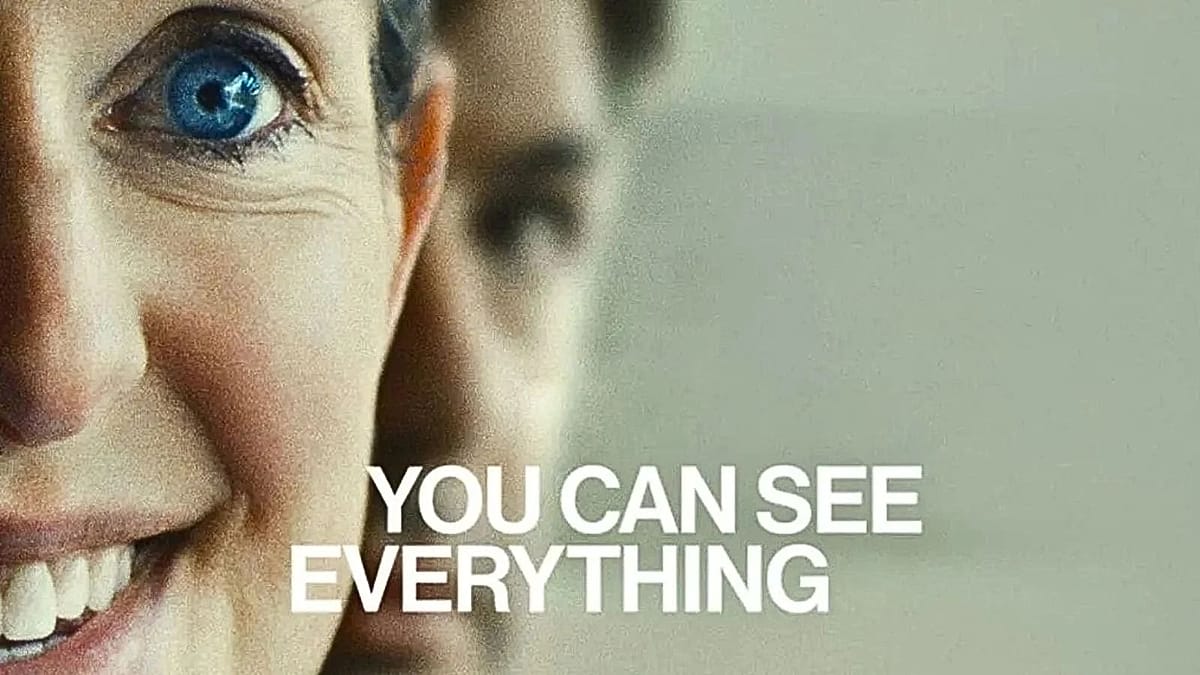
In 2015, Forbes crowned Elizabeth Holmes the youngest self-made female billionaire in America, thanks to a $9-billion valuation of her blood-testing startup, Theranos. Within a few years, the company's revolutionary promise — a single drop of blood for a full diagnostic panel — was exposed as a fraud. Holmes was convicted of defrauding investors and sentenced to over 11 years in prison in 2022.
Her rise and fall has already spawned podcasts, books, an HBO documentary by Alex Gibney, and the Emmy-winning miniseries The Dropout. Now, with her appeals exhausted, a new documentary arrives in European cinemas with a staggered release. You Can See Everything, co-directed by Nathan Fielder and Lance Oppenheim, begins 34 days before Holmes reports to federal prison in May 2023.
The film opens in a rented beach house where Holmes and her husband Billy Evans have invited a crew to document their lives under the banner of “radical transparency.” Fielder, known for his satirical docu-reality series Nathan For You and The Rehearsal, and Oppenheim, whose work blends nonfiction with cinematic formalism (Some Kind Of Heaven, Spermworld), are an unlikely but fitting pair to probe the mind of a convicted fraudster.
A portrait of denial
For the first half, Fielder lurks in the background, asking blunt questions about Theranos and the conviction. Holmes responds with unblinking eyes and a steadfast insistence that “the world believes a reality about me that isn't true.” She appears not as a pathological liar but as someone who has genuinely convinced herself of her own innocence. The effect is both chilling and darkly comic.
Fielder doesn't let her off the hook. He calls out Evans for being “so weird and cryptic,” and the tension in the room is palpable. The footage is revealing, tense, and at times shockingly intimate.
Halfway through, Holmes goes to prison. Two years pass. The claustrophobic setting shifts, and Evans steps into the spotlight as the documentary's unnerving secondary subject. He was already a troubling presence — manipulating narratives, brushing his teeth in the shower, and offering a full-frontal shot no one asked for. Now, he claims he can speak for Holmes and hints at a Theranos 2.0, turning her incarceration into a business model.
What follows is best left unspoiled. The film's genius lies in its ever-deepening layers, subverting expectations and forcing viewers to question who is manipulating whom. It starts as a story of two people gaslighting themselves and others, then evolves into a folie à deux that becomes a folie à trois with Fielder, and finally a folie à plenty with the audience.
As the film progresses, it morphs from a portrait of a manipulator who has convinced herself she wasn't manipulating anyone, to a woman seemingly being manipulated by her partner, who in turn tries to manipulate the filmmakers. The result is a matryoshka doll of narratives, each layer revealing another.
Just when you think you have it figured out, a surprise guest or a new thematic strand appears, leading to more meditations on truth, performance, and the stories we tell ourselves. You Can See Everything is a film that resists easy summary — it's an experience that will spark endless debate.
For those interested in the broader cultural moment, this documentary joins a wave of Holmes-related media that continues to fascinate European audiences. And as the continent grapples with its own tech ambitions, the cautionary tale of Theranos serves as a reminder of the dangers of unchecked hype.