Consumers across Europe should brace for a sustained period of higher energy bills, with knock-on effects likely to hit food prices in the coming months, according to Osama Rizvi, global market and product strategist at Primary Vision.
In an interview with European Pulse, Rizvi painted a stark picture of the months ahead: households will find themselves in a “very strained environment,” and, as he put it, “there is no way out of it as of today.” The warning comes as energy markets remain volatile, with natural gas and electricity prices still well above pre-crisis levels in many EU member states.
From energy bills to grocery baskets
The link between energy and food is often underestimated, Rizvi argued. Fertiliser production, greenhouse heating, transport, and food processing are all energy-intensive. When energy costs climb, those expenses are passed down the supply chain, eventually showing up in supermarket prices. “What we are seeing is not just an energy crisis,” he said, “it is a cost-of-living crisis that will become more visible in the food aisle.”
Recent data from Eurostat already shows food inflation running above headline inflation in several countries, including Germany, France, and Italy. In Poland and the Baltic states, where energy costs have been particularly high, food price increases have been even more pronounced. Rizvi noted that the situation is especially acute for lower-income households, who spend a larger share of their income on both energy and food.
Governments urged to act
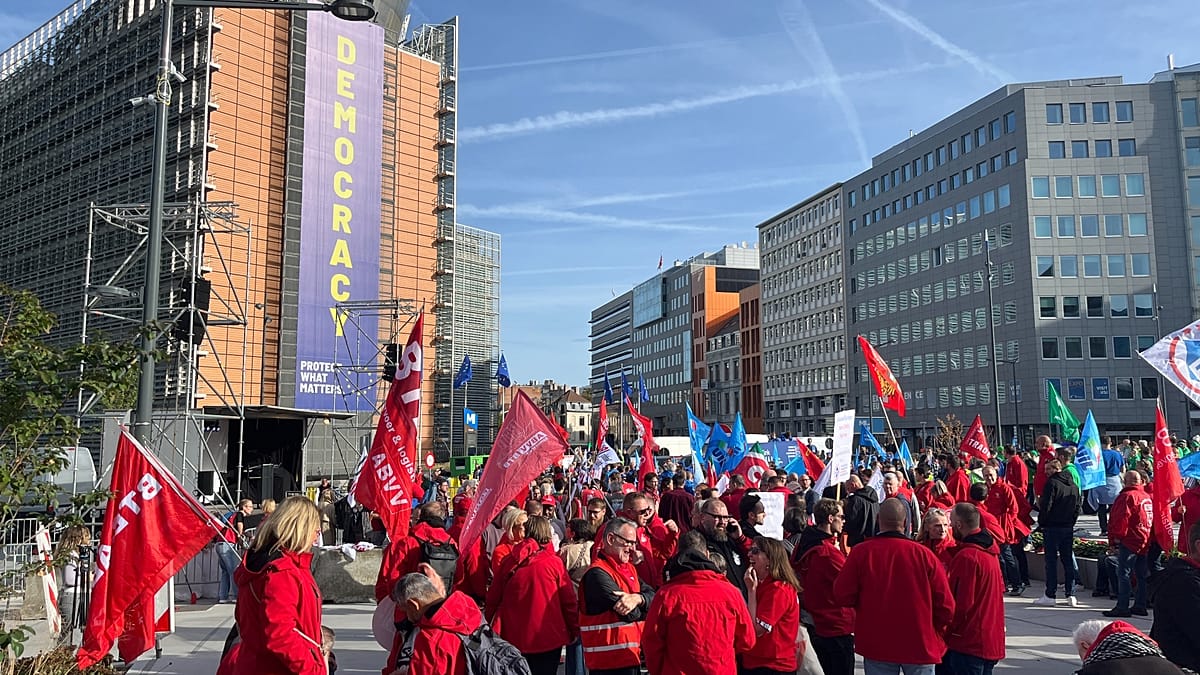
Rizvi called on European governments to step in and protect “consumers on the lower end of earning.” Without targeted measures, he warned, rising living costs could develop into a wider “social and political problem.” His comments echo concerns already being voiced in several capitals. In France, for example, fuel prices have ignited political tensions ahead of the presidential vote, with protests over the cost of living becoming a recurring theme.
The European Commission has so far resisted calls for a blanket energy price cap, preferring targeted subsidies and tax breaks. But Rizvi argues that more decisive action may be needed. “We are seeing a patchwork of national measures, but the problem is pan-European,” he said. “A coordinated approach would be more effective than each country going it alone.”
Wider economic implications
The energy crunch is also feeding into broader economic concerns. The EU's reliance on imported fossil fuels has been exposed by the war in Ukraine, and the bloc is now racing to accelerate its green transition. However, Rizvi cautioned that the transition itself could add to short-term price pressures. “Investment in renewables is essential, but it takes time. In the meantime, we are still dependent on volatile global markets,” he said.
He also pointed to the EU's soaring fuel bill, which has reached €270 million a day for diesel alone, according to a recent report. That figure underscores the scale of the challenge facing European policymakers as they try to shield consumers while also meeting climate goals.
Some analysts have suggested that the current crisis could accelerate the shift away from Russian energy, but Rizvi warned that the transition must be managed carefully. “If we move too fast, we risk energy shortages; if we move too slow, we remain exposed to price shocks,” he said. “It's a delicate balance.”
Looking ahead
With winter approaching, the pressure on households is likely to intensify. Rizvi expects energy prices to remain elevated for at least the next several months, and possibly longer if geopolitical tensions persist. He urged consumers to prepare for higher bills and advised governments to consider more aggressive support measures, including direct payments to vulnerable households.
The warning comes as the EU is also grappling with other challenges, from trade imbalances with China to internal divisions over sanctions policy. But Rizvi insisted that the energy and cost-of-living crisis should be a top priority. “If people cannot afford to heat their homes or put food on the table, everything else becomes secondary,” he said.
For now, the outlook remains uncertain. But one thing is clear: the ripple effects of high energy prices will be felt far beyond the utility bill, and European governments will need to act decisively to prevent a social backlash.