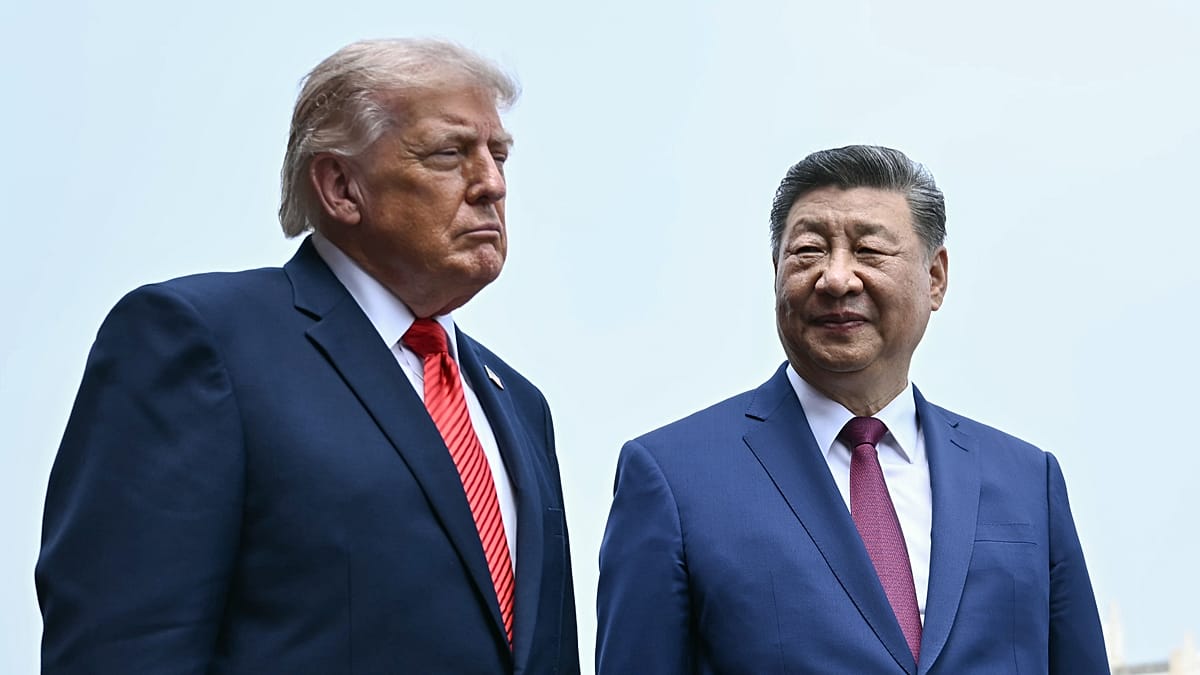
When Xi Jinping and Donald Trump sit down at the White House on Thursday, the agenda will stretch far beyond the usual diplomatic pleasantries. Four months after their last encounter in Beijing, the two leaders face a trade relationship increasingly strained by a practice that has quietly reshaped global supply chains: the transshipment of Chinese goods through third countries to dodge US tariffs.
Days before the summit, the White House published a report that puts nine Latin American and Caribbean nations on notice. Mexico, Brazil, Argentina, Chile, Colombia, Peru, Panama, Costa Rica and the Dominican Republic are among more than 40 economies identified as potential conduits for Chinese products seeking to bypass import duties. The document, titled The Great Transshipment Scam: Rise, Scope, and Costs, was signed on 13 August by the Office of Trade and Manufacturing Policy, led by Peter Navarro, Trump's chief trade adviser.
The report's cover—a container ship rendered as a Trojan horse—sets the tone. Inside, it describes a familiar playbook: relabelling, repackaging, re-invoicing, minor assembly and false declarations of origin, all facilitated by free zones, bonded warehouses and logistics hubs where goods undergo no real transformation. It is a practice that has long concerned European customs authorities, who face similar challenges in protecting the EU's single market.
Five estimates, one problem
The report does not offer a single headline figure. Instead, it compares five independent estimates of the annual cost to the US economy, each using different methodologies and covering different product universes. The White House itself cautions that the numbers are neither additive nor directly comparable.
Goldman Sachs provides the most conservative estimate, at $40 billion (€35 billion) per year, based on 2023 data and focused solely on the re-export channel. The White House Council of Economic Advisers puts the range between $34.2 billion and $89.6 billion, with a midpoint of $60 billion. The supply-chain intelligence firm Exiger arrives at $75 billion, a figure the report adopts as its central case for calculating job losses and revenue shortfalls. The Department of Commerce offers a broader reading, with an upper ceiling of $109 billion, while Altana, another analytics firm, sets the widest bound at $303 billion.
These disparities are not a contradiction but a reflection of what each source measures. Goldman Sachs isolates a single, well-defined channel; Altana tracks factory-to-factory relationships and counts any suspicious route, including goods that do undergo real processing in the intermediate country. The White House chose Exiger's number as its working baseline, citing its balance of breadth and on-the-ground verification.
On that basis, the report calculates an annual loss of between $16.5 billion and $22.6 billion in tariff revenue, the displacement of 450,000 jobs, and a reduction in GDP of up to $150 billion. To put those figures in context, the White House notes that the lower end of the revenue loss is nearly equal to the Space Force's 2026 budget request and exceeds the entire budget of US Customs.
Enforcement data cited in the report show a sharp uptick in irregularities since Trump's return to office: shipments flagged by Customs rose by 245% in the 526 days after his inauguration, and associated additional revenue increased by 169%. The legal basis for this crackdown is executive order 14411, signed on 3 June 2026, which strengthens customs tools on importer liability, bonds, ownership transparency and penalties. A new AI system, dubbed "Detective Border," is already being tested to cross-check shipping routes, ownership histories and declared production capacity.
Latin America in the crosshairs
Washington divides the 40 flagged economies into three tiers. The first, "diversified scale leaders," includes Mexico alongside Canada, the European Union, India, Japan, South Korea, Taiwan and Israel. The second tier, with deeper production integration with China, groups Brazil with Indonesia, Malaysia, Thailand, Turkey and Vietnam. The third, "smaller opportunistic targets," lists Argentina, Chile, Colombia, Costa Rica, Panama, Peru and the Dominican Republic.
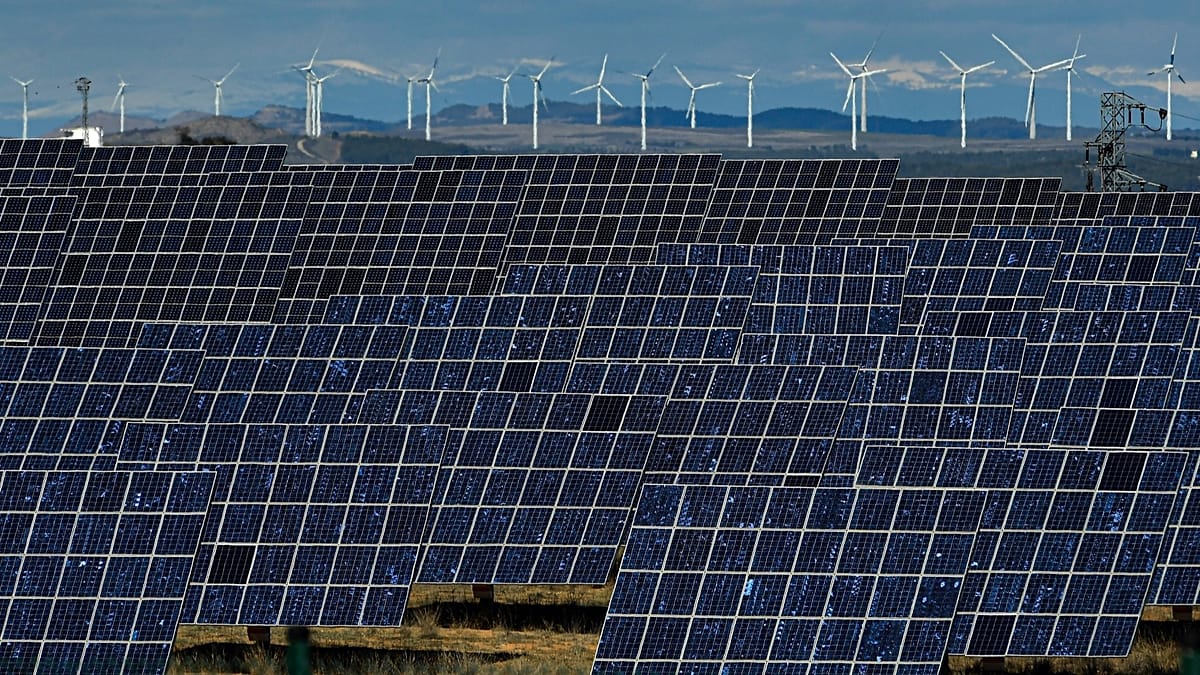
For European readers, the inclusion of the EU in the first tier is a reminder that transshipment is not a purely transatlantic issue. European ports and free zones have also been used as transshipment hubs, and the EU has its own anti-circumvention investigations into Chinese goods, from solar panels to electric vehicles. The bloc's recent decision to stick to a November deadline for Chinese inverters in energy projects shows that similar concerns are shaping European policy.
The Trump-Xi meeting comes at a delicate moment for transatlantic trade relations. Washington's aggressive stance on Chinese transshipment could spill over into European exporters, who may face stricter scrutiny of their own supply chains. As the superpowers set the agenda, Europe watches closely, aware that any new US enforcement measures could have ripple effects across the Atlantic.
The report's release, timed just days before the summit, signals that trade enforcement will be a central topic of discussion. For the nine Latin American countries named, the implications are significant: increased inspections, potential penalties, and a need to demonstrate that their export industries are not merely conduits for Chinese goods. For Europe, the message is equally clear: the era of lax transshipment controls is ending, and the continent must decide whether to follow suit or risk becoming the next target.