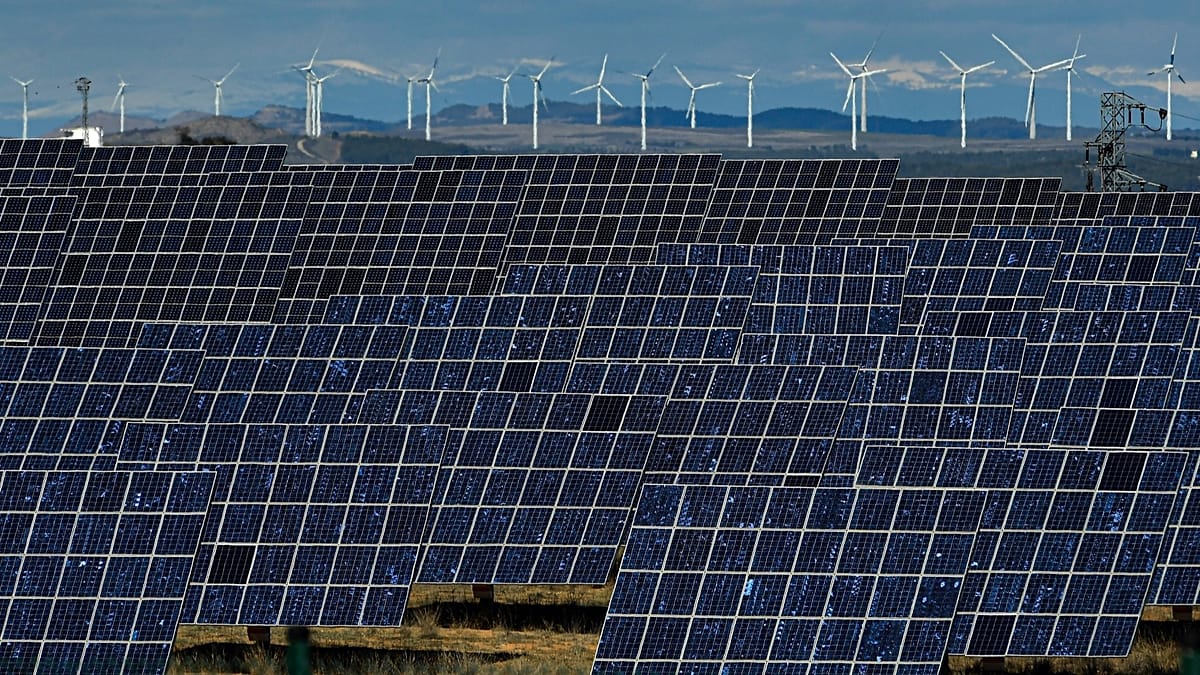
New Eurostat data show that renewable sources generated 54.1% of the EU's electricity in the second quarter of 2026 – a slight dip from 54.3% in the same period last year. The marginal decline masks a more worrying trend: while total electricity output rose 3.2% year-on-year, gas-fired generation climbed 3.9%, outpacing the 2.8% growth in renewables.
Solar power continued its rapid expansion, accounting for 41.6% of renewable generation, up from 37% a year earlier. Yet this surge has not been enough to displace fossil fuels, highlighting the structural challenges in Europe's energy transition.
Why the EU needs more than just solar
Jonathan Bruegel, a power sector analyst at the Institute for Energy Economics and Financial Analysis (IEEFA), told Euronews Earth that the dip underscores the need for a diversified mix of hydro, wind, and solar. “Gas held at 13.3%, even with renewables above 50%,” he said. “This means that weak hydro and wind generation still bring gas back in, underlining again the need for more solar – which is a more stable intermittent technology than hydro and wind – storage, and flexibility.”
The summer of 2026 brought severe drought across the continent, with Alpine hydropower flows reaching near-record lows. At the start of Q3, energy intelligence firm Montel warned that inflows to reservoirs and run-of-river plants in Austria and Switzerland were nearly 50% below average. Austrian hydro production in July was just 51% of normal levels (compared with the last 15 years), while Switzerland managed only 48%. Germany (63%) and France (68%) also suffered significant shortfalls.
Such weather conditions typically boost solar output, and indeed solar has already saved the EU an estimated €35.4 billion in avoided gas imports since the start of the Iran war. However, the solar boom has not curbed gas generation, which rose 0.1% in Q2.
Which countries lead the renewables race?
Latvia topped the ranking with a renewables share of 97.7%, driven mostly by hydro and solar. Denmark followed at 94.3%, and Croatia at 92.2%. At the other end, Slovakia (19.8%), Czechia (20.9%), and Malta (24.5%) recorded the lowest shares.
The data come as Brussels considers new powers to force electricity cuts during crises, a proposal that has sparked debate about grid resilience. Meanwhile, the EU's push for energy independence has been complicated by the ongoing conflict with Iran, which has reshaped global energy markets.
Analysts argue that the solution lies not just in adding more solar capacity but in investing in storage and grid flexibility. As Bruegel noted, “The case for a diversified mix is clear – hydro, wind, and solar each have their vulnerabilities, and only a balanced portfolio can ensure reliability.”
For now, the EU's renewable transition remains on track in the long term, but the short-term volatility exposed by this quarter's data serves as a reminder that the path to decarbonisation is neither linear nor guaranteed.