Climate change has outgrown its traditional home in environmental ministries. According to Emmanuella Doussis, professor of international institutions at the University of Athens and holder of the UNESCO Chair on Climate Diplomacy, the phenomenon now operates simultaneously as an economic, social, political and geopolitical problem — one that is redrawing the balance of power between states.
"Climate change is an economic problem, because it directly concerns states' national economies. It is a social problem, because it affects societies. It is a political problem and it is also a geopolitical problem," she told Euronews.
Competition over resources intensifies
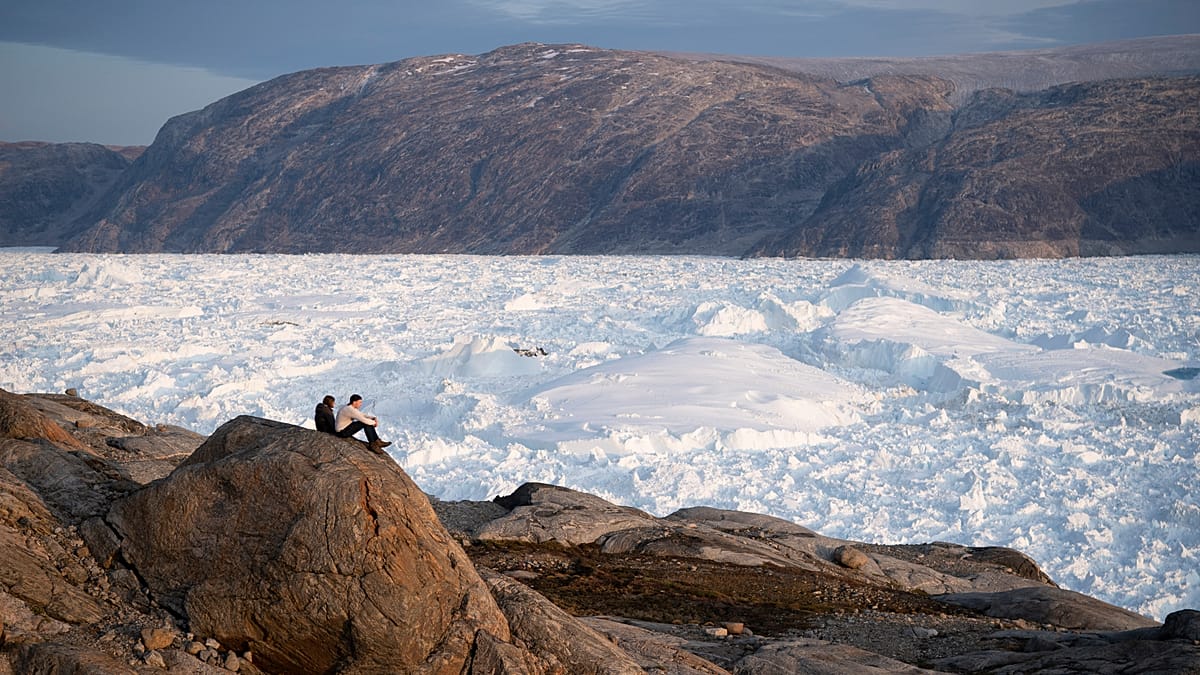
Doussis points to several fronts where the climate crisis is already reshaping international relations. The retreat of Arctic sea ice is opening new shipping corridors, while competition sharpens over the minerals that underpin clean technologies — lithium, cobalt and rare earth elements. Water, too, has become a strategic asset, with cross-border river basins emerging as potential flashpoints. She cites the Nile as a case in point, where Egypt and Ethiopia remain at odds over the Grand Ethiopian Renaissance Dam.
Food security and migration are woven into the same fabric. "At this point we are seeing heightened competition in the search for new resources," she says, listing the Arctic, disputes over rivers and water, and population movements as interconnected pressures.
The transition will not treat all states equally
Moving away from fossil fuels is unavoidable, but Doussis stresses that it will produce winners and losers. "The move away from fossil fuels will weaken certain states," she notes. Exporters of oil and gas will need to restructure their economies and find new sources of growth. Meanwhile, countries with strong renewable potential — solar, wind, geothermal — and those holding reserves of critical raw materials stand to gain influence.
"Consequently, new dependencies and power relations will emerge," she warns. The shift is not simply a technical exercise; it is a redistribution of leverage across the continent and beyond. European capitals from Oslo to Athens are already grappling with how to secure supply chains without replicating the dependencies of the fossil era, a theme that has dominated discussions at successive climate week gatherings.
Diplomacy's limits and the case for practical cooperation
The institutional architecture for climate cooperation rests on the UN Framework Convention on Climate Change, reinforced by the 2015 Paris Agreement. Yet Doussis highlights a structural weakness: national emissions plans are revised every five years, but non-compliance carries no meaningful sanction. In a fractious geopolitical climate, she argues that diplomacy should pivot from endlessly setting new targets toward concrete action.
She singles out research and technology cooperation, as well as electricity interconnections, as areas where progress is tangible. Cross-border grids can accelerate the rollout of renewables in ways that national plans alone cannot.
On the largest emitters, Doussis draws a nuanced picture. China, the United States, India and the European Union sit at the centre of global efforts, but with divergent priorities. Washington has grown more sceptical of climate policy and more focused on fossil fuels, she observes, while Beijing has poured capital into clean technologies — treating the green industry as a defining sector of the 21st century — even as it continues to invest in coal and oil.
Greece's exposure and the danger of using climate as an alibi
For Greece, geography is destiny. The Mediterranean is widely regarded by scientists as one of the regions most exposed to climate impacts, from extreme heat to wildfire and drought. Doussis acknowledges Greece's earlier progress — the decision to phase out lignite and the accompanying just transition plans — but contends that recent years have seen a renewed emphasis on fossil fuels.
She insists climate policy should not be reduced to a collection of isolated green measures, but treated as a broad political choice that touches the economy, energy and the whole of public policy. That framing has particular resonance in a country where rural livelihoods are already under strain, as seen in the pressures facing protected Greek crops.
Equally important, in her view, is adaptation. Reflecting on the natural disasters that have struck Greece in recent years, she warns against using climate change as a blanket explanation for failures that predate it. "Climate change is not always to blame," she says, pointing to chronic planning weaknesses, overly complex legislation and inadequate protection of vulnerable areas.
Water and food at the centre of the storm
The most alarming dimension, Doussis argues, concerns access to basic goods. "We will face a very large, serious problem with food security. We will face problems with water," she stresses. Pressure on water resources could generate new tensions between states, particularly where rivers and basins cross borders. Climate-driven displacement, meanwhile, is expected to intensify, adding another layer of complexity to international security and migration management.
The upshot is a policy landscape in which energy, water, food, raw materials and human movement can no longer be addressed in isolation. As European governments weigh industrial strategy, agricultural resilience and border policy, Doussis's warning suggests the climate file has become the connective tissue of domestic and foreign policy alike — a meta-crisis that demands integrated answers rather than siloed ones.