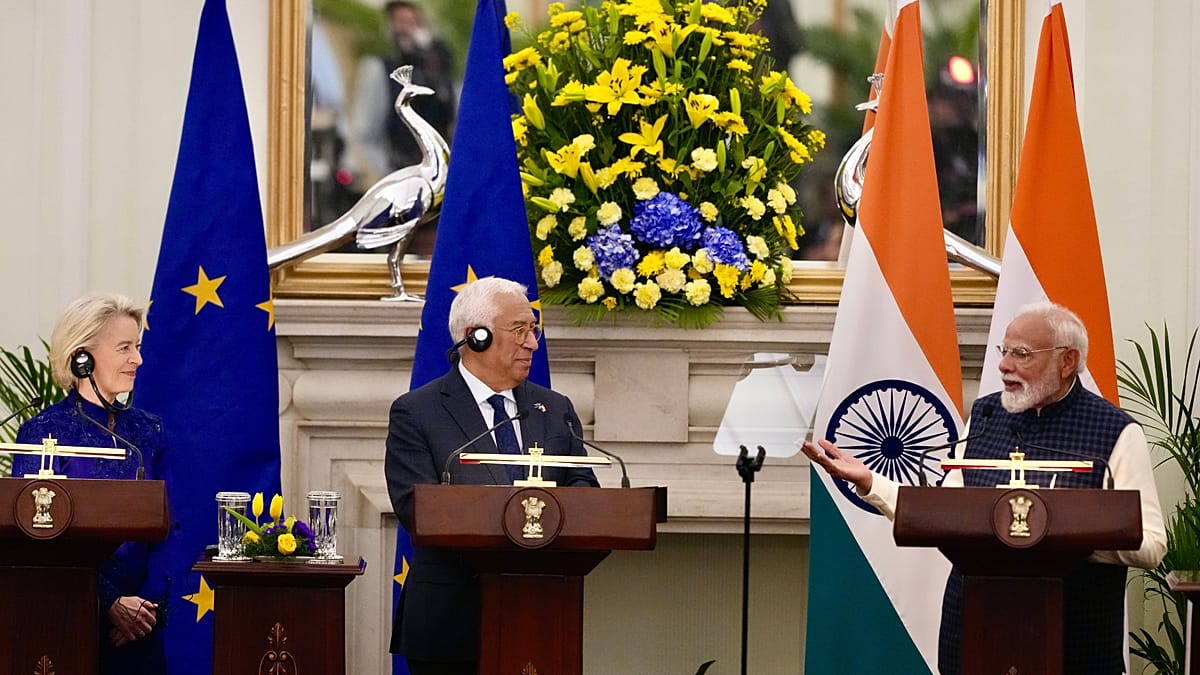
India has sharpened its criticism of the European Union's carbon border tax, setting the stage for a tense confrontation at next week's COP31 climate summit in Antalya, Turkey. New Delhi is preparing to defend its industrial interests against what it calls "unilateral trade barriers," according to statements from Indian officials.
Bhupender Yadav, India's environment minister, told local media that the country would hold its ground on the Carbon Border Adjustment Mechanism (CBAM). "On CBAM, we will stand by our position. When it comes to protecting India's interests, that is what we speak about most strongly," he said.
The CBAM, which took effect in January 2026, applies to imports of aluminium, cement, fertilisers, hydrogen, iron and steel. Importers must pay for the CO2 emissions embedded in those products, a measure Brussels says is necessary to prevent European manufacturers from being undercut by rivals operating under weaker climate rules.
But developing economies argue the tax is an unfair, unilateral tool that penalises their industries and hinders their development. Even the monitoring and reporting requirements, which apply to foreign producers, are seen as excessively burdensome.
India's commerce minister, Piyush Goyal, launched a blistering attack on the CBAM at the Berlin Global Dialogue. "If you have put a CBAM on yourself, you put a 50% import duty to bring steel into your country, you are inviting disaster. Your cost of living will go up. Your people will be unhappy. Your industry will be out-priced," he said.
The timing is significant. Brussels is negotiating plans to extend CBAM to more products, including washing machines and car parts, while tightening rules to prevent companies from circumventing the tax. The next round of political talks between the European Council and the European Parliament is scheduled for 20 November.
Global opposition mounts
Resistance to the EU's carbon border tax is spreading beyond India. Canada is seeking an exemption, while the United States is assessing the impact on its businesses. Jodey Arrington, the outgoing chair of the US House Budget Committee, and ten other lawmakers wrote to US Trade Representative Jamieson Greer, demanding action against EU energy regulations.
"These policies, including the EU's CBAM, Methane Regulation and Corporate Sustainability Due Diligence Directive (CSDDD) discriminate against American producers and suppliers, even as the US maintains some of the highest environmental standards in the world for energy production," they said.
The United Kingdom is also in talks with EU officials to link its carbon market to the EU's Emissions Trading System (ETS), which would effectively create the conditions for mutual CBAM exemptions. British Financial Secretary to the Treasury Lord Livermore said in a written parliamentary answer that linking the two schemes would "reduce barriers to trade."
Russia has an open dispute against the CBAM at the World Trade Organisation, and on 3 November, Russia and China announced they would join forces at COP31 to oppose unilateral trade barriers.
Brussels is also under pressure at home. Delays in complying with methane rules, the ongoing revision of the 2035 ban on new diesel and petrol cars, and the EU's ETS are all signs of how EU policymakers are rolling back parts of the European Green Deal.
Environmental activists argue that the EU cannot credibly push for a global fossil-fuel phase-out while weakening its own climate framework. Sven Harmeling, head of climate at Climate Action Network Europe, said the EU should help bridge divides at COP31 instead of deepening them.
"The EU cannot ask the rest of the world to deliver while weakening climate action at home or falling short on finance. Leadership in Antalya means doing both: accelerating Europe's own transition away from fossil fuels and putting its fair share of support on the table internationally," he said.
As the EU heads to the summit, it risks arriving with a weakened negotiating hand, caught between its ambition to present itself as a global climate leader and the political retreat unfolding at home. The bloc wants COP31 to deliver progress on electrification and moving away from fossil fuels, but with high energy prices, supply concerns and industrial pressure, EU governments are considering expanding domestic refineries.
The outcome of the CBAM dispute could have far-reaching implications for global trade and climate diplomacy. For more on the broader context, see US lawmakers' cautious hopes for COP31 and the WHO's six climate measures.