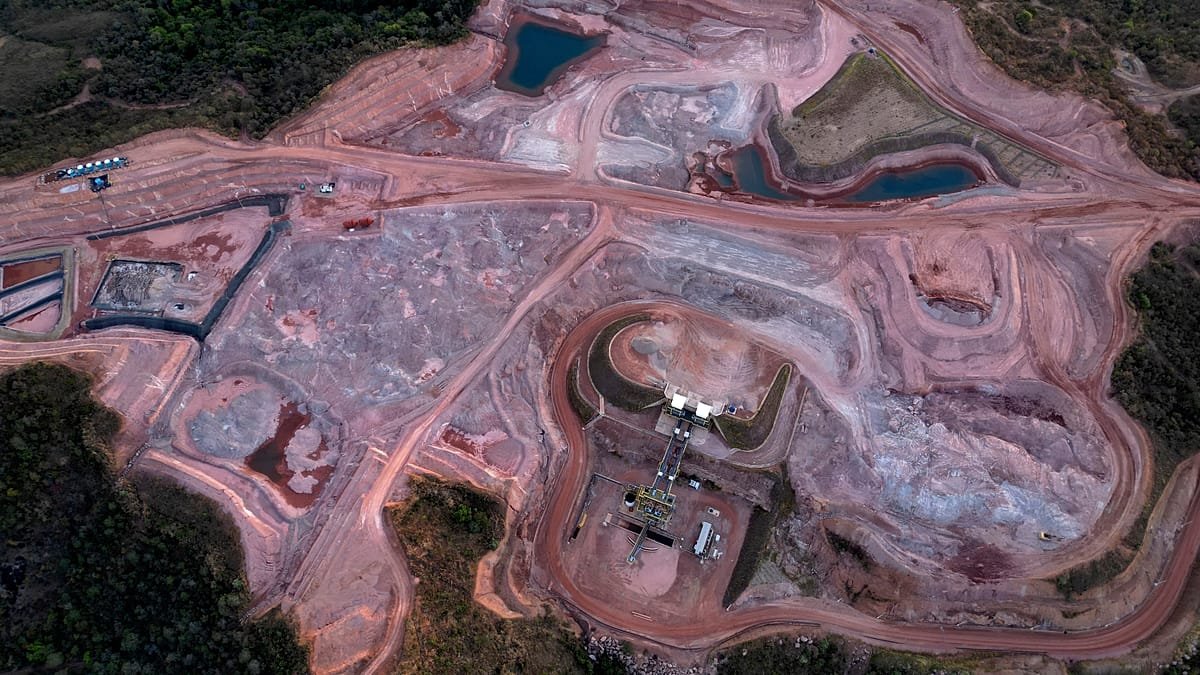
Norway's government has set a target of 2028 to finalize a development plan for the Fen Complex, the largest known rare earth deposit in Europe. The site, located roughly 150 kilometers southwest of Oslo, holds an estimated 15.9 million tonnes of rare earth oxides, including neodymium and praseodymium—key ingredients in the powerful magnets used in electric vehicles, wind turbines, and military hardware.
Industry Minister Cecilie Myrseth told reporters on Wednesday that the objective is to have a plan in place by 2028 at the latest, though she expressed hope it could be completed sooner. The announcement comes after years of delays tied to environmental assessments and local opposition.
Environmental hurdles persist
Surveys in the Fen area have identified 78 endangered species of animals and plants, including rare beetles, ancient trees, mosses, and fungi. These findings have complicated the permitting process and forced planners to reconsider where surface facilities would be located.
Rare Earths Norway (REN), the company holding extraction rights, has emphasized that the mine itself would be largely invisible, with extraction and crushing occurring underground. However, surface processing plants are still necessary, and their placement has been a sticking point.
Earlier this year, the national government took over planning responsibilities from the local municipality, including the study of alternative locations for surface installations. This centralization is seen as a way to accelerate a project that is strategically important for Europe's supply chain security.
Strategic importance for Europe
Currently, no rare earth deposits are being mined anywhere in Europe, leaving the continent almost entirely dependent on China for these critical minerals. The European Union classifies rare earths as critical raw materials, essential for everything from smartphones and electric cars to fighter jets.
Norway, though not an EU member, is closely aligned with the bloc's industrial and security policies. The Fen Complex could help diversify Western supply chains and reduce reliance on Chinese exports, a priority that has gained urgency amid geopolitical tensions.
REN has said it hopes to begin mining in the first half of the 2030s, assuming the plan is approved and financing is secured. The company has not yet disclosed the projected investment costs, but industry analysts expect it to run into billions of euros.
The project also fits into a broader European push to secure critical minerals, as seen in recent EU initiatives on data centre sustainability and green hydrogen infrastructure. While those focus on energy and digital sectors, the Fen Complex addresses the raw material bottleneck that underpins both.
Environmental groups remain cautious, warning that even an underground mine could disrupt fragile ecosystems. They have called for a thorough assessment of alternative sites and for strict mitigation measures to protect biodiversity.
For now, the Norwegian government is pressing ahead, balancing ecological concerns with the strategic imperative of reducing Europe's dependence on China for critical minerals. The 2028 deadline is ambitious, but officials insist it is achievable.