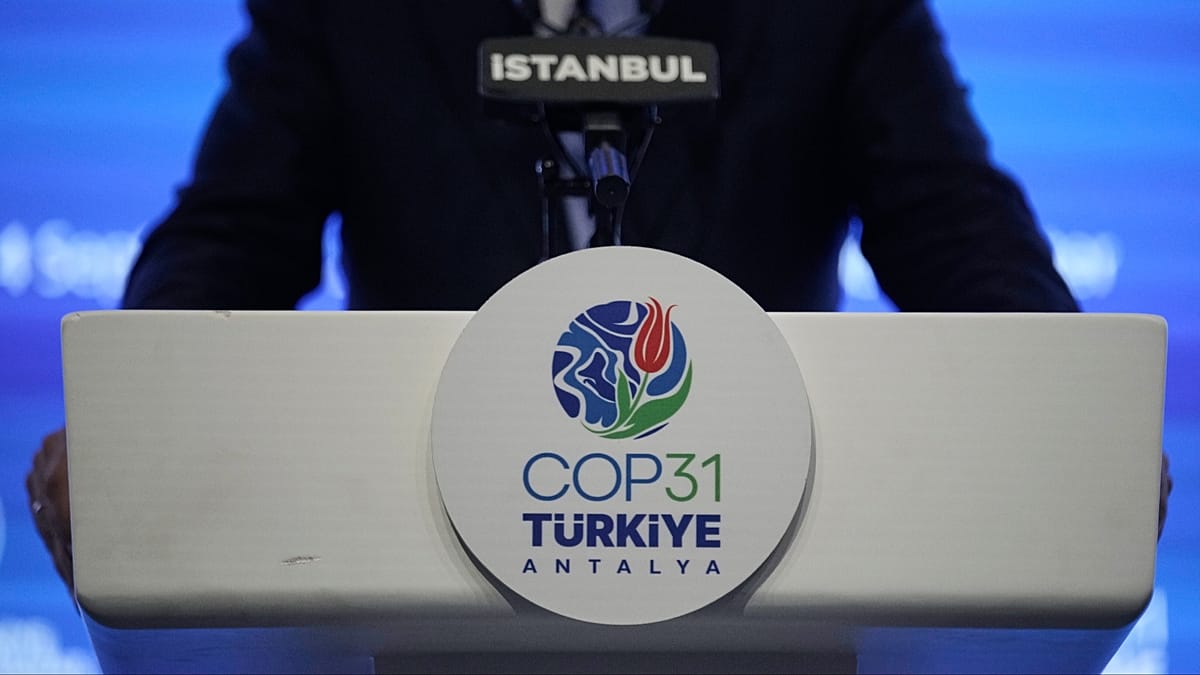
When Türkiye hosts the UN climate summit in November, its presidency will put a spotlight on what it calls “climate-responsible AI” and a global push to electrify daily life. But as Ankara unveils its masterplan, analysts and campaigners are questioning whether the initiative could inadvertently lock the world into continued fossil fuel use.
On 21 September, COP31 President-Designate and Environment Minister Murat Kurum announced that persuading tech companies to power data centres with clean energy would be a central theme of the talks. The announcement follows Türkiye’s headline target, unveiled in June, to raise the global share of energy demand met by electricity from around 20 per cent to 35 per cent by 2035.
“By electrifying daily life, from transport to buildings and industry, we can protect families and businesses from volatile energy markets,” Kurum said. “This 35 per cent by 2035 target will be one of the defining priorities of our COP31 presidency.”
Electrification: enabler or Trojan horse?
Electrification means replacing technologies that burn fossil fuels—swapping a diesel car for an electric vehicle, for example. But as the World Resources Institute (WRI) points out, it is “an enabler, not an end goal in itself.” An electric car charged from a coal-heavy grid can be worse for the climate than a petrol car. The benefits depend entirely on how the electricity is generated.
That caveat is at the heart of expert concerns. Critics argue that the 35-by-35 pledge, as currently framed, could allow governments to count expanded gas-fired generation as progress towards electrification targets—a move they say would “seriously undermine climate goals.”
“Let’s not let electrification become the Trojan horse of our times, used to hide new fossil fuel consumption rather than promote renewable energy,” said Claire Smith of the campaign coalition Beyond Fossil Fuels. She argues that the presidency’s pledge “leaves the backdoor open” for governments to conceal or justify expanded fossil fuel use under the “guise of electrification.”
Smith also pointed to the growing energy demands of data centres, which she says are already diverting renewable electricity away from sectors that genuinely need to decarbonise, driving higher gas dependence and pushing up electricity costs for consumers. “Clear guardrails are essential to ensure that electrification advances both climate justice and equitable access to renewable energy, and not the fossil industry’s agenda,” she added.
Duygu Kutluay, another campaigner at Beyond Fossil Fuels, echoed that warning. “Globally, we must ensure that the electrification agenda does not come at the expense of the urgent transition away from fossil fuels,” she said.
Türkiye’s own energy mix: a mixed picture
According to energy think tank Ember, 43 per cent of Türkiye’s electricity came from low-carbon sources last year. Hydropower, despite drought conditions, remained the largest clean source at 16 per cent. Wind contributed 11.1 per cent—ahead of Italy (8.1 per cent) and France (8.2 per cent), despite France’s nuclear fleet. Solar generation (10.5 per cent) has doubled in recent years but still trails southern European peers like Italy (17 per cent) and Spain (22 per cent).
Coal, however, remains Türkiye’s dominant power source, covering 34.3 per cent of generation in 2025—above the world average and far above the EU average. Nearly two-thirds of that coal is imported, raising energy security concerns. Gas also plays a significant role, at 22.1 per cent of the mix, again above both world and EU averages.
Emissions from Türkiye’s power sector have nearly doubled over the past two decades, driven by rising demand and fossil fuel expansion, though the recent growth of wind and solar has helped curb the trend. Türkiye’s per-capita emissions are now level with the global average. The country aims to source 47 per cent of its electricity from renewables by 2030—a target slightly more ambitious than the EU’s binding 42.5 per cent.
“The global fossil fuel crisis experienced for the second time in the past four years has further highlighted the importance of the transition to clean energy,” said Ufuk Alparslan of Ember.
As COP31 approaches, the question is whether Türkiye’s electrification vision will genuinely accelerate the shift away from fossil fuels—or simply provide a new cover for their continued use. For many experts, the answer will depend on the guardrails put in place. Without them, the promise of a cleaner future could remain just that—a promise.