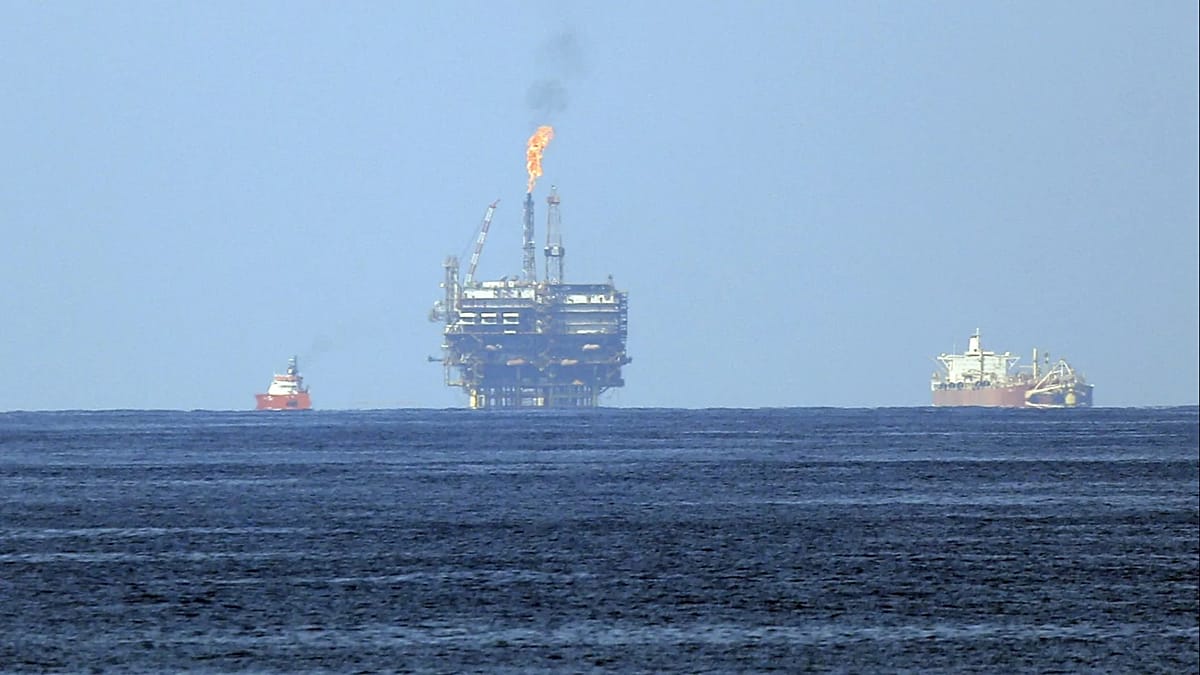
On 7 May, an industrial structure weighing over 5,200 tonnes and standing 45 metres tall departed the port of Ravenna, bound for the Bouri oil field roughly 170 kilometres off Libya's coast. The offshore module is designed to capture and process gas that is currently flared — burned off as a by-product of oil extraction — turning it into a usable energy resource.
The initiative is far more than a technical upgrade. It sits at the intersection of industrial strategy, environmental policy, and geopolitical positioning in the Mediterranean. For Italy, it reinforces a decades-long energy partnership with Libya; for Europe, it adds a new source of gas at a time when supply diversification is a pressing concern.
Italian industrial chain in action
The module was developed by Mellitah Oil & Gas, a joint venture between Eni and Libya's National Oil Corporation. Construction took place at the Rosetti Marino shipyard in Ravenna, while offshore installation will be handled by Saipem using its Saipem 7000 crane vessel. The entire value chain — from design to fabrication to installation — remains within Italian hands, showcasing the country's capabilities in offshore energy infrastructure.
Hundreds of engineers, technicians, and labourers worked on the module at the Ravenna yards, generating significant economic spin-offs for local and national suppliers. Contracts of this scale, worth hundreds of millions of euros, sustain a specialised industrial ecosystem that Italy has cultivated over decades. In a sector undergoing rapid transformation, such projects help maintain competitive advantage and preserve high-skilled employment.
Curbing flaring, boosting efficiency
The core environmental objective is to reduce flaring — one of the largest sources of avoidable emissions in the global oil and gas industry. Vast quantities of natural gas are routinely burned off at extraction sites, releasing CO₂ and methane into the atmosphere. The new module will recover that gas, process it, and feed it back into the production cycle, effectively converting waste into a resource.
For Libya, this aligns with a national target of achieving zero routine flaring by 2030. The Bouri field is one of the country's most significant hydrocarbon assets, and the installation is expected to improve both its efficiency and overall output. The project also supports broader efforts to modernise Libya's energy infrastructure, which has suffered from years of conflict and underinvestment.
Reducing flaring has become a priority for international oil companies and regulators alike. The European Union has been weighing measures to curb methane emissions, including potential penalties on imports from high-flaring regions. In that context, projects like Bouri help align Libyan production with evolving European standards. For more on the EU's approach, see EU Weighs Suspending Methane Penalties to Shield Energy Supply Amid Crisis.
Strategic axis in the Mediterranean
For Italy, the Bouri project is not just an industrial order — it is a pillar of bilateral relations with Tripoli. Eni has maintained a continuous presence in Libya even during the country's most turbulent periods, and the partnership with the National Oil Corporation has deepened in recent years. Rome positions itself as one of Tripoli's most reliable European partners, leveraging energy cooperation to build broader diplomatic and economic ties.
The timing is notable. Libyan Prime Minister Abdulhamid Dabaiba is on an official visit to Rome, where he is meeting Prime Minister Giorgia Meloni to discuss energy, security, and economic cooperation. The visit, accompanied by a high-level delegation from Tripoli, signals a renewed phase of diplomatic engagement between the two countries. It also underscores how energy infrastructure projects serve as a foundation for wider strategic dialogue.
For Europe, each new source of gas production in the Mediterranean adds a degree of stability to a volatile energy landscape. The war in Ukraine and the weaponisation of Russian gas supplies have forced EU member states to rethink their import dependencies. Libyan gas, delivered via the Greenstream pipeline to Italy, offers a relatively short and secure route. As the EU Climate Chief Calls for Radical Energy Shift as Third Oil Shock Bites, projects like Bouri contribute to the continent's energy security while also supporting decarbonisation goals.
The Bouri module is expected to be installed in the coming weeks. Once operational, it will mark a tangible step toward reducing flaring in the Mediterranean and strengthening the Italy-Libya energy axis — a relationship that looks set to remain central to both countries' strategic calculations.