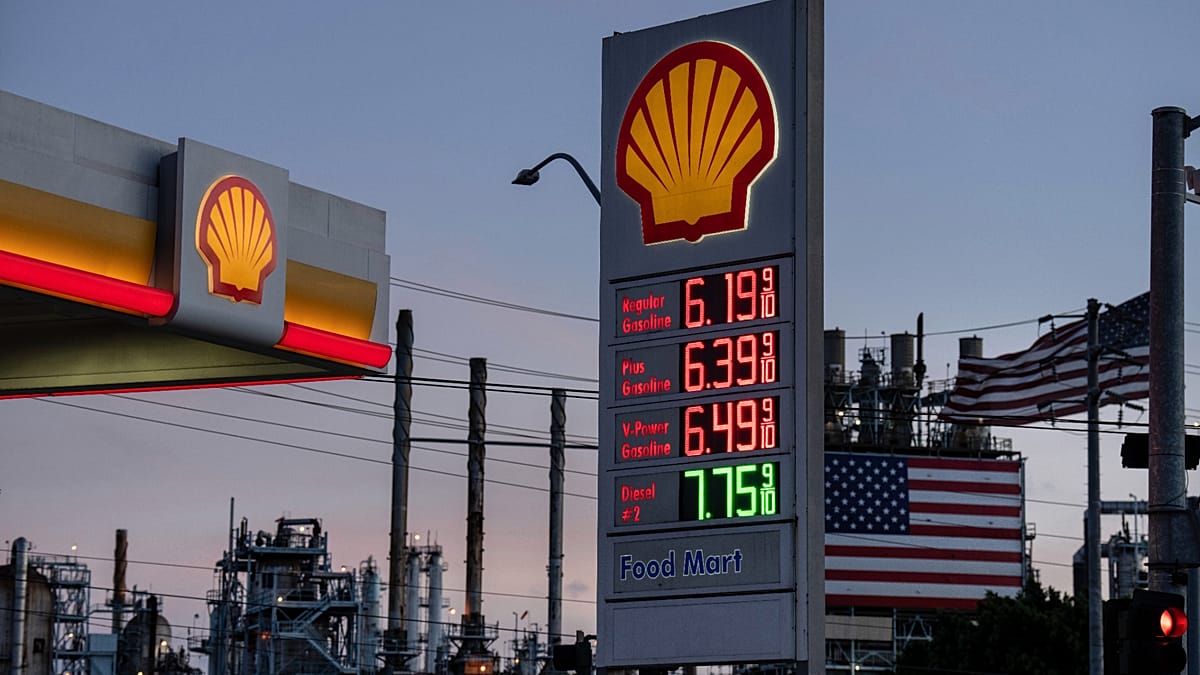
Shell plc reported a sharp rise in first-quarter earnings on Thursday, as the ongoing conflict with Iran and the effective closure of the Strait of Hormuz pushed global oil prices to their highest levels in over four years. Europe's largest oil and gas company posted adjusted income of $6.9bn (€5.86bn), up from $3.3bn in the previous quarter, comfortably exceeding analyst expectations.
“Shell delivered strong results enabled by our relentless focus on operational performance in a quarter marked by unprecedented disruption in global energy markets,” Chief Executive Wael Sawan said in a statement. The company also announced a 5% increase in its dividend and a $3bn share buyback programme over the next three months.
War-Driven Volatility Boosts Trading Profits
The conflict, which began with Iranian military operations and subsequent US-led responses, has severely restricted shipping through the Strait of Hormuz, a chokepoint for roughly a fifth of the world's oil supply. Before the war, Brent crude traded at around $70 a barrel; it later peaked at $126, its highest since early 2022. On Thursday morning, Brent futures for next-month delivery dipped below $100 amid tentative hopes of a diplomatic breakthrough between Washington and Tehran.
“A key profit driver has been the Middle East conflict, leading to a spike in oil prices, meaning Shell was able to sell its products at much higher prices,” said Dan Coatsworth, head of markets at AJ Bell. He added that “the oil price has been volatile since the conflict began on stop-start hopes of a resolution, and that volatility created opportunities for Shell's trading arm.”
Higher crude prices and stronger refining margins lifted profits across the sector, but Shell also faced operational setbacks. The company reported damage to one of its facilities in Qatar during the conflict and cyclone-related stoppages at a liquefied natural gas site in Australia. Around 20% of Shell's oil and gas production comes from the Middle East, leaving it exposed to prolonged regional disruption. Shell signalled that gas production in Qatar is expected to fall by at least 30% in the second quarter compared with the first three months of 2026, though its assets in Oman remain operational.
Strategic Moves and the Windfall Tax Debate
“Strategically, the longer-term question remains reserve replacement and production growth,” said Maurizio Carulli, global energy analyst at Quilter Cheviot. “The recent ARC Resources acquisition is a meaningful step in that direction, lifting Shell's production outlook from stagnation to modest but visible growth.” The company recently announced the acquisition of ARC Resources Ltd., a producer focused on the Montney shale basin in Canada, strengthening its shale gas and liquids production.
In the United Kingdom, Shell's bumper earnings have reignited the debate around an extended windfall tax on energy profits. “Once again, fossil fuel giants are pocketing monstrous profits while drivers are being squeezed at the petrol pump and households are set to pay higher energy bills,” Danny Gross, climate campaigner at Friends of the Earth, told the BBC. He called for a strengthening of the existing windfall tax, which currently applies only to profits from oil and gas extraction in the UK—a market that accounts for less than 5% of Shell's global production.
“Calls for a windfall tax on oil profits will only grow louder now that both Shell and BP plc have reported bumper earnings as a direct result of the Middle East war,” Coatsworth said. “The longer oil prices stay higher, the harder it will be for them to oppose any windfall tax suggestions.” The issue is likely to feature prominently in the upcoming UK local elections, where energy policy and cost-of-living concerns are key voter issues.
Shell shares fell about 2% after the results, but analysts attributed the decline to broader market expectations that shipping through the Strait of Hormuz could soon resume, rather than company-specific concerns. “Shell's first-quarter numbers were clearly better than expected,” Carulli said. “The early share price weakness looks entirely macro-driven rather than company-specific, with oil stocks broadly under pressure on hopes of a rapid resolution to the Strait of Hormuz disruption.”
The broader European energy landscape remains under strain. European shares dipped as elevated oil prices weighed on transport and manufacturing sectors, while European banks diverged, with HSBC taking war-related charges and UniCredit posting gains. The conflict has also driven up shipping costs for humanitarian agencies, threatening refugee aid across Africa.