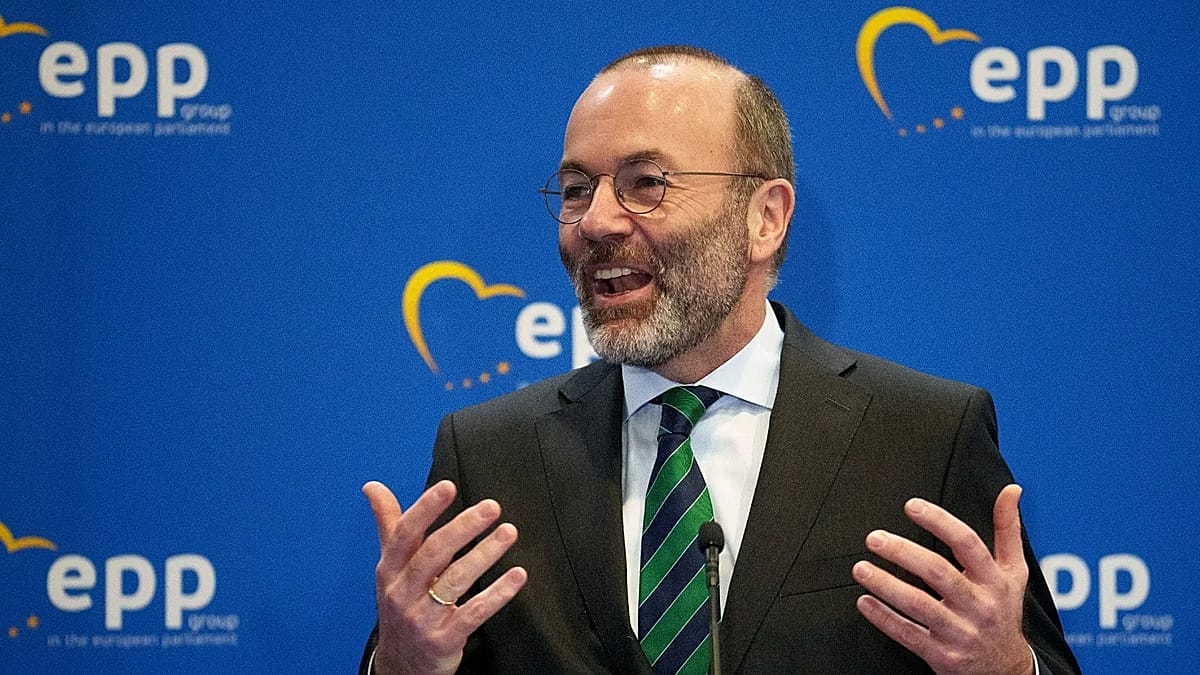
Manfred Weber, president of the European People's Party (EPP), has launched a sharp critique of Spanish Prime Minister Pedro Sánchez's plan to regularise over one million undocumented migrants, arguing the move has continent-wide implications. In an exclusive interview with Euronews, the German MEP said the initiative, which has already attracted more than one million applications, effectively enables migrants to move freely across the Schengen area, affecting countries from France to Poland.
“They can go to France, they can go to Belgium, they can go to Poland,” Weber told Euronews' programme Europe Today. “I would expect that [EU] leaders speak about this kind of massive, 1-million-people legalisation.” The Spanish law grants residence permits valid only within Spain, but Weber contends that in practice, beneficiaries can travel to other member states, undermining national immigration controls.
Economic Arguments vs. Security Concerns
Sánchez has defended the regularisation as essential for Spain's ageing economy, warning that without immigration the country could lose 19 percent of its GDP by 2050. But Weber dismissed this reasoning, arguing that the individuals being regularised are not the skilled workers Europe needs. “We need qualified people who can really contribute to our system. And that is not happening in Spain,” he said, adding that a sudden regularisation of one million people in a few weeks is “not a normal procedure.”
The EPP is increasingly aligning with right-wing and far-right parties in the European Parliament to tighten migration rules. At its general assembly in Vienna, the party adopted a resolution urging the European Commission to limit the right to asylum for certain groups, particularly in cases of “instrumentalisation” or when migrants enter from a third country deemed “safe.” This echoes recent legislative changes approved by the European Parliament in February, which allow EU states to deport asylum seekers to unrelated countries before their claims are processed.
Weber also defended the EU's new “return regulation,” which permits the establishment of return centres for irregular migrants outside the bloc. The measure passed despite criticism over potential human rights violations. “If someone is illegal, he has to leave the EU, and only 20 percent [of the returns] are enforced at the moment,” Weber said, arguing that return hubs in third countries could increase repatriation rates. He declined to specify whether EU funds should finance these centres or which non-EU countries might host them, saying only that “we have partners in Africa, in the Middle East, where we can work with.”
The debate comes as Sánchez faces multiple corruption scandals at home, including allegations involving his wife and party. Meanwhile, French President Emmanuel Macron has joined Sánchez in rejecting the concept of EU return hubs, calling them ineffective and un-European. The EPP's tougher stance on migration is likely to intensify divisions within the European Council, where member states remain split over how to balance humanitarian obligations with border security.