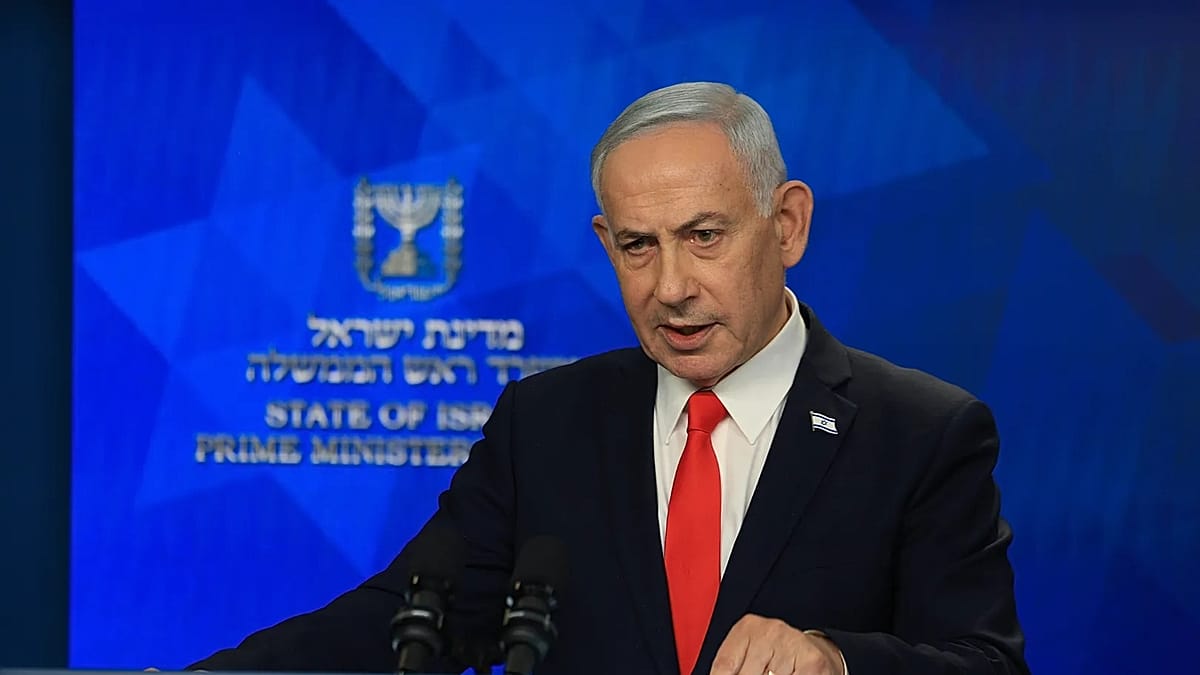
The British government has sharply criticised Israeli Prime Minister Benjamin Netanyahu after he referred to the United Kingdom as the “Islamic republic of Britain” during a podcast interview. A spokesperson for the UK government called the remarks “completely unacceptable” and confirmed that the matter had been raised directly with Israeli officials.
Netanyahu made the comments while speaking on an Israeli army radio programme, where he also joked that Britain could become the “first Islamic republic with nuclear weapons.” The remarks were part of a broader discussion about media coverage of Israel, in which the prime minister praised Randolph Churchill, son of wartime leader Winston Churchill, for his reporting during the 1967 Six-Day War.
“Try and find that now, in what is called the Islamic republic of Britain,” Netanyahu said. When the host suggested that “all of Europe” was similar, Netanyahu agreed and added: “Yes, but someone said, ‘the first Islamic republic with nuclear weapons will be the Islamic republic of Great Britain.’” He then pivoted to Iran, saying, “So, we'll make sure there isn't a second one here in Iran.”
The reference to a nuclear-armed Islamic republic is widely understood to point to Pakistan, which has possessed nuclear weapons since 1998. Netanyahu's language echoes rhetoric from some right-wing commentators in Britain and elsewhere who claim that Islam is exerting growing influence over British society and politics.
Strained relations over Gaza
The incident comes at a delicate moment in UK-Israel relations. Since Andy Burnham became British Prime Minister, the two governments have clashed over the conduct of the war in Gaza. Before taking office, Burnham apologised for his Labour Party's initial response to the conflict and acknowledged that the party needed to “do better.”
While Burnham has condemned Hamas's “monstrous” attacks on 7 October and the rise in antisemitic incidents in the UK, he has also been outspoken in his criticism of Israel's military campaign. In early July, he described the suffering in Gaza as “a scar on our collective conscience” and said it was “completely unacceptable that innocent Palestinians, including children, continue to be killed.” He called on Westminster to apply greater pressure on the Israeli government.
Netanyahu's latest remarks are likely to deepen the diplomatic rift. They also come as the Israeli leader has rejected a US-backed ceasefire proposal that Hamas had accepted, insisting on the full disarmament of the militant group before any Israeli withdrawal from Gaza. That stance has further isolated Israel among European allies, many of whom have called for an immediate end to hostilities.
The British government's response has been firm but measured, reflecting the delicate balance London seeks to maintain between its historic ties with Israel and its growing criticism of Israeli actions in Gaza. The spokesperson did not specify what steps had been taken beyond raising the issue with Israeli authorities.
Observers note that Netanyahu's inflammatory language may be aimed at domestic audiences, but it risks alienating European partners at a time when Israel needs international support. The UK, along with other European nations, has repeatedly urged Israel to do more to protect civilians and allow humanitarian aid into Gaza.
For now, the diplomatic fallout from the “Islamic republic” comment is likely to be limited, but it underscores the fragile state of UK-Israel relations under the new British government. As the war continues, such incidents could further erode trust between Jerusalem and London, complicating efforts to broker a lasting peace.