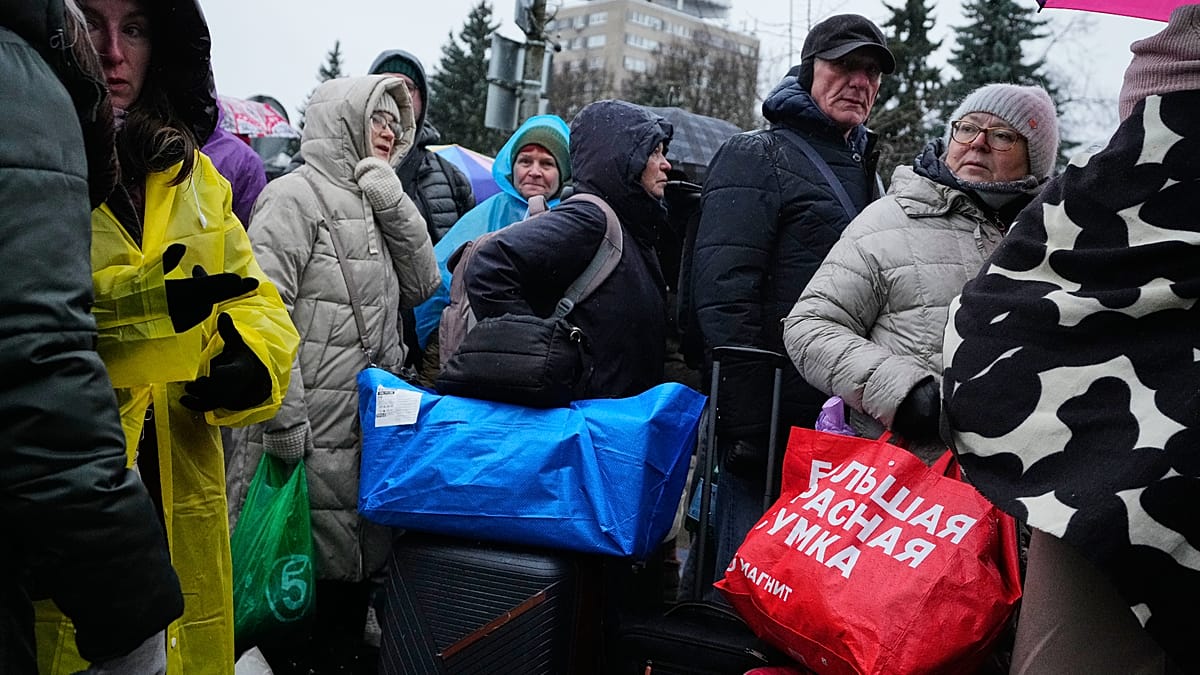
As the clock ticks toward 1 December, long queues have formed at Estonia's border with Russia, with travellers and freight operators rushing to cross before the gates close. The Estonian government has decided to shut all five road border crossings with its eastern neighbour, a move driven by security concerns that have been mounting since Russia's full-scale invasion of Ukraine.
The decision, announced by Interior Minister Lauri Läänemets, will affect the crossings at Narva, Koidula, Luhamaa, Saatse, and the northernmost point at the Gulf of Finland. Only the railway crossing at Koidula will remain operational, but it is reserved for freight and passenger trains, not road traffic. The closure is set to last until at least 1 February 2024, with the possibility of extension.
Security rationale and regional context
Estonian officials have framed the closure as a necessary measure to protect national security. They point to a recent surge in third-country nationals, including citizens of Russia, arriving at the border, some of whom may be used by Moscow as part of hybrid warfare tactics. The Estonian Police and Border Guard Board has reported that the number of people seeking entry has increased significantly, and there are concerns that Russia could deliberately funnel migrants to the border to destabilise the region.
This move aligns with a broader pattern across the Baltic states and Finland, which have all tightened border controls with Russia in response to the war in Ukraine. Finland, for instance, closed several crossing points in November after a similar influx of asylum seekers. Estonia's decision is the latest in a series of measures that reflect the heightened tension along NATO's eastern flank, a situation underscored by NATO's deployment of AWACS surveillance aircraft to Poland after Russian missiles crossed into Polish airspace.
Human and economic impact
For many Estonians, the border closure is more than a bureaucratic inconvenience. Thousands of people have family ties across the border, and the shutdown threatens to separate relatives who often visit each other. Local businesses on the Estonian side, particularly in border towns like Narva, rely heavily on cross-border trade and tourism. Shopkeepers, fuel stations, and small traders have seen a drop in customers as the closure looms, and many fear the economic hit will be severe.
One resident of Narva, who gave her name as Irina, told local media: "My mother lives in St. Petersburg. I usually visit her every few months. Now I don't know when I'll see her again." Such stories are common in the region, where the border has historically been a bridge rather than a barrier.
The Estonian government has acknowledged the hardship but insists that security must come first. Prime Minister Kaja Kallas has been a vocal advocate for a tough stance against Russia, and her government has argued that the closure is a proportionate response to the current threat environment. The decision also comes amid reports of continued Russian missile and drone strikes on Ukraine, which have killed civilians and damaged infrastructure.
Broader European implications
The closure is not just a bilateral matter. It has implications for the entire European Union, as Estonia is the EU's and NATO's eastern border. The EU has already imposed extensive sanctions on Russia, and the bloc has been grappling with how to manage its external borders while maintaining the free movement of goods and people within the Schengen area. Estonia's move could set a precedent for other member states, though each country must weigh its own security concerns against the practical needs of its citizens.
Some analysts have noted that the closure could push more migrants to attempt illegal crossings, which would be harder to monitor. Others argue that it sends a clear signal to Moscow that the Baltic states will not be intimidated. The European Commission has not yet commented officially, but it is likely to support Estonia's right to protect its borders under EU law.
For now, the queues at the border are a visible sign of the changing times. Travellers are being advised to expect long waits, and some have already been turned back. The Estonian government has said it will review the situation regularly and may reopen the crossings if the security situation improves. But with the war in Ukraine showing no signs of ending, and with NATO warning of Russian nuclear satellite launches as space threats escalate, the prospect of a quick reopening seems remote.
As the 1 December deadline approaches, the mood on the border is a mix of resignation and anxiety. For many, the closure is a stark reminder that the post-Cold War era of open borders in Europe is over, at least along the eastern frontier. The European project, built on the promise of unity and free movement, now faces the challenge of reconciling those ideals with the hard realities of a resurgent and aggressive Russia.



