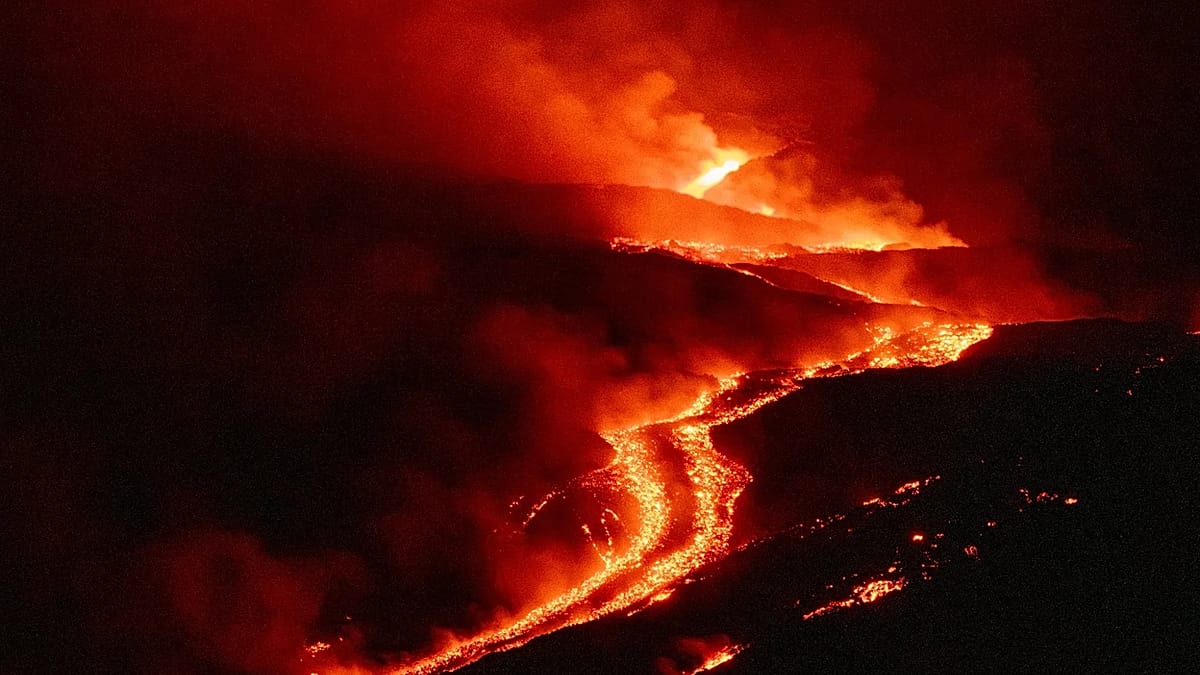
Mount Etna, Europe's most active volcano, is now in its sixth consecutive day of heightened activity, and the disruption to air travel in Sicily is intensifying. On Wednesday, Catania–Fontanarossa airport, the island's main gateway, suspended all arrivals and departures until 6 pm local time, leaving thousands of passengers stranded at the height of the summer season.
According to the airport's tracking data, around 55 outbound flights were cancelled on Wednesday alone, adding to roughly 388 departures that had already been scrapped since the eruption began. Dozens more flights have been rescheduled or diverted to other airports in the region, including Palermo, Trapani, and Comiso. At Comiso, operations were halted for several hours on Wednesday morning due to volcanic ash, though services later resumed.
Ash reaches beyond Italy
The impact of Etna's activity extends well beyond Italian borders. The volcano sits roughly 220 kilometres north of Malta, and ash clouds have forced some aircraft arriving at and departing from Malta to alter their routes. The Volcanic Ash Advisory Centre (VAAC) in Toulouse has been tracking the plume as it drifts south and southwest. According to a bulletin issued on Tuesday evening, the highest concentration of ash remains over Sicily, while lower levels have been detected between eastern Malta and as far as northern Libya.
The disruption has even affected local traditions on the island. The Socjeta Muzikali La Stella Levantina of Attard postponed its fireworks display scheduled for Tuesday, the Feast of Santa Marija. The organiser explained that the launch site is close to the runway approach path, and after consulting with authorities, it decided to delay the event until operational restrictions at the airport are lifted.
A recurring problem with political overtones
Catania airport, located just a few kilometres from the volcano, has been forced to close repeatedly in recent weeks, with numerous flights cancelled or diverted to Palermo. The repeated shutdowns have reignited a long-running debate about the airport's vulnerability and the need for a new facility.
Nello Musumeci, Italy's Minister for Civil Protection and Maritime Policies, has weighed in on the issue. "What has been happening in recent days at the airports of Catania and Comiso, with cancellations, delays and serious disruption for thousands of citizens and tourists at the height of the summer season, brings back to the fore a problem that Sicily has known about for a long time," he said.
Musumeci, who previously served as president of the Province of Catania and later as president of the Sicily region, recalled that he had proposed relocating the airport as far back as 1999. "We included in the provincial spatial plan a proposal to relocate the airport. We also commissioned a preliminary study for a new airport on the plain between Catania and Enna, designed to serve seven of the island's nine provinces," he said. "That idea of mine did not receive any backing."
He added that he returned to the issue during his time as regional president, only to face opposition from the airport operator and indifference from local authorities. The current crisis, he suggested, underscores the urgency of finding a long-term solution.
For now, travellers in Sicily face continued uncertainty. The VAAC's forecasts suggest that ash dispersion will persist as long as the eruption continues, and further closures cannot be ruled out. The situation is a stark reminder of the challenges posed by living with an active volcano, and of the broader infrastructure questions that Sicily has yet to resolve.