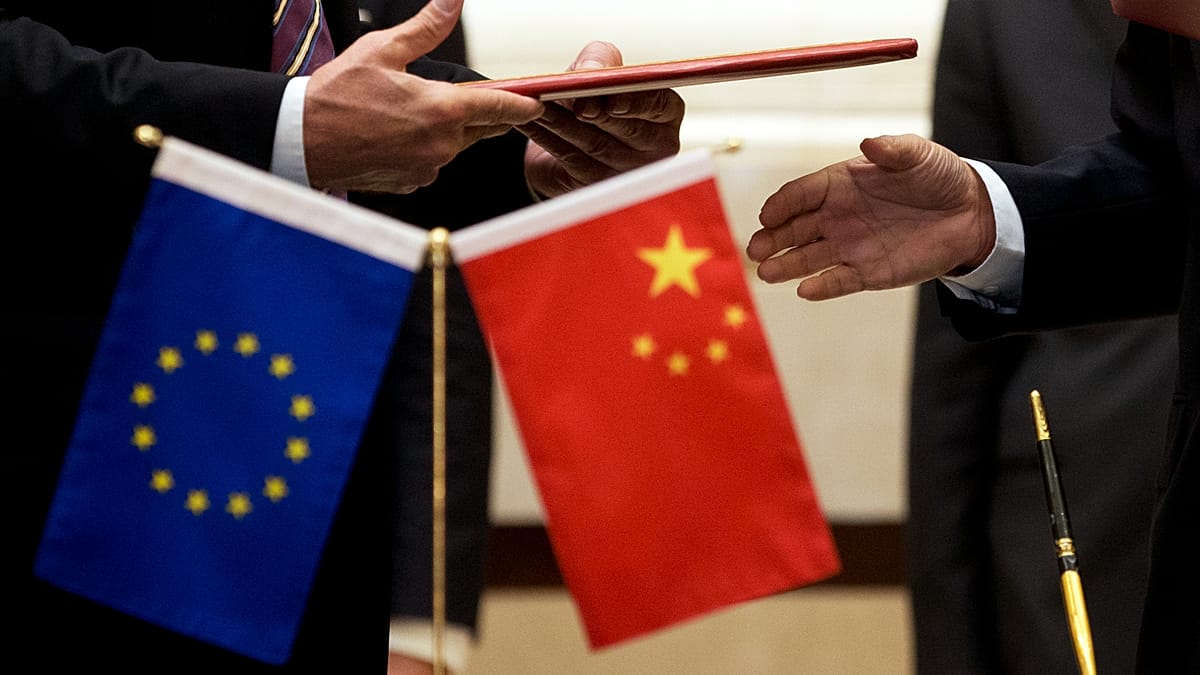
After two days of intensive negotiations in Beijing, EU Trade Commissioner Maroš Šefčovič announced on Friday that the bloc and China have reached a shared understanding on a range of trade issues, most notably a commitment to moderate Chinese exports of hybrid and plug-in hybrid vehicles to the European Union. The agreement, which Šefčovič described as the conclusion of the “first phase” of talks, is intended to ease tensions that have been building for months over the growing trade imbalance between the two economies.
The deal comes as EU leaders prepare to meet in Brussels next week, where they are expected to review the details and consider whether stronger measures are needed to protect European industry. The European Commission has been leading the negotiations on behalf of the member states since last June, and there is mounting pressure from capitals for concrete results.
A step toward rebalancing
Speaking after the talks, Šefčovič said the understanding would cut China's exports of hybrids and plug-in hybrids to the EU by more than half. “We have reached a shared understanding to moderate China's export of hybrids and plug-in hybrids to the European Union,” he said. “This opens up the prospect of cutting China's exports by more than half.”
The commissioner also highlighted improvements in market access for European products, ranging from car parts to olive oil and footwear. These exports are currently worth nearly €4 billion, and the deal is expected to generate at least €225 million in duty savings for EU businesses.
Market access has been a central sticking point since negotiations began. Beijing has been reluctant to give up its access to the EU's 450-million-consumer market, which serves as an outlet for its excess manufacturing capacity. Brussels, meanwhile, has pushed for reciprocal openings and has floated retaliatory measures if the outcome falls short of expectations.
Rare earths and strategic dependencies
Beyond vehicles, the agreement also addresses a critical vulnerability for Europe: rare earths. Šefčovič said China had agreed to facilitate export licensing for rare earths and permanent magnets, which are essential to the EU's green technology, defence, and automotive sectors. The EU has previously accused Beijing of “weaponising” its dominance in this area, particularly after China restricted exports in 2025 amid its trade war with the United States.
This aspect of the deal is likely to be welcomed in European capitals, where concerns about strategic dependencies have grown in recent years. The European Commission has been working on a Critical Raw Materials Act to diversify supply chains, but China remains the dominant supplier of many key minerals.
Growing consensus for tougher stance
The deal arrives against a backdrop of increasing unanimity among EU member states on the need for a firmer line with Beijing. All EU countries now run trade deficits with China, and the bloc faces a record daily deficit of €1 billion. On Monday, Germany and France jointly urged the European Commission to take strong action against unfair Chinese trade practices, suggesting measures that could include “an immediate cut-off from the internal market if needed.”
On Wednesday, the European Parliament overwhelmingly adopted a resolution calling for resolute measures against China, reflecting a broader shift in sentiment across the continent. The parliament's tougher stance signals that lawmakers are prepared to back more assertive policies.
Šefčovič's trip to Beijing was closely watched, not least because of the wider geopolitical context. The EU is navigating a complex relationship with China, balancing economic interests with security concerns and transatlantic alliances. The warnings from Washington about Europe's need to wake up to the challenges posed by China have added urgency to the discussions.
While the preliminary deal is a positive signal, many questions remain. The details of how the export moderation will be implemented and monitored are still to be worked out. And the broader goal of a fundamental rebalancing in EU-China trade relations is far from achieved. As Šefčovič himself noted, this is only the first phase.
European leaders will have the opportunity to assess the agreement at next week's summit in Brussels. Expectations are high, and the pressure is on to deliver tangible benefits for European workers and businesses. The outcome of these negotiations will shape not only the EU's economic relationship with China but also its strategic position in a rapidly changing global order.