Gaza will require more than $71 billion (€60.3 billion) over the next decade to recover from the devastation wrought by two years of war, according to a joint assessment published Monday by the European Union and the United Nations.
The Gaza Rapid Damage and Needs Assessment (RDNA), developed in coordination with the World Bank, warns that the conflict has caused “unprecedented loss of life and a catastrophic humanitarian crisis.” The report estimates total recovery and reconstruction needs at approximately $71.4 billion.
Massive Infrastructure and Social Losses
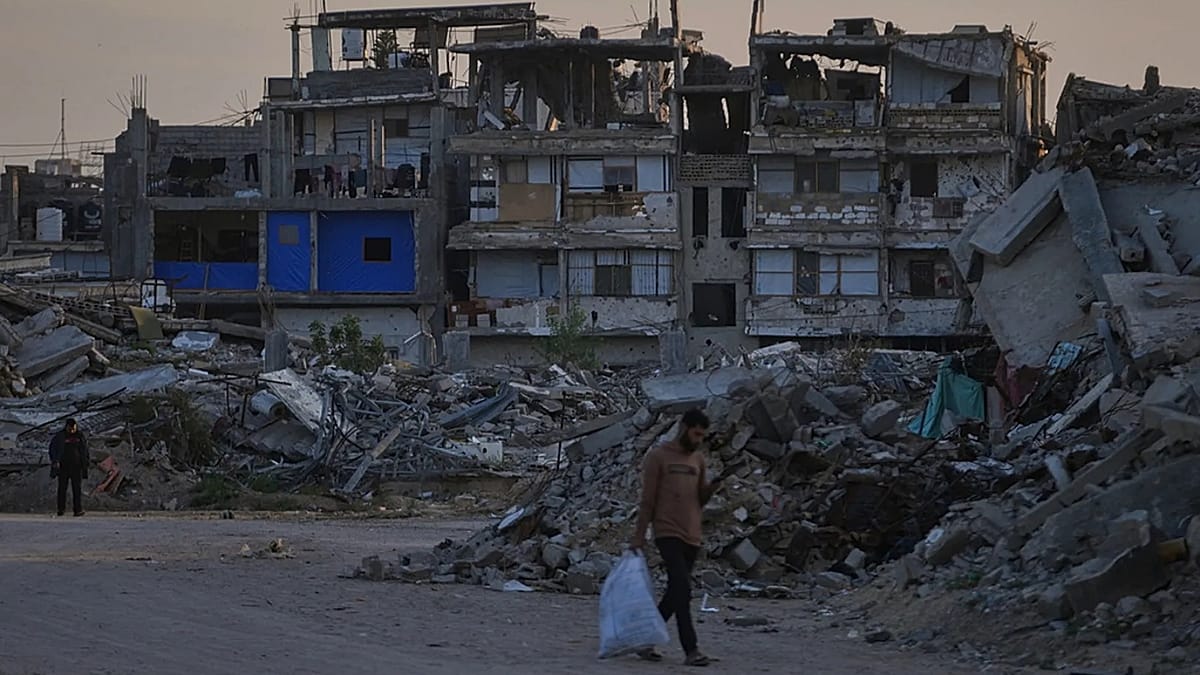
Physical infrastructure damages are pegged at $35.2 billion, while economic and social losses amount to $22.7 billion. In the first 18 months alone, $26.3 billion would be required to restore essential services, rebuild critical infrastructure, and support economic recovery.
The assessment details the scale of destruction: 371,888 housing units have been destroyed or damaged, over half of Gaza’s hospitals are non-functional, and nearly all schools have been reduced to rubble. Some 1.9 million people—almost the entire population—have been displaced, often multiple times, and more than 60% have lost their homes.
Gaza’s economy has contracted by 84%, and the report states that human development has been set back by 77 years, with severe impacts on living conditions, livelihoods, food security, gender equality, and social inclusion.
Ceasefire and Political Context
The conflict began with the Hamas-led attack on southern Israel on 7 October 2023, which killed 1,221 people, mostly civilians, according to Israeli figures. Militants also took 251 hostages. Israel’s subsequent military campaign has killed more than 72,000 people in Gaza, mostly civilians, according to the Hamas-run health ministry, whose figures the UN considers reliable.
A fragile ceasefire was agreed last October. The EU and UN stress that recovery efforts must run in parallel with humanitarian action, ensuring a transition from emergency relief to large-scale reconstruction. They insist the process must be “Palestinian-led” and support the transfer of governance to the Palestinian Authority, in line with UN Security Council resolution 2803, which also welcomed the creation of a board to oversee reconstruction.
The report identifies enabling conditions for effective implementation: a sustained ceasefire, unimpeded humanitarian access, immediate restoration of essential services, and free movement of people and goods within Gaza and between Gaza and the West Bank.
This assessment comes as the EU continues to grapple with other major financial commitments, including a €90 billion loan for Ukraine and new sanctions against Russia. The scale of Gaza’s needs underscores the bloc’s expanding role in post-conflict reconstruction across its neighbourhood.