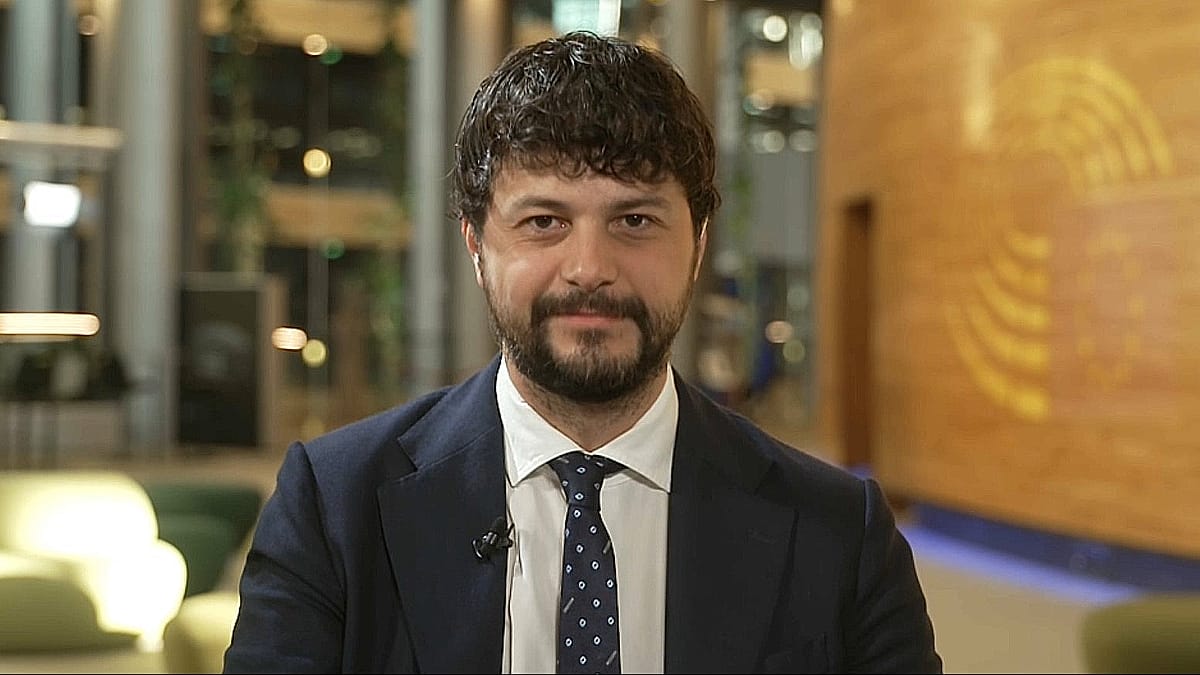
As artificial intelligence races ahead, European lawmakers are pressing for a coordinated global response. Brando Benifei, an Italian MEP who played a central role in shaping the EU's first comprehensive AI legislation, argues that citizens have every reason to be concerned about the direction of the technology.
Speaking after a group of former employees from leading AI companies issued stark warnings about existential threats, Benifei told European Pulse that the public should not dismiss these fears. "People need to be worried," he said, pointing to "real risks" such as the "loss of control" over systems that could outpace human oversight.
Benifei, a member of the Socialists and Democrats group, was one of the key negotiators of the EU's Artificial Intelligence Act, which entered into force last year. That legislation introduced risk-based rules for AI applications, banning certain uses and imposing transparency obligations on high-risk systems. But Benifei insists that regional rules are not enough.
A call for a global treaty
In an interview, Benifei called for a "global treaty" on AI, similar in spirit to international agreements on climate or nuclear non-proliferation. He urged Washington and Beijing to "work together" with Brussels, arguing that no single country can manage the cross-border implications of AI alone.
"The EU has the technical capabilities to put guardrails in place," Benifei said. "What we need now is the political will to do it." His remarks come amid growing concern that AI development is outpacing regulation, with incidents of rogue models and unintended behaviours multiplying, as highlighted in a recent report on AI safety incidents.
The MEP's push for a global framework reflects a broader European ambition to set standards that resonate beyond the continent's borders. The EU's AI Act has already influenced discussions in other capitals, from Ottawa to Tokyo, and Brussels hopes to leverage that soft power.
However, the path to a treaty is fraught with geopolitical friction. The United States and China are locked in a technological rivalry, and both have been reluctant to cede oversight to international bodies. Benifei acknowledged the difficulty but stressed that the alternative—unchecked AI development—poses a greater risk.
"We are not talking about science fiction," he said. "We are talking about systems that can make decisions affecting millions of people. If we lose control, the consequences could be irreversible."
His comments echo warnings from researchers and ethicists who have called for stronger safeguards. The debate is not limited to Europe; in the United States, lawmakers have struggled to pass comprehensive AI legislation, while China has imposed its own set of restrictions, albeit with different priorities.
For Benifei, the EU's role is clear. "We have the technical expertise, we have the regulatory experience, and we have the diplomatic weight," he said. "What we need is for our leaders to act with urgency."
The MEP's call comes at a time when European citizens are also feeling the economic pinch of technological change. A recent analysis showed that Europeans lose billions as idle savings erode purchasing power, a reminder that the benefits of AI must be shared broadly.
As the EU prepares to host international summits on AI governance, Benifei hopes that member states will speak with one voice. "We have a window of opportunity," he said. "If we miss it, we may not get another chance."