The European Commission has unveiled a long-anticipated overhaul of the bloc's Emissions Trading System (ETS), proposing that from 2029, international flights arriving in Europe from airports within 5,000 km must pay for their CO₂ emissions. The plan, announced on Friday, targets routes such as Frankfurt–Dubai and Frankfurt–Istanbul, while longer sectors like Frankfurt–Tokyo and flights from the United States and China remain exempt.
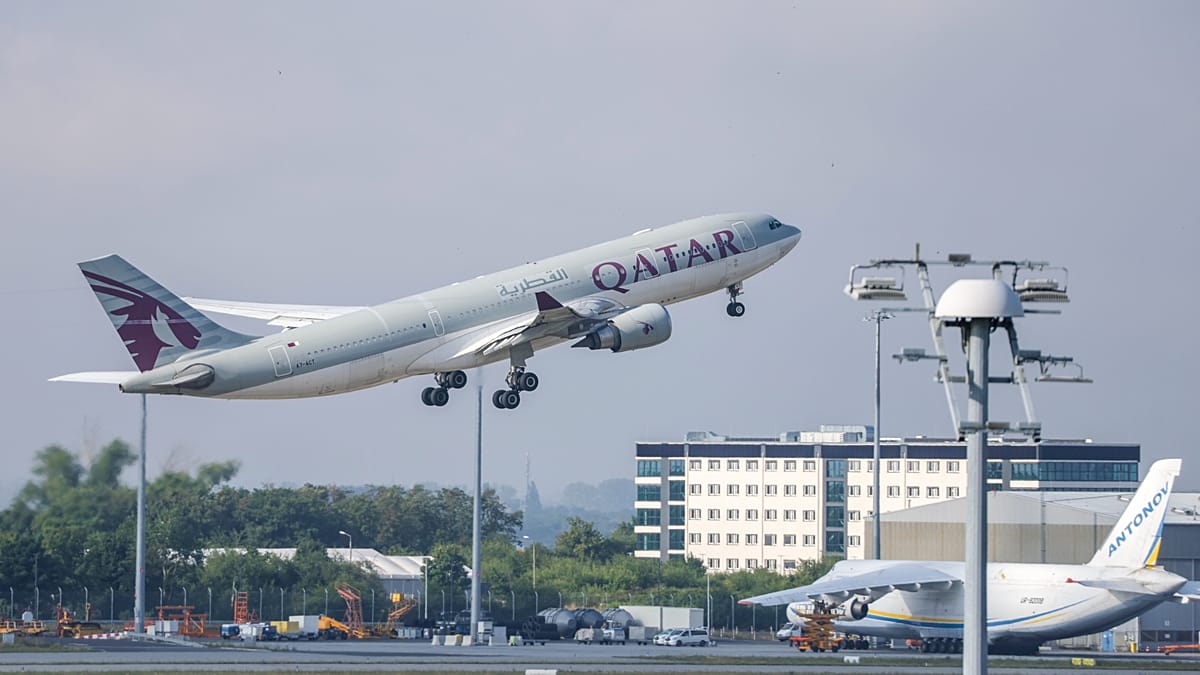
Exemptions for domestic services to the EU's outermost regions, including connections between mainland Spain and the Canary Islands, will continue until the end of 2035. Commission officials argue the approach will create a fairer competitive environment for European carriers by reducing advantages enjoyed by rival hub airports outside the EU, particularly in the Gulf region.
Addressing Aviation's Rising Emissions
Climate Commissioner Hopke Woekstra told reporters: "Aviation is the only major sector where emissions are going up rather than down. At the same time, the EU faces a level playing field issue: currently ETS only covers the EEA and quite a few countries, particularly in the Gulf, subsidise their airlines." He added that private jets departing and landing within the EEA will also be covered, asking why a family flying to Benidorm once a year should pay ETS while a private jet user making twenty trips annually to luxury locations remains uncovered.
The revised ETS is part of Brussels' legal obligation to consider expanding carbon pricing beyond intra-European flights, as global efforts to curb aviation emissions through the International Civil Aviation Organization's (ICAO) CORSIA offsetting scheme have so far fallen short. The current ETS covers flights within the European Economic Area since 2012, while international aviation largely falls under CORSIA.
If the international framework is deemed insufficient to deliver meaningful emissions reductions by 2032, the Commission must propose extending the ETS to all departing international flights from Europe, rather than only those within 5,000 km. EU officials acknowledged this would be politically difficult but stressed legal obligations leave little room to maintain the status quo.
"We don't believe we can achieve our decarbonisation goals without ETS," an EU official said, while emphasising that carbon pricing must operate alongside regulation, sustainable aviation fuel (SAF) mandates and investment support.
Funding Sustainable Aviation Fuels
Existing ETS revenues already help fund SAF uptake through a dedicated allocation of emissions allowances, and officials said this support could be increased under the revised proposal. Current rules require 2% SAF in 2025—a target that has largely failed—scaling to 70% by 2050.
Despite growing political pressure from some EU countries and industrial sectors to soften the ETS in the name of competitiveness, Commission officials rejected suggestions that the carbon market was being fundamentally weakened. They argued the post-2030 reforms are intended to preserve investment certainty while aligning the ETS with the EU's legally binding 2040 climate target, under which emissions are to fall by 90%.
Free Allowances Tied to Decarbonisation Plans
The Commission has proposed retaining free emissions allowances beyond 2030 but making them conditional on companies investing in decarbonisation—one of the biggest changes to the ETS since its creation in 2005. Under the proposal, industrial companies would receive 80% of their free allowances after publishing a board-approved decarbonisation investment plan, with the remaining 20% released only after investments and emissions reductions have been delivered.
"Eighty percent of the free allowances will be given to companies on an annual basis after publication by these companies of their plan for decarbonisation investment," a Commission official explained. "We will withhold 20 percent of the free allowances, which will be given after the implementation and publication of the investments and emission reductions."
Commission officials said the reform transforms free allocation from carbon leakage protection into what they described as "investment allowances", designed to keep manufacturing and clean technology investment in Europe. The broader context includes rising energy costs across the continent, as seen in Portugal Fuel Prices Surge as Middle East Tensions Drive Up Costs, and ongoing debates about the EU's market restrictions and their global implications, such as those discussed in Top MEP Warns EU Market Restrictions Could Destabilize China's Economy.
The proposal now enters negotiations between the European Parliament and member states, with final adoption expected in the coming months. The outcome will shape the future of aviation carbon pricing in Europe and influence global efforts to decarbonise air travel.