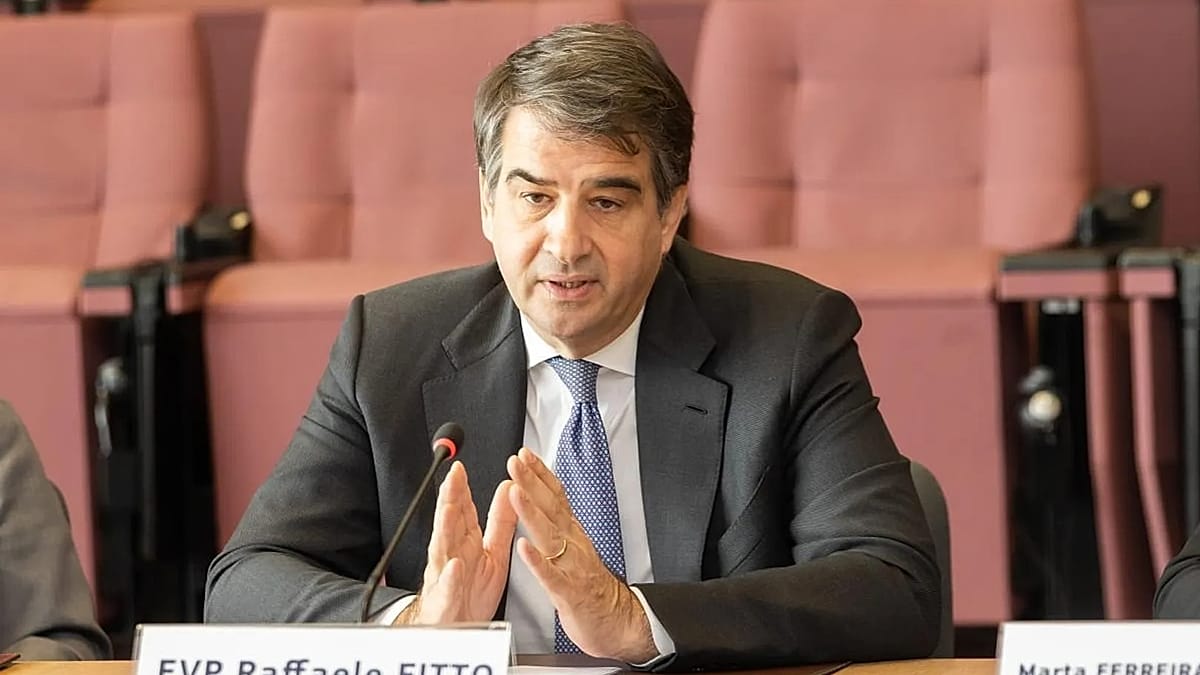
European Commissioner for Cohesion and Reforms Raffaele Fitto has proposed that unspent EU cohesion funds—worth up to €160 billion—could be redirected to help member states cope with soaring energy prices. In a letter sent to EU ministers on Thursday, Fitto argued that the bloc's regional development money, originally intended to reduce territorial disparities, should be deployed to cushion the economic shock caused by the war in Iran and the resulting disruption of Gulf supply routes.
“It is critical to ensure these readily available EU funds are fully deployed in time to benefit the regions and communities that need them most, particularly in the context of the current energy price developments,” Fitto wrote. The letter, seen by Euronews, explicitly notes that member states and regions can already channel funding toward energy-related investments, for instance by scaling up support for households and businesses or by reducing energy consumption.
Meloni's Push for Fiscal Flexibility
Fitto's initiative echoes a recent appeal by Italian Prime Minister Giorgia Meloni, who sent a letter to European Commission President Ursula von der Leyen last week urging that energy security be treated as a strategic European priority. Meloni called for the same fiscal flexibility that was recently extended to defence spending to be applied to energy investments. Fitto, a member of Meloni's right-wing Brothers of Italy party, serves as the Commission's Executive Vice-President for Cohesion and Reforms.
As part of the mid-term review of EU cohesion policy, Fitto drove through amendments that allow member states and regions to redirect funds toward emerging challenges such as defence, decarbonisation, and affordable housing. In March, the European Commission reported that just under €35 billion in cohesion money had already been repurposed, with Poland alone reallocating more than €6 billion to defence.
Now, Fitto is suggesting a similar approach could be used to mitigate the energy crisis—a threat that is particularly acute for energy-intensive economies with strong industrial bases, such as Italy and Germany. The letter states that “cohesion policy funds have thus demonstrated their capacity to intervene in support of EU strategic priorities, including for energy.”
Available Funds and Constraints
The EU cohesion budget for the 2021–2027 period totals €392 billion. According to Commission data, around €355 billion had been allocated to specific projects by the end of March, of which €100 billion had already been spent. That leaves roughly €160 billion potentially available for reallocation, though the actual figure is likely lower because governments and regions may have already issued tenders for public projects.
Nevertheless, the volume of unspent cohesion money remains significant, largely due to delays in finalising programmes and because EU countries have prioritised spending from the post-pandemic recovery fund, which carried tighter deadlines. Following Meloni's letter, European Commissioner for Economy Valdis Dombrovskis said the Commission is “currently looking at the policies, including fiscal policy options, to best address the crisis, including the use of existing flexibilities within our framework.”
The energy crisis has been exacerbated by the ongoing conflict in Iran, which has disrupted shipping through the Strait of Hormuz, a critical chokepoint for global oil and gas supplies. The International Energy Agency has warned that the situation poses the greatest energy security threat in modern history, and has cautioned the EU against easing sanctions on Russian energy as a stopgap measure.
For countries like Italy and Germany, which rely heavily on imported energy for their manufacturing sectors, the price spikes have already led to factory shutdowns and rising inflation. The redirection of cohesion funds could provide a lifeline, but critics argue that it may divert resources from long-term development goals in poorer regions. Fitto's proposal is likely to be debated at the next meeting of EU finance ministers.