The European Commission is preparing a set of proposals to overhaul the EU enlargement process, aiming to reclaim the initiative in a debate that has increasingly been driven by member states, three EU officials have told European Pulse.
Enlargement has surged to the top of the EU agenda as Montenegro approaches the final stages of accession talks, potentially becoming the bloc's 28th member. In recent weeks, several member states have circulated position papers outlining their own ideas for reforming how new countries join the Union.
Five of the six founding EU members — France, Germany, Italy, Belgium, the Netherlands, and Luxembourg — have proposed strengthening existing safeguards to prevent democratic backsliding and rule-of-law breaches after accession, drawing lessons from Hungary under Viktor Orbán. Germany and France have separately floated concepts for gradual integration, allowing candidate countries to experience early benefits of membership before full accession. German Chancellor Friedrich Merz has even proposed an "associate membership" status to extend security guarantees to Ukraine.
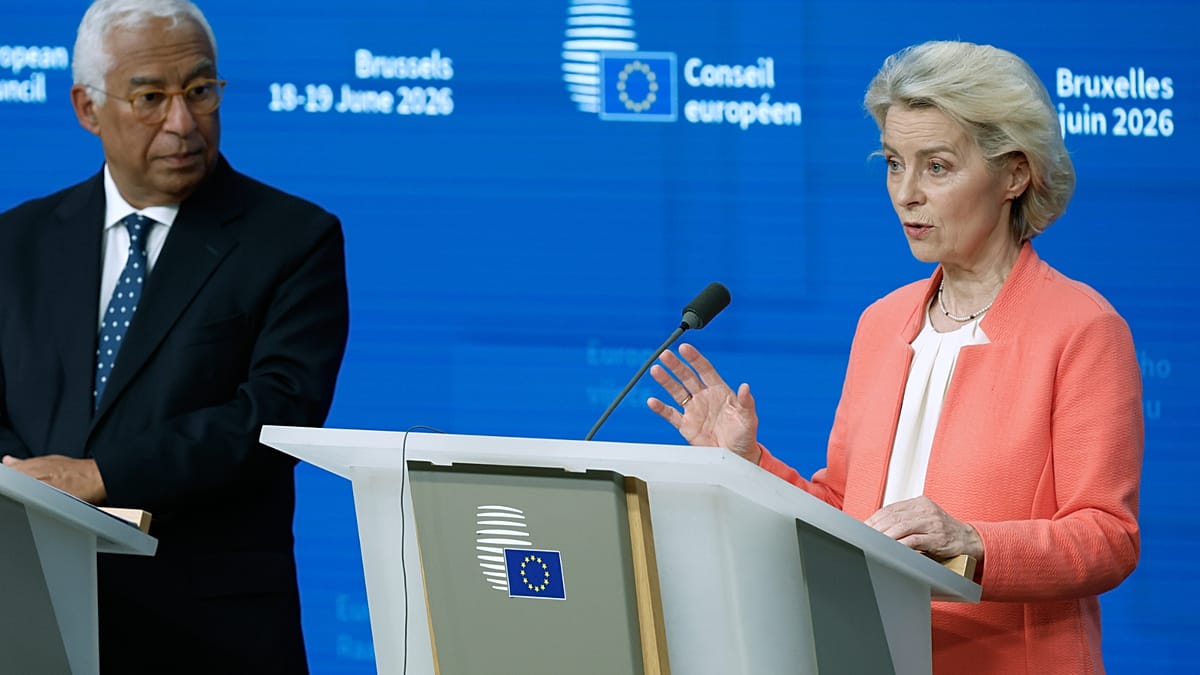
EU leaders are expected to hold a strategic debate on enlargement reform at their October summit, following a tour of all 27 capitals by European Council President António Costa. Ahead of that meeting, the Commission is crafting its own proposals to regain control — or at least avoid being sidelined entirely.
"We saw contributions on the topic from several member states. The Commission is also working on this matter. We are looking forward to the upcoming strategic discussion on enlargement and reforms at the EUCO meeting in October this year," a Commission spokesperson told European Pulse.
Broader reform plans remain sensitive
The scope of the Commission's proposals is still being debated at the highest political level within the EU executive. Since early 2024, the Commission has been expected to present its pre-enlargement policy reviews — a comprehensive assessment of how a Union of 30 or more members would function in terms of budget, decision-making, and internal workings. However, those reviews were quietly shelved after Ukraine's accession bid complicated the picture, and the exercise remains politically sensitive as it touches on the distribution of power and money among member states.
"When it comes to the pre-enlargement policy reviews, we can add that we are working diligently to finalise the communication as soon as possible, with the ultimate goal of ensuring its highest quality," the Commission representative said.
As the debate gains momentum, it remains unclear how much appetite exists for such a broad discussion, which would inevitably require treaty changes. The timing is particularly delicate ahead of next year's French presidential election, where the hard-right National Rally candidate Jordan Bardella — a front-runner — has categorically opposed Ukraine's EU accession in recent television interviews.
While deeper reform may come later — notably to keep countries like Ukraine motivated to pursue internal reforms while seeing early benefits — the discussion on stronger safeguards for new members is already under way.
Enhancing safeguards to protect the rule of law
The Commission's proposals are expected to advance the debate on safeguards designed to prevent democratic backsliding by new member states once the accession process concludes. "We are reflecting on how safeguards within future accession treaties could be devised. The objective is simple: ensure commitments made during negotiations, particularly those linked to the 'fundamentals', are upheld also after accession," the Commission spokesperson added.
The intent is to avoid placing the entire burden of this discussion on Montenegro, the frontrunner candidate. As drafting of Montenegro's accession treaty began a few weeks ago, the country risks becoming the testing ground for future entries. "If you do this with Montenegro, it might look like they are getting punished because they performed well," an EU official with direct knowledge of the matter told European Pulse. "The burden cannot be all on Montenegro; it needs to be a fair process."
How other member states will receive the Commission's move remains uncertain. Some capitals may welcome the initiative; others may view it as a power grab. "There are many ideas floating, but they are just ideas. Some are even unclear. There is no consensus," said a second EU official with direct knowledge of the discussions.
Safeguards are not new to EU enlargement. The Commission had already signalled its intent to introduce stronger guardrails before Orbán was ousted from power in April. In its 2025 annual review of the enlargement process, the Commission wrote: "Future accession treaties will need to contain stronger safeguards against backsliding on commitments taken in the accession negotiations, as well as requirements for the new member states to continue to safeguard and make irreversible their track-record on rule of law."
In designing these safeguards, Brussels will naturally look at past experiences, starting with Croatia's accession treaty in 2013. When Zagreb joined, a new monitoring mechanism required the Commission to closely monitor all commitments undertaken by Croatia, focusing on justice and fundamental rights, including the independence and efficiency of the judiciary, the handling of war crimes cases, the protection of minorities, and refugee-related issues.
The Commission's proposals are expected to build on that model, but with stronger teeth. As the debate intensifies, the outcome will shape not only Montenegro's path to membership but also the future of EU enlargement for countries like Ukraine, Moldova, and the Western Balkans.