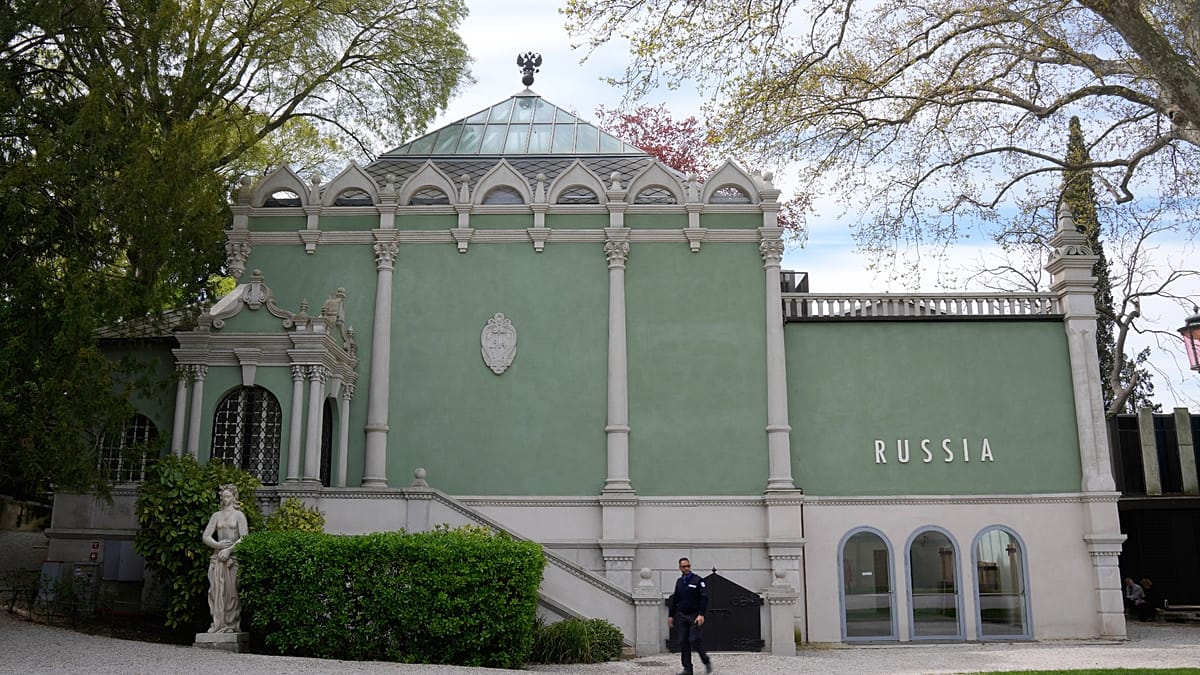
The European Commission has formally confirmed the withdrawal of a €2 million grant previously allocated to the Venice Biennale for the 2025-2028 cycle. The decision, announced by European Commissioner for Democracy Henna Virkkunen, stems from the Biennale's decision to reopen the Russian pavilion during this year's edition, despite ongoing European sanctions against Moscow following its full-scale invasion of Ukraine.
In a post on X, Virkkunen stated that EU-funded culture must “promote and safeguard democratic values” and that such values “are not respected in Russia today.” The Commission had launched a review process in April after Biennale Foundation President Pietrangelo Buttafuoco confirmed the pavilion's reopening, which had remained closed during the 2022 and 2024 editions as a direct consequence of the war.
Commission's Assessment and Biennale's Response
The Commission gave the Biennale Foundation thirty days to either reverse its decision or provide compelling arguments to halt the revocation. After receiving what it deemed insufficient explanations, the Commission escalated the matter, requesting further clarifications on the nature of Russia's participation. The Foundation pressed ahead, though the pavilion operated in a limited capacity, failing to secure permits for public events.
The final decision is a non-binding recommendation to the European Education and Culture Executive Agency (EACEA), which had already signaled its support for the funding cut. The EACEA is expected to formalize the withdrawal.
This move aligns with broader EU efforts to isolate Russia culturally and economically. The bloc has imposed multiple sanctions packages since February 2022, targeting sectors from energy to finance. The cultural dimension remains sensitive, as European institutions grapple with balancing artistic freedom against geopolitical realities. The Biennale's decision also comes amid heightened security concerns across Europe, including recent Russian missile and drone strikes on Kyiv that injured civilians.
Political Fallout in Italy
The Commission's decision has provoked sharp criticism in Italy, particularly from the League, the right-wing party led by Deputy Prime Minister Matteo Salvini. In a statement, the League accused Brussels of overreach, declaring: “The Biennale is history, culture, art, innovation and freedom. If some Brussels bureaucrat fails to understand that, we will live with it. Culture does not bow to Brussels diktats.” The party has announced it will ask Prime Minister Giorgia Meloni's government—of which it is a coalition member—to compensate the Biennale for the lost funding.
Russian gallerist Marat Gelman also weighed in, openly accusing Italy of being the weak link in Europe's response to Russian aggression. The controversy echoes earlier tensions, such as Italy's expulsion of two Russian diplomats over espionage, which Foreign Minister Antonio Tajani condemned as part of a broader pattern of hybrid warfare.
The Biennale's decision to host the Russian pavilion, even in a reduced form, has reignited debates about the role of cultural institutions in times of conflict. Critics argue that allowing Russia a platform undermines EU solidarity, while supporters contend that art should remain separate from politics. The Commission's funding withdrawal is a clear signal that, in its view, cultural events funded by European taxpayers must align with the bloc's democratic principles.
As the EACEA moves to finalize the grant revocation, the Biennale Foundation faces a financial shortfall that may affect future programming. The League's pledge to seek government compensation adds a layer of domestic political tension, testing the cohesion of Meloni's coalition. Meanwhile, the broader European cultural sector watches closely, aware that this decision could set a precedent for how EU funds are tied to geopolitical stances.