Rail travel across the European Union reached an all-time high in 2024, with citizens taking 8.7 billion trips totalling 444.5 billion passenger-kilometres, according to the latest Eurostat figures. The data underscores a continental shift toward rail, even as network density and connectivity remain uneven across member states.
Germany and France were the largest contributors to rail passenger transport performance, recording 109.1 billion and 107.3 billion passenger-kilometres respectively. Italy followed with 55.9 billion. At the other end of the spectrum, six EU countries logged fewer than 1 billion passenger-kilometres, with Lithuania and Estonia each at just 0.4 billion.
Domestic travel dominates overwhelmingly: in 25 of the 27 member states, national journeys accounted for more than 90% of total rail passenger transport. The exceptions were Luxembourg, where domestic travel made up 63.5%, and Czechia at 82.1% — reflecting their high levels of cross-border commuting and international connections.
Network density and infrastructure gaps
The EU boasts one of the densest railway networks globally, according to the European Council. Yet Eurostat data reveals that the total length of the network shrank by 7.9% between 1990 and 2024. Spain bucked the trend with a 12.2% increase, driven largely by the construction of dedicated high-speed lines.
The highest railway network densities are found in central and northern Europe, correlating with dense populations and heavy freight volumes. Conversely, peripheral regions show sparse coverage: Greece, with its many islands, has the lowest density, followed by the Nordic countries, the Baltics, the Iberian Peninsula, and Ireland.
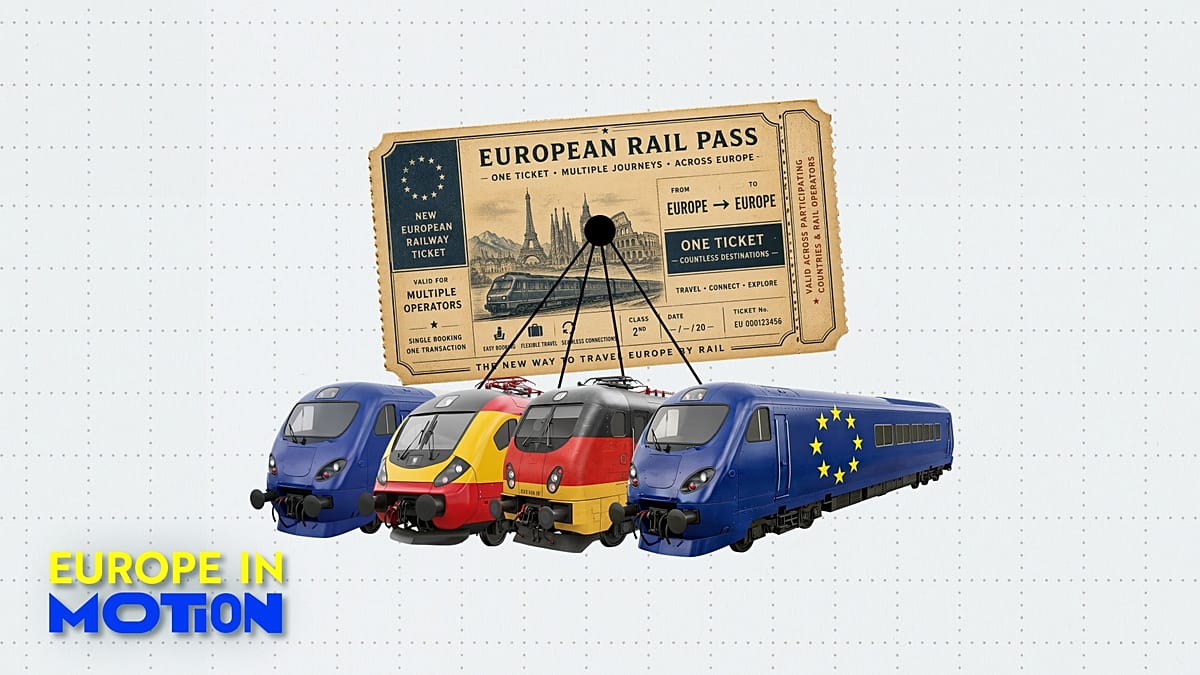
These disparities matter as the European Commission rolls out a new passenger package designed to simplify cross-border rail travel. The initiative will allow travellers to book single tickets covering multiple operators in one transaction, and strengthens passenger rights — including protection if a connection is missed, even when different railway companies run the services.
The move comes amid a broader revival of interest in rail, partly driven by environmental concerns and rising fuel costs. For many Europeans, the ability to seamlessly cross borders by train remains a practical challenge, despite the continent's dense network. The new rules aim to make rail a more viable alternative to air travel for medium-distance journeys.
As short-haul summer travel surges across Europe, the Commission's package could help shift more passengers onto trains. Meanwhile, initiatives like Italy's ancient walking routes highlight a growing appetite for slower, more sustainable travel options.
For now, the data makes clear that while rail is booming, its benefits are not evenly distributed. The challenge for Brussels and national governments will be to ensure that the continent's rail revival reaches all corners of Europe — not just its core.