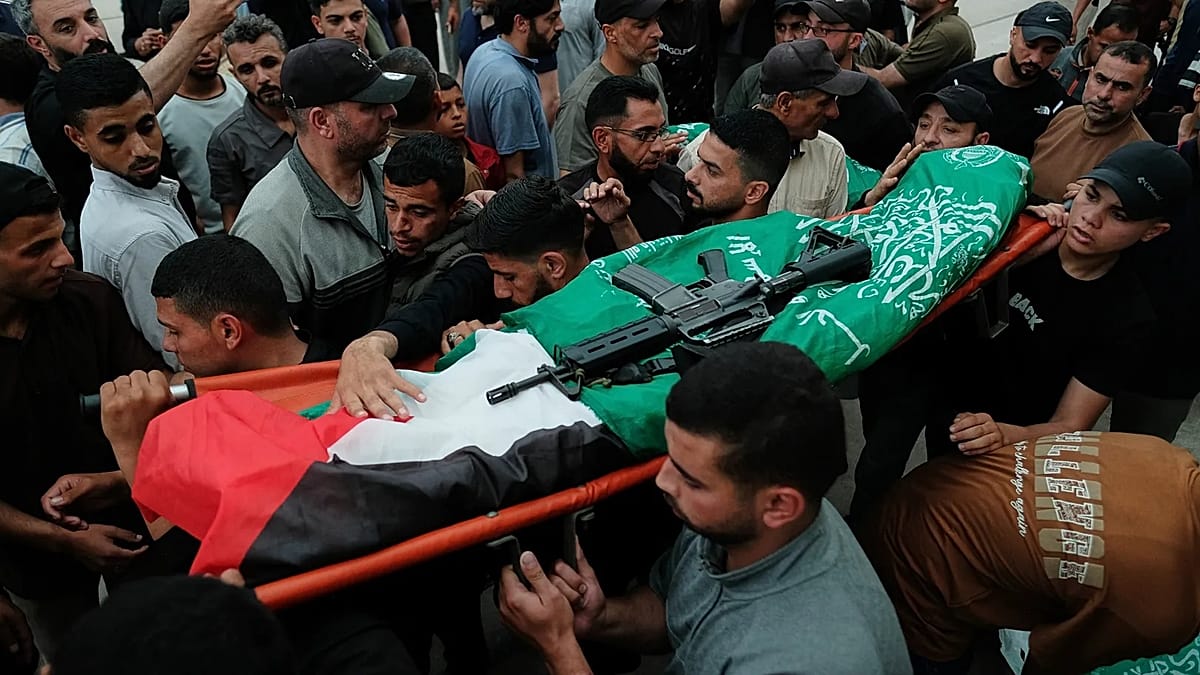
The European Union has broadened its sanctions regime against the militant groups Hamas and Palestinian Islamic Jihad, now targeting members of Hamas's political leadership. On Friday, the Council of the EU added ten individuals from the Hamas Politburo to its list of designated persons, subjecting them to an asset freeze and a travel ban across member states.
Those listed include prominent figures such as Khaled Mashal, Moussa Abu Marzouk, and Khalil Al-Hayya, among others. The EU stated that these individuals, as decision-makers within the organization, are directly involved in planning, preparing, and executing violent actions. The bloc's press release emphasized that they actively defend and justify such actions, often publicly threatening future attacks.
This move aligns with the EU's broader strategy to pressure Hamas, which it designates as a terrorist organization. The bloc reiterated its commitment to achieving a lasting peace in Gaza, devastated by the conflict following Hamas's October 2023 attacks. A key condition for progress, the EU noted, is the disarmament of Hamas.
Parallel Sanctions on Israeli Settlers
In a related development, the Council also announced sanctions against four entities and three individuals described as extremist Israeli settlers and their supporters. These measures target those responsible for serious human rights abuses against Palestinians in the West Bank, including violations of physical integrity, property rights, and freedom of religion.
The EU's actions come amid heightened tensions in the region. Earlier this week, Israel confirmed it had killed Mohammed Odeh, the new head of Hamas's military wing, the Al-Qassam Brigades. Odeh had taken over after the death of his predecessor Izz al-Din al-Haddad earlier this month.
The sanctions on Hamas Politburo members are part of a broader EU effort to address security threats. For context, the bloc has also been navigating complex sanctions policies elsewhere, such as the IEA's warning against easing Russian energy sanctions amid the Hormuz crisis. Additionally, the EU's stance on Israel-related issues has seen internal debates, as highlighted by Italy's call for sanctions on an Israeli minister over flotilla treatment.
The EU's decision underscores its role as a key actor in Middle East diplomacy, balancing security concerns with human rights obligations. As the conflict continues, the bloc's sanctions aim to pressure both militant groups and extremist settlers, seeking to de-escalate violence and pave the way for negotiations.