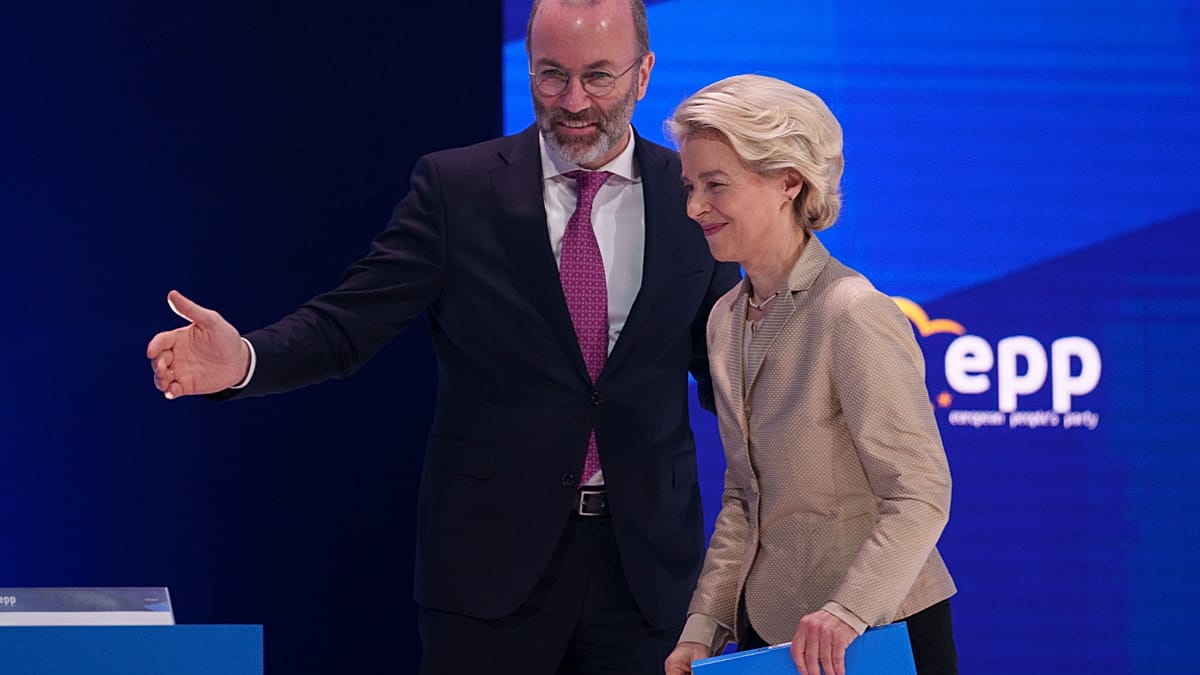
The European Union is on course for a trade confrontation with China unless both sides strike an agreement by October to address the bloc's widening trade deficit, according to Manfred Weber, chairman of the European People's Party (EPP). In an exclusive interview with Euronews, Weber said the EU must fundamentally change its approach to Beijing, warning that without a deal, the relationship would enter a "phase of conflict."
Weber, a German MEP from the CDU—the same party as Commission President Ursula von der Leyen and Chancellor Friedrich Merz—leads the largest group in the European Parliament. His comments come as EU trade chief Maroš Šefčovič confirmed on Monday that Brussels aims to reach an agreement with China by October to tackle trade imbalances, amid growing fears that Chinese industrial overcapacity is undercutting European manufacturers.
October Deadline to Fix 'Unsustainable' Deficit
The EU is walking a tightrope between avoiding a full-blown trade war and adopting a more defensive trade policy to protect its single market. European leaders have asked von der Leyen to review the bloc's trade defence instruments and consider new ones, though at their May summit they stopped short of naming China directly, reflecting internal divisions over how to manage the relationship.
Weber stressed that Europe cannot allow Chinese subsidies to distort competition. "We need a new level playing field where we clarify that subsidies cannot be part of a free market economy," he told Euronews. The EPP chief warned that if imbalances are not addressed by October, the EU would enter a "phase of conflict" with Beijing.
Among the measures under discussion is a "diversification mechanism" aimed at encouraging EU businesses to reduce reliance on Chinese suppliers. The Commission is also weighing a "solidarity mechanism" to support member states and industries hardest hit by Chinese competition or retaliation. For European leaders, October could prove a pivotal moment.
Germany, the EU's largest economy and industrial hub, is widely seen as the decisive player in determining how far the bloc is willing to harden its stance. While Spanish Prime Minister Pedro Sánchez has argued that China should be treated as a partner, France is pushing for a stronger "European preference" across strategic industries. The outcome of these negotiations will have significant implications for European businesses and workers, particularly in sectors like electric vehicles and consumer goods.
As the EU prepares new defence tools, the stakes are high. The bloc is increasingly worried about a "China shock 2.0", with fears that Beijing's industrial overcapacity could undercut European manufacturers and threaten jobs through unfair competition. Weber's warning underscores the urgency of reaching a deal before the autumn deadline.