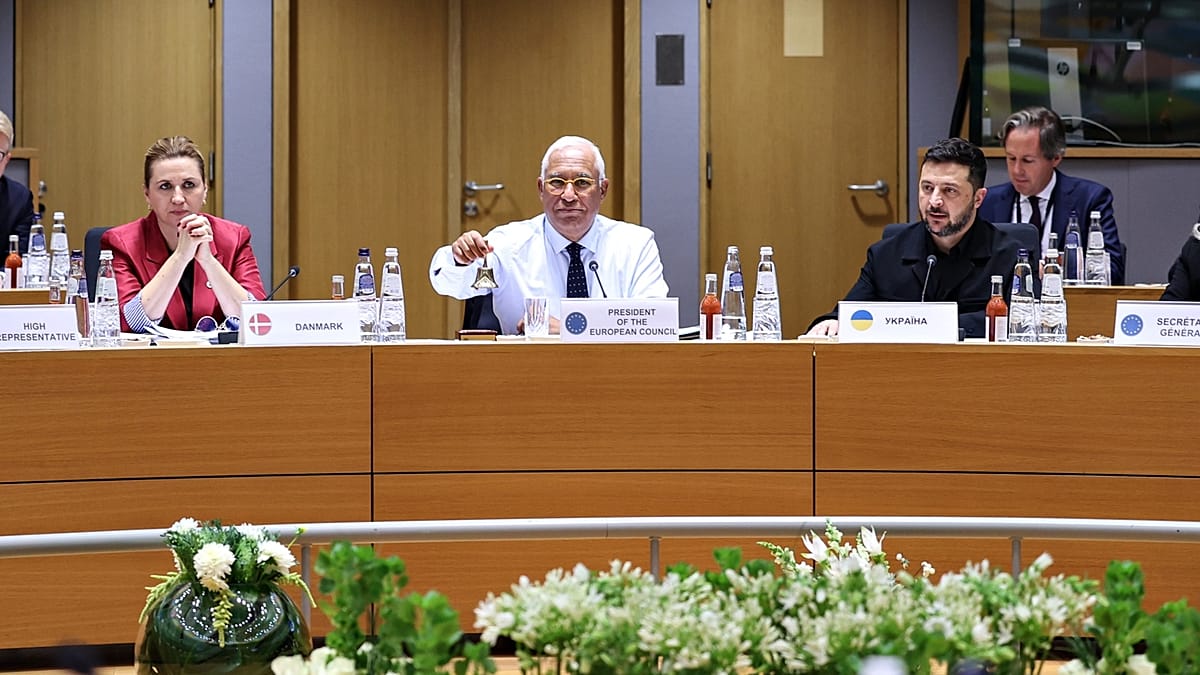
European Union leaders are preparing to discuss a more direct role in diplomatic efforts to end Russia's war in Ukraine, but they will insist on an unconditional ceasefire from Moscow before any talks can begin. According to a draft of the summit conclusions seen by Euronews and dated 1 June, the bloc is ready to 'step up' its engagement in peace negotiations—but only once Russia demonstrates genuine willingness to negotiate.
The draft, which will be debated by the 27 heads of state and government at their meeting on 18–19 June, marks the first time the EU has formally signalled a hands-on approach to the peace process. Until now, the United States has led diplomatic efforts, which have stalled in recent months.
Ceasefire as a precondition
'The European Council supports diplomatic efforts to bring the war to an end and underlines the European Union's readiness to step up its engagement in peace negotiations,' the draft states. However, it adds: 'Russia has not shown any genuine willingness regarding a fair and sustainable peace.' The text urges Moscow to 'agree to a full, unconditional and immediate ceasefire and engage in meaningful negotiations towards a just and lasting peace.'
The wording stops short of endorsing the appointment of a special EU envoy, a proposal that has gained traction among some member states. Among the names floated for such a role are European Council President António Costa, Finnish President Alexander Stubb, former Italian Prime Minister Mario Draghi, and former German Chancellor Angela Merkel. Costa, who will chair the summit, has publicly supported direct talks under the right conditions.
Yet divisions remain entrenched. Germany, Poland, the Nordic countries, and the Baltic states argue that the Kremlin's maximalist demands would render any outreach futile. High Representative Kaja Kallas has stated unequivocally that the EU cannot act as a neutral mediator. 'We can't be neutral, treating them equally, because we have been clearly on Ukraine's side,' she said after an informal meeting of foreign affairs ministers in Cyprus last week.
Instead, Kallas urged member states to agree on a common set of concessions and conditions that Russia must meet at the negotiating table. 'All our efforts have to be complementary to US efforts,' she said. 'We are not coming in instead of the United States, but we are actually addressing the issues that haven't been addressed in these talks.'
The draft also forcefully condemns Russia's recent large-scale attacks on Ukraine, including a drone strike that crashed into a residential building in Romania. Such escalatory incidents have shifted the debate within the EU about whether to break diplomatic isolation and engage directly with Moscow.
Ukrainian President Volodymyr Zelenskyy is expected to address the 27 leaders at the June summit, though it remains unclear whether he will appear in person or remotely. In a recent interview with CBS, Zelenskyy mentioned the E3 format—comprising Germany, France, and the United Kingdom—as well as the Nordic countries and Turkey as potential mediators.
The EU's cautious stance reflects a broader tension: the desire to play a more active role in ending the war, balanced against the risk of legitimising Russian aggression. As the summit approaches, the final wording of the conclusions will reveal how far the bloc is willing to go.