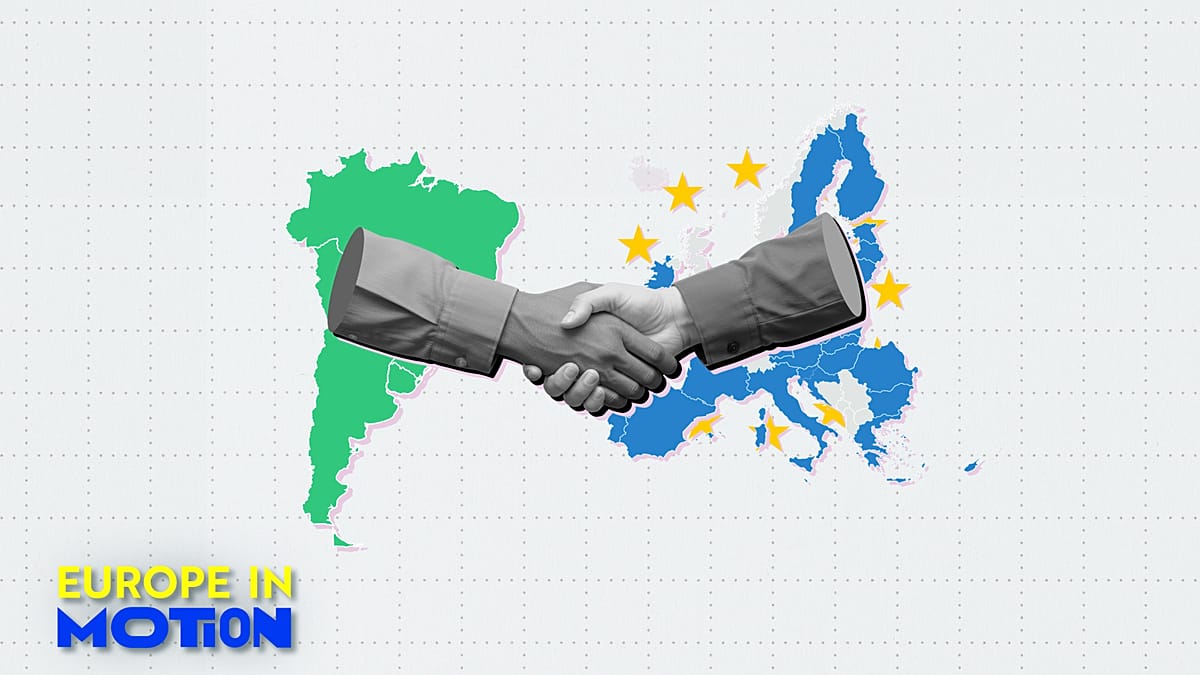
After more than two decades of negotiations, the free-trade agreement between the European Union and the Mercosur bloc—comprising Argentina, Bolivia, Brazil, Paraguay, and Uruguay—entered provisional application in early May. The deal, which connects over 700 million consumers across Europe and South America, is projected to increase EU exports to the region by 39% by 2040 and add €77.6 billion to the EU's GDP.
The EU is Mercosur's second-largest trading partner, accounting for nearly 17% of the bloc's total goods trade in 2024. In return, Mercosur ranks as the EU's tenth-largest partner. Bilateral trade in goods exceeded €111 billion last year, with more than 80% of that flow involving Brazil. Between 2014 and 2024, trade grew by over 36%, driven by a 50% surge in EU imports from Mercosur and a 25% rise in exports.
What the Deal Entails
The agreement will progressively reduce Mercosur's tariffs on European exports such as cars, machinery, chemicals, pharmaceuticals, and transport equipment. In exchange, the EU will open its markets to South American agricultural products, albeit with quotas and safeguards. Notably, the EU will allow 99,000 tonnes of beef per year at a 7.5% tariff and 180,000 tonnes of poultry at 0%, both phased in over five to six years. Limits also apply to pork, ethanol, honey, and sugar.
European Commission President Ursula von der Leyen welcomed the provisional application, stating in a social media post that it "will show the agreement's tangible benefits." The deal is seen as a strategic counterweight to rising protectionism elsewhere, particularly as the EU navigates trade tensions with the United States. The bloc has recently faced ultimatums from Washington, as President Trump set a July 4 deadline for a new trade deal, threatening higher tariffs on European goods.
Criticism and Concerns
Despite the economic promise, the deal has drawn sharp criticism from several EU member states, including France and Ireland, as well as environmental groups and farming lobbies. Critics argue that increased agricultural imports from South America could undermine European farmers, who fear being undercut by cheaper beef and poultry. There are also worries about the concentration of quota allocations, with some MEPs warning that Mercosur's agricultural heavyweights could dominate access to European markets.
Environmental concerns are equally pressing. Activists and governments warn that the deal could accelerate deforestation in the Amazon rainforest, as expanded agricultural production in Brazil and other Mercosur countries may lead to further land clearing. The EU has included sustainability clauses, but skeptics question their enforceability. The European Parliament has called for robust monitoring mechanisms to ensure that trade growth does not come at the expense of the planet.
The debate echoes broader tensions in EU trade policy, where the bloc seeks to balance economic openness with climate and social goals. As the provisional application unfolds, the real test will be whether the promised benefits materialize without exacerbating environmental degradation or harming European livelihoods.