Officials from the European Commission and fifteen EU member states convened a discreet technical meeting with a Taliban delegation in Brussels on Tuesday, aiming to expedite the deportation of Afghan migrants who lack legal status in Europe. The gathering, whose location and details were kept confidential, has drawn sharp condemnation from progressive lawmakers and civil society organizations for engaging with a regime widely accused of systematic human rights abuses.
The meeting was co-chaired by Sweden, a country with one of the largest Afghan populations per capita in the EU. It took place outside the Commission's institutional premises and was deliberately kept at a technical level, reflecting the EU's continued non-recognition of the Taliban government that seized power in Kabul in August 2021.
Focus on Criminal Offenders
A European Commission spokesperson stated that discussions centered on the return of irregular Afghan migrants "who have committed serious crimes or pose a security threat." European nations have struggled to repatriate such individuals because Afghan authorities have refused to accept them back. Swedish Migration Minister Johan Forssell told local media: "It is incredibly important that these criminals are deported. And that is not possible today. They do not want to participate. They do not want to go home." Forssell noted that roughly 200 Afghan nationals in Sweden are awaiting deportation after convictions for serious offenses, including aggravated rape and drug trafficking. Defending the engagement, he argued that his government must negotiate with dictatorships in certain situations to "protect Swedish interests."
The Commission does not maintain data on how many irregular Afghans across Europe have committed serious crimes or pose security threats. However, an invitation document seen by Euronews—whose authenticity the Commission did not confirm—referred only to the return of "Afghan nationals with no right to stay in the EU," omitting the criminal component.
Broader Deportation Strategy
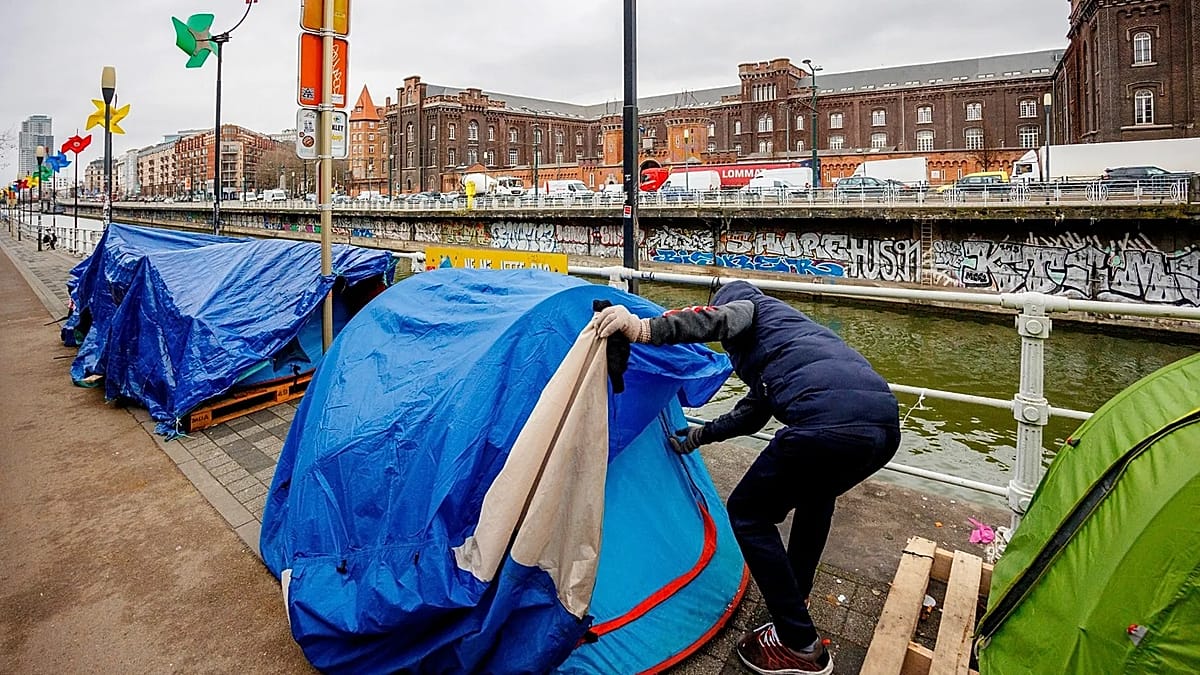
These talks are part of a wider EU strategy to increase the return rate of irregular migrants, which currently stands at 29% and has barely budged in recent years. Deportations have been particularly challenging for Afghans, who were among the top nationalities issued return orders in 2025. According to Eurostat, of the 14,270 Afghan nationals ordered to leave the bloc in the first nine months of last year, only 340 were actually repatriated—a return rate of just 2%.
Meanwhile, arrivals continue. Over 3,300 Afghans crossed EU borders irregularly in the first four months of 2026, primarily via the Eastern Mediterranean route, and more than 63,000 Afghan nationals sought asylum in the EU in 2025, accounting for 10% of all asylum applications. This represents only a fraction of the Afghan diaspora that fled after the Taliban takeover; over 90% of displaced Afghans are estimated to live in neighboring countries, particularly Iran and Pakistan.
The Commission has faced mounting pressure from EU capitals to act. In October, nineteen member states and Norway signed a letter calling for a common approach to ramp up deportations, confirming their willingness to engage directly with Kabul. Technical contacts have been ongoing for months, and Tuesday's meeting was considered a follow-up to a Commission delegation visit to Kabul in January.
Criticism and Concerns
Since the Taliban takeover, the EU has pursued a policy of "operational engagement" without recognizing the regime as Afghanistan's legitimate government. Engaging with the Taliban is a red line for many in the European Parliament and civil society, who warn that such outreach amounts to normalization of ties with a regime ranked 140th out of 142 countries in the World Justice Project's Rule of Law Index. Critics also question whether Brussels might offer financial compensation to the Taliban in exchange for accepting deportees. The Commission insists the dialogue currently falls short of any political commitments.
Socialist MEP Cecilia Strada labeled Tuesday's meeting a "shameful chapter for Europe," telling Euronews it grants legitimacy to "a regime that tramples on the rights of women and girls and imposes a system of gender apartheid." Green MEP Saskia Bricmont called it "unacceptable" to host representatives of a regime "that systematically oppresses women, suppresses all opposition, denies fundamental freedoms." In a non-binding resolution recently approved, the European Parliament urged the Commission to uphold non-recognition and non-normalization of the Taliban, deploring the decision to invite them to Brussels. A provision that would have allowed discussions with non-recognized third-country entities for readmission was also scrapped from a new migration law.
For more on EU migration policy and far-right alliances, see Jordan Bardella Courts Vlaams Belang in Brussels to Build Far-Right Alliance. The visa arrangements for the Taliban delegation are detailed in Belgium Grants Visas to Taliban Delegation for EU Migration Talks in Brussels.