The European Commission has launched the EU's first Screening Week, urging member states to make routine checks for blood pressure, cholesterol and blood sugar a standard part of preventive care. The initiative, announced on Monday, comes as cardiovascular disease remains the bloc's deadliest condition, responsible for roughly 1.7 million deaths each year and an economic burden exceeding €282 billion.
In a proposed Council recommendation, the Commission calls on governments to encourage regular testing, with particular attention to groups at higher risk. Health Commissioner Olivér Várhelyi stressed that early detection is crucial: “A very large majority of premature cardiovascular diseases could be avoided if we identify risks earlier and if we act earlier.”
According to the Commission, fewer than half of EU countries currently run systematic cardiovascular health-check programmes, and those that do vary widely in scope and accessibility. The proposal is part of the broader Safe Hearts Plan, unveiled in December 2025, which targets a 25% reduction in premature cardiovascular deaths by 2035. The plan also promotes wider use of digital tools and artificial intelligence in screening, subject to human oversight.
Free checks across Europe
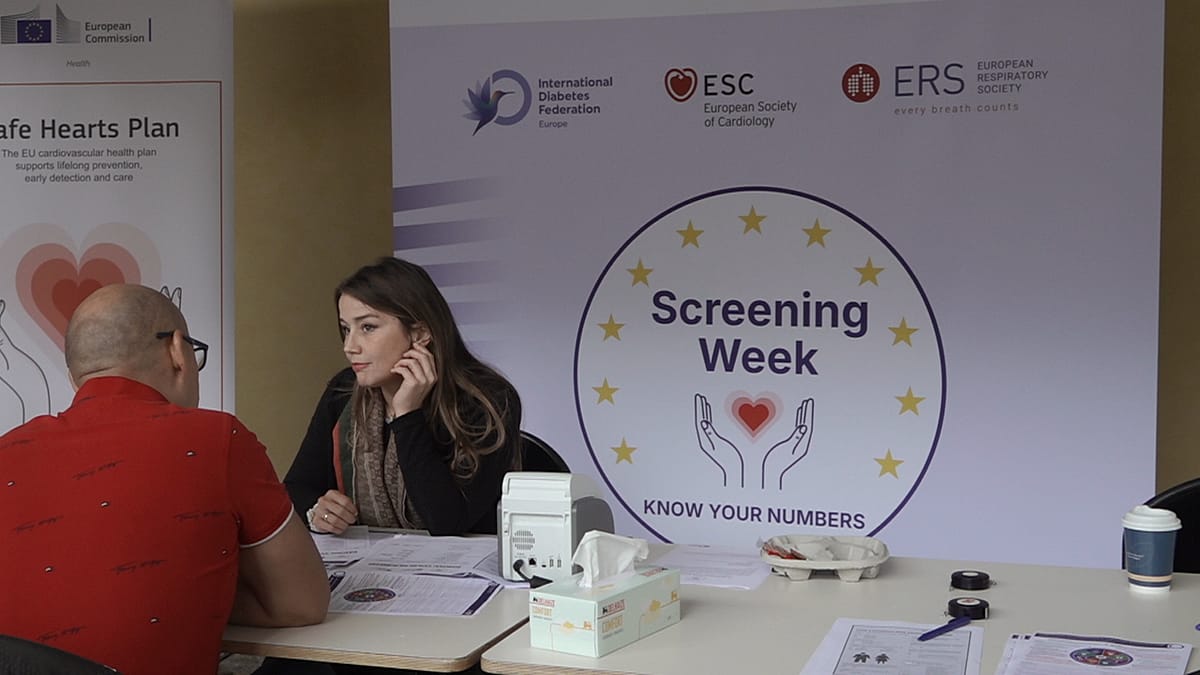
During Screening Week, health organisations have set up free testing stations in cities including Brussels, Berlin, Paris and Warsaw, open to all. Sophie Millar, EU Policy Advocacy Manager at the European Society of Cardiology, told Euronews Health that the initiative “can hopefully lead to reducing inequalities.” She noted that while people near EU institutions may already know their numbers, the real challenge is reaching “the more vulnerable groups who actually have the biggest need to know their numbers and to get their tests done.”
Blood sugar is one of the three key metrics being measured, alongside blood pressure and cholesterol. Diabetes often goes undetected; the International Diabetes Federation estimates that one in four Europeans living with the condition are unaware of it. Maxence Prizzi, EU Policy and Advocacy Coordinator at IDF Europe, explained that diabetes is “one of the main root causes of many other non-communicable diseases such as cardiovascular disease, cancer and kidney disease.” He added that “primary prevention starts with simple health checks… it all starts with knowing your health data and health numbers and that can save lives.”
Regular screening is not just for those with symptoms. Grace Bayams, a nurse administering tests in Brussels, said that “at a certain age, everyone needs to know their glycaemic, lipid and cholesterol levels to know if they are in the norm or not.” Depending on the results, doctors can recommend lifestyle changes or medication to keep patients within healthy ranges.
Among those who stopped by the Brussels stand was Angelos, who admitted he had not visited a doctor as often as he should. “This was maybe an opportunity to get a little bit more pragmatic and start going on a regular basis,” he said, adding that he was seeking advice about his blood glucose levels. Others came out of curiosity, like Jack Smith, a doctor with England's National Health Service who was visiting the city. “I saw this going on and I thought it would be fun because I think I'm healthy but I've not been to the doctors to check how good my health is,” he told Euronews Health. Smith emphasised the importance of prevention: “It's really important to raise awareness so that people know that there are things that they can do to help stop diseases happening and that they can live healthier and happier lives.”
The Commission's push aligns with broader efforts to reduce health inequalities across the EU. While the initiative is voluntary, it sets a clear direction for member states to invest in preventive care. As research increasingly shows that lifestyle interventions can be as effective as medication, the message from Brussels is simple: knowing your numbers could save your life.