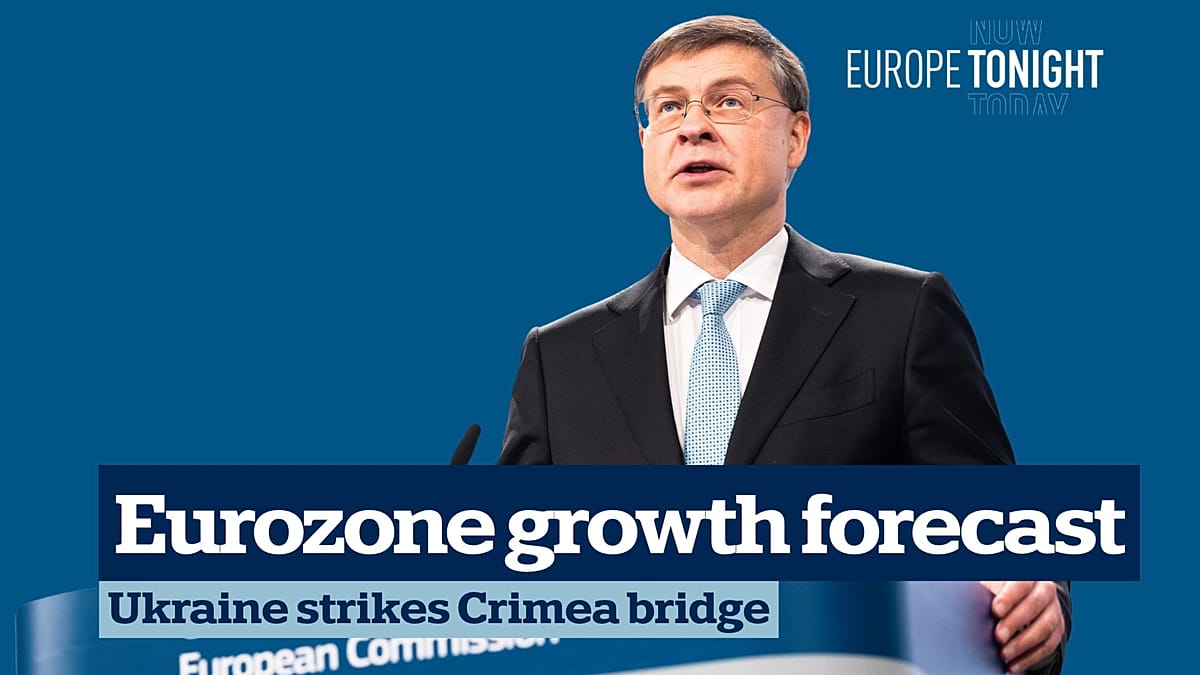
The European Commission has nudged up its growth forecast for the eurozone, now expecting the bloc's economy to expand by 1.2% of GDP this year. The revision, announced on Tuesday, reflects a slightly more optimistic outlook than the previous projection of 1.0%, with officials pointing to resilient labour markets and easing supply chain pressures. However, the executive arm of the EU cautioned that inflation, public spending, and rising government debt remain significant headwinds across the currency union.
EU Economy Commissioner Valdis Dombrovskis, who presented the figures, said the upgrade was a sign of "guarded optimism" but stressed that the bloc was not out of the woods. "We see a gradual recovery, but the risks are still tilted to the downside," he told reporters in Brussels. "Energy prices, geopolitical tensions, and the need for fiscal consolidation will test member states in the months ahead."
Ukraine strikes key Crimea bridge
In a separate development, Ukrainian forces have damaged a vital bridge connecting Russia to occupied Crimea, an operation President Volodymyr Zelenskyy described as an "unprecedented strike." The bridge, which spans the Kerch Strait, is a crucial supply route for Russian military operations in southern Ukraine. Ukrainian officials released footage showing the attack, with one arch reportedly destroyed, in what appears to be a significant blow to Moscow's logistics.
The strike comes as diplomatic efforts intensify. Norwegian Foreign Minister Espen Barth Eide is expected to hold talks with European negotiators in the coming days, with discussions likely to focus on potential peace frameworks and continued military support for Kyiv. Norway, a NATO member and a key donor to Ukraine, has been vocal in backing Kyiv's defence. The timing of the bridge attack, just ahead of these talks, underscores Ukraine's determination to strengthen its negotiating position.
Analysts note that the Kerch bridge has long been a symbol of Russia's annexation of Crimea, which the international community does not recognise. Its repeated damage—this is not the first strike—has forced Russia to rely on ferry and land routes, complicating its supply lines. The latest operation, described by Ukrainian officials as a seven-stage mission, appears to have been meticulously planned.
Spain's Sánchez hits out at EU asylum plans
Meanwhile, Spanish Prime Minister Pedro Sánchez has sharply criticised five EU member states over their plans to send rejected asylum seekers to Rwanda. Speaking in Madrid, Sánchez hailed Spain as "a great country that respects human rights" and distanced his government from the controversial policy, which has gained traction in some northern European capitals as a way to deter irregular migration.
The proposal, which echoes a similar deal struck by the UK with Rwanda, has drawn criticism from human rights groups and some EU institutions. Sánchez's rebuke highlights a growing split within the bloc over migration policy, with southern member states like Spain, Italy, and Greece bearing the brunt of arrivals and often favouring more humanitarian approaches. The Spanish leader's comments come as the EU debates a new pact on migration and asylum, which aims to balance solidarity with stricter border controls.
The European Commission's growth forecast and the geopolitical developments are likely to dominate discussions at the next EU summit. With inflation still hovering above the European Central Bank's 2% target—recent data put it at 3.1%—and several member states facing high debt levels, the economic outlook remains fragile. The Commission's upgrade, while welcome, does little to mask the structural challenges ahead.
For Ukraine, the bridge strike is a morale booster and a strategic gain, but the war is far from over. As winter approaches, Russia has already targeted Ukrainian infrastructure, including bridges in Kyiv, disrupting water and heating supplies. The EU is preparing its 22nd sanctions package against Moscow, aiming to curb its ability to sustain the war effort. Meanwhile, Germany and Norway have jointly funded new Patriot missiles for Ukraine, a move that underscores the continued Western commitment to Kyiv's defence.
In the broader European context, the day's events illustrate the interconnectedness of economic and security challenges. The eurozone's modest growth forecast is a reminder that the continent's prosperity is tied to stability on its eastern flank. As European leaders navigate these turbulent waters, the decisions made in Brussels, Berlin, and Madrid will shape the bloc's future for years to come.