Two trains collided on an overpass in central Prague on Tuesday morning, leaving 46 people injured, four of them seriously. The accident occurred near the city's main railway station, on Seifertova street in the Prague 3 district, a busy area close to the historic centre.
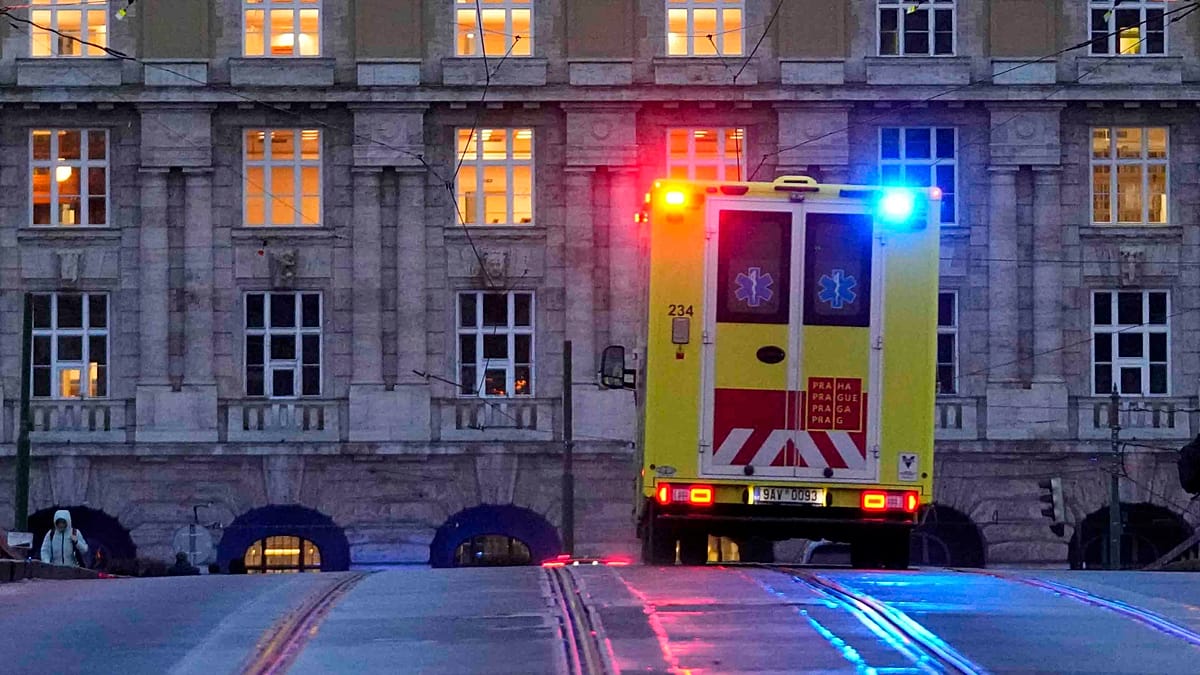
Prague's emergency medical service reported that four people sustained severe injuries, 12 suffered moderate injuries, and 30 had minor injuries. All those with priority 1 and 2 conditions have been transported to medical facilities, the service said.
Video footage shared by police on social media showed emergency crews working at the scene, with passengers being taken away on stretchers. The trains were visibly crumpled together, with damage to both vehicles.
The emergency service said the first crew arrived within four minutes of the incident being reported, and the trauma response was concluded at 9:40 a.m. More than ten emergency response crews, including four with a doctor, an inspector, and a special evacuation vehicle, were gradually deployed to the scene.
Investigation launched
Ivan Bednárik, the Czech Republic's minister for transport, thanked paramedics and firefighters for their “professional and swift response” and confirmed that authorities had opened an investigation into the cause of the collision. The exact circumstances remain unclear, and railway safety officials are expected to examine signalling, human error, and infrastructure conditions.
The incident has raised fresh questions about the resilience of Czech rail infrastructure, which has seen increased investment in recent years but still faces challenges from ageing equipment and growing passenger numbers. Prague's main station is one of the busiest transport hubs in Central Europe, serving both domestic and international routes.
Local authorities have urged commuters to expect delays and to use alternative routes while the investigation and cleanup continue. The overpass where the collision occurred is a key link for trains entering and leaving the city centre, and its closure is likely to disrupt services for much of the day.
This is not the first rail accident in the Czech Republic in recent months. In June, a collision between a passenger train and a freight train near the town of Česká Třebová injured several people and prompted calls for stricter safety measures. The country has been modernising its rail network, partly with European Union funding, but safety experts argue that more needs to be done to prevent such incidents.
The broader European context is also relevant: rail safety remains a priority across the continent, with the European Union setting ambitious targets for reducing accidents and improving interoperability. The Czech Republic, as a member state, participates in these efforts, but national investigations often reveal localised issues that require targeted fixes.
Meanwhile, the injured are being treated in several Prague hospitals, and the emergency service has said it will provide updated numbers later. The city's mayor, Bohuslav Svoboda, expressed solidarity with the victims and thanked the rescue teams for their work.
For those following European transport developments, this incident echoes other recent rail disruptions, such as the collision between two jets on a Miami taxiway, though the causes and contexts differ. In Europe, rail accidents often prompt rigorous investigations and policy debates, as seen in the aftermath of previous incidents in Germany and France.
The Czech transport ministry has promised a thorough inquiry, and the results are expected to inform future safety upgrades. In the meantime, passengers are advised to check their travel plans and allow extra time.