After weeks of diplomatic maneuvering, Europe has finally assembled a joint team to represent the continent in negotiations to end Russia's full-scale invasion of Ukraine. The group includes France, Germany, the United Kingdom, Italy, Poland, the EU institutions (Council and Commission), and NATO. Yet the path to a multilateral format remains blocked by Moscow's stalling tactics.
European, US, and Ukrainian officials all agree that the only way to move the process forward is to start direct talks with Russia. But Moscow seems in no hurry. Yury Ushakov, a close aide to President Vladimir Putin, said on Monday that no date has been agreed and that expanding the format "has not been agreed with us." He even suggested that "it may be necessary to hold another round, or perhaps more than one round, of trilateral talks" with the US and Ukraine before sitting down with Europeans.
US special envoy Jared Kushner, after speaking with Ushakov, sounded cautiously optimistic. "We discussed how to facilitate direct engagement between Europe and Russia, which has been largely absent over the past four years," Kushner said on social media. "It is important that both sides hear each other's concerns and proposals directly as we work toward a more stable and secure future for Europe."
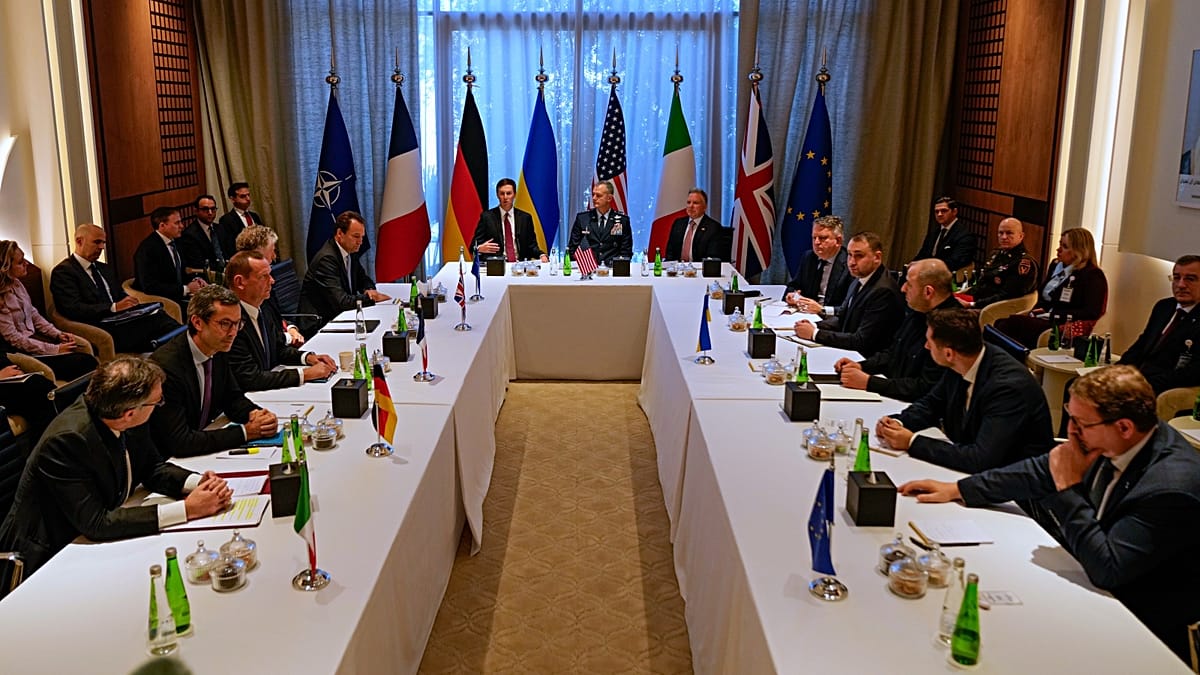
So far, the peace talks have run on two parallel tracks: one involving Ukraine, Russia, and the US; the other involving Ukraine, Europe, and the US. In practice, this has left Europe in the room next door, trying to catch up with what is discussed in the main room, as happened in Abu Dhabi. The US side has concluded that this two-track configuration has reached its limit and that the time has come for Europe and Russia to sit at the same table, at the same time.
Europe, long opposed to direct engagement, is now on board. "We are absolutely ready to engage at the multilateral level," said Paula Pinho, the Commission's chief spokesperson.
Low expectations, high stakes
Privately, European officials and diplomats say expectations should remain low because, when it comes to Russia, nothing can be guaranteed, particularly given the volatility of the negotiations, which have gone through multiple ups and downs – and a protracted pause – in the past year alone. Moscow's continued delays reinforce the widespread belief that Putin is playing lip service to the White House and has no intention of treating diplomacy seriously. The brutal attacks against Ukraine ahead of the winter bear witness to that.
The fact that Moscow talks about Europe's security architecture but refuses to talk with Europeans is cited as further reason to be wary. The topic is seen as a ploy to divert attention from Ukraine, regurgitate old grievances, and reassert Russia's long-lost sphere of influence. According to the New York Times, the Russian demands presented to the US were that NATO stop expanding, withdraw its troops to 1997 borders, and halt military support for Ukraine.
"It's absurd. Russia misbehaves, and then they want to be rewarded for it," a senior diplomat snapped. "I don't see how it could fly at all."
Despite the daunting odds, Europeans are keen to show their readiness and availability, while preparing new sanctions on Russia and support for Ukraine. Senior officials from the joint European team will meet with their US and Ukrainian counterparts on Thursday on the sidelines of the Coalition of the Willing in Berlin to work out the next steps.
Brussels, meanwhile, has begun drafting a common mandate in case the multilateral format happens. The mandate is meant to compile the principles that Ukraine's allies have followed since the start of the war. Austria, one of the first member states to publicly call for direct talks with Russia, has circulated a two-page document, seen by Euronews, to structure the negotiations built around four key pillars: political, security, humanitarian, and economic.
The paper calls on the EU to maximise its "sanction leverage," prepare a special mission to monitor an eventual ceasefire, and develop a strategy for the use of the immobilised Russian assets. It also floats a "division of labour" among the EU, NATO, the United Nations, the OSCE, and the Coalition of the Willing to safeguard a future peace.
"Europe finally has a negotiating team that is expected to join the next round of talks. Now the focus must shift from the 'who' to the 'what'. This team urgently needs a mandate on substance," said Austrian Foreign Minister Beate Meinl-Reisinger. "What is at stake is nothing less than Europe's own security."
As the EU prepares its 22nd sanctions package and Ukraine continues to strike key infrastructure like the Kerch bridge, the coming weeks will test whether Moscow is genuinely interested in peace or simply buying time. The hybrid warfare that Russia has waged across the continent only adds to the urgency.