The European Commission has decided to release €4.2 billion in cohesion funds for Hungary, concluding that the government in Budapest has taken meaningful steps to strengthen the rule of law. The decision, announced on Wednesday, also reopens Hungary's participation in the Erasmus+ student exchange programme and the Horizon Europe research initiative, which had been suspended since 2022.
The funds were originally frozen under the EU's conditionality mechanism, which allows Brussels to withhold payments to member states that fail to uphold judicial independence, anti-corruption standards, or other fundamental principles. In Hungary's case, the Commission cited concerns about corruption, conflicts of interest, and systemic problems in public procurement.
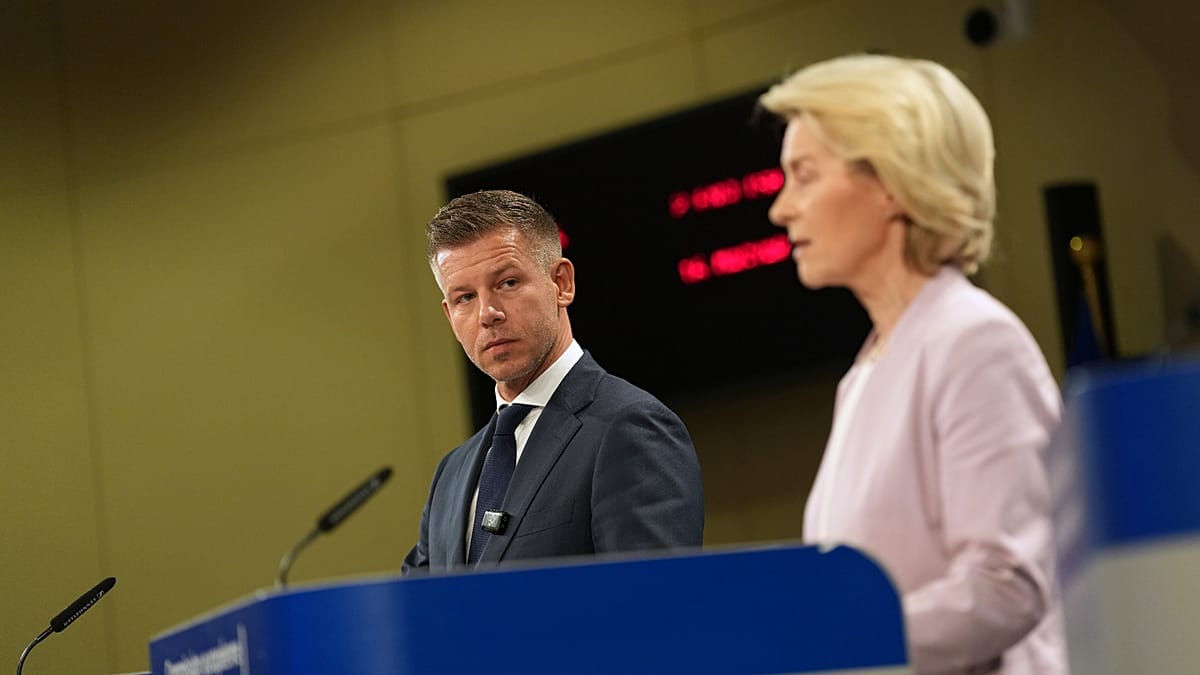
Prime Minister Péter Magyar, who won a landslide victory in April's elections, had made the release of EU money a central campaign promise. His government has since worked to dismantle some of the legal structures put in place under his predecessor, Viktor Orbán, including the controversial public interest trusts (KEKVA) that had been used to take control of universities and other public institutions.
"Hungary has taken important steps to strengthen the rule of law and protect the Union's financial interests," said European Commission President Ursula von der Leyen in a statement. "Today, we are proposing to unlock €4.2 billion and reopen the doors of Erasmus+ and Horizon Europe to Hungarian students and researchers. I am glad that they will once again fully benefit from the opportunities our Union creates. This shows that reforms deliver results."
A conditional thaw
The release is part of a broader agreement struck in May between von der Leyen and Magyar, under which Hungary could access up to €16.4 billion in EU funding if it met a series of so-called "super milestones" — 27 in total, plus more than 100 additional benchmarks. In late August, Budapest announced it had fulfilled all of them, a claim that the Commission has now verified.
Beyond the €4.2 billion now unlocked, Hungary is also seeking to draw down €10 billion from the Recovery and Resilience Facility, the EU's post-pandemic recovery fund. The Commission's assessment of that request is still ongoing, and no timeline has been given for a decision.
However, not all EU funds are flowing back to Budapest. Approximately €2 billion in cohesion money remains blocked due to concerns over Hungary's asylum system, its child protection law, and academic freedom. Magyar has said he intends to resolve these issues by the end of the year, but the Commission has not indicated whether it considers that timetable realistic.
The thaw in relations between Budapest and Brussels marks a significant shift from the confrontational stance of the Orbán era, which saw frequent clashes over judicial independence, media freedom, and migration policy. Magyar's government has signalled a more cooperative approach, but some EU officials remain cautious, noting that the rule-of-law reforms have yet to be fully tested in practice.
The decision also comes at a time when the EU is grappling with broader questions about how to enforce its values among member states. The conditionality mechanism, introduced in 2021, has been used against Poland and Hungary, and its application has been closely watched by other governments. For now, the Commission's move suggests that it is willing to reward tangible progress, even if the underlying tensions remain unresolved.
For Hungarian students and researchers, the reopening of Erasmus+ and Horizon Europe is a practical benefit that will be felt immediately. Many had been forced to look elsewhere for study-abroad opportunities or research funding, and the restoration of these programmes is likely to be welcomed across the academic community.
As Hungary seeks to reintegrate fully into the EU's funding structures, the coming months will show whether the reforms are durable. The Commission has made clear that it will continue to monitor the situation, and any backsliding could lead to renewed suspensions. For now, the ball is in Budapest's court.