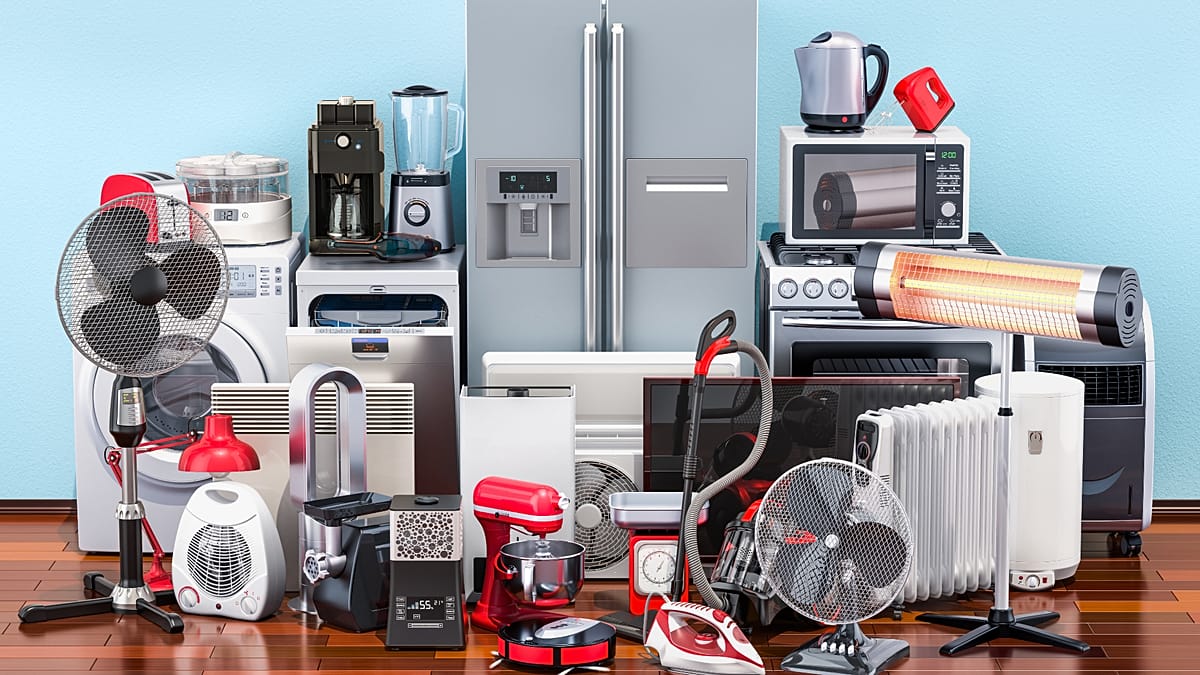
Across the European Union, millions of household appliances are discarded every year, often because a single component fails and the cost of repair rivals that of a new machine. In France and Belgium, only 18% and 15% of broken devices are ever fixed, respectively. Of the roughly 28 million breakdowns reported annually, just 5 million result in a technician actually repairing the product.
This pattern is not for lack of consumer interest. Surveys show that 77% of Europeans would prefer to repair rather than replace. Yet the economics rarely work out: only 5% of washing machines and 33% of vacuum cleaners are priced such that professional repair makes financial sense. For most devices, the cost of spare parts and labour exceeds the price of a brand-new replacement.
“Access to repair is not the main bottleneck. The price is,” said Alex Bunodiere, a PhD researcher at KU Leuven’s Life Cycle Engineering group.
Why repairs are so expensive
When a small part fails, households often end up replacing an entire 60–80 kg machine. A €280 repair bill can be the same as buying a new appliance. The convenience factor also plays a role: a replacement can arrive within 24 hours, while repairs may take weeks.
Manufacturers have long restricted independent repair by locking supply chains. Up to 80% of independent technicians report being blocked from accessing diagnostic software, spare parts, or digitally pairing components. Design choices also push consumers toward replacement: cheap wear-and-tear parts are often soldered onto major control boards, turning a €50 fix into a €250 assembly replacement.
“They can make money from repair, but I think they typically make more money from the sale than they do from a repair,” said Bunodiere, explaining that companies are incentivised to sell new products rather than support long-term use.
The environmental toll
Discarded appliances generate 261 million tonnes of greenhouse gas emissions annually. According to Euroconsumers, smartphones and tablets are replaced on average every three years, televisions as soon as software updates stop, and cordless vacuums after just 4.5 years due to battery degradation.
“Generally, I would say repair is almost always the more environmentally efficient option,” Bunodiere noted, though he acknowledged that replacing very old, energy-hungry appliances can sometimes be justified.
The European Green Deal sets legally binding targets for a fully circular economy by 2050. Lawmakers recognised that these goals are unattainable without reducing the 30 million tonnes of raw materials used annually to manufacture replacement products. After years of campaigning by the Right to Repair Europe coalition, the European Commission proposed the directive in 2023. It was approved by the European Parliament and Council in early 2024 and took effect on 1 July 2026.
What the new directive includes
The Right to Repair Directive is a “full harmonisation” measure, meaning all EU member states must align their laws with it. It covers both pre-market design requirements and post-sale consumer rights. The EU is also introducing harmonised labels, including official repairability scores and digital product passports.
Under the new rules, if a product breaks during the seller’s legal liability period, consumers can choose between repair and replacement. Opting for repair extends that period by 12 months, and member states may allow further extensions for repeat repairs. For products that fail later, consumers can still request a manufacturer repair where EU repairability rules apply.
The directive also introduces a European Repair Information Form, which must include the repairer’s identity, diagnostic and repair costs, expected duration, and whether a temporary replacement is available. Quoted terms must remain valid for at least 30 days.
Consumers are free to use independent repairers and can receive a temporary replacement during repairs. Producers must provide clear information about repair services, and member states must make these rights easily accessible through national websites.
Obligations for manufacturers
Manufacturers are now required to provide repairs unless genuinely impossible. They cannot refuse because a repair is expensive or because an independent repairer previously worked on the product. They must make spare parts, tools, and repair information available at reasonable prices.
The directive is enforced by national market authorities and consumer protection agencies, with financial penalties set by each member state. The European Commission estimates that these measures could save consumers up to €12 billion annually.
For more on how the EU is tackling appliance waste, see our coverage of EU repair rules and the broader Right to Repair movement.