The European Union has adopted a new Return Regulation that marks a significant shift in its migration policy. For the first time, member states are permitted to set up return hubs for irregular migrants in countries outside the bloc. While proponents argue this will accelerate deportations, critics fear it could lead to human rights violations and legal complications.
How the Return Hubs Would Work
Under the new framework, return hubs would be established in non-EU countries to host migrants who have no legal right to stay in an EU member state. These facilities could serve as transit points where individuals await deportation to their country of origin, or as longer-term holding centres where return is not immediately possible. The regulation removes the current requirement that migrants can only be sent to countries with which they have a proven connection, allowing transfers to states with no prior ties.
Each hub requires a bilateral agreement between the EU (or one or more member states) and a host country. The law outlines procedures for migrants' stay, responsibilities of the EU country involved, and consequences if return to the country of origin proves impossible. Member states retain significant flexibility to negotiate terms on a case-by-case basis.
Why the Controversy?
Human rights organisations and legal experts have raised serious concerns. The regulation stipulates that host countries must respect international human rights standards, but this safeguard is considered weak. Agreements are not subject to external scrutiny or European Commission approval; member states merely need to notify others when negotiations begin.
Unaccompanied minors are excluded from transfer, but families with children are eligible, raising worries about minors' education and welfare. There is no specified time limit for a migrant's stay in a hub. “The goal is to send people to their country of origin. If this is not possible, we would wait until it is possible,” an EU diplomat told Euronews. Conditions of stay are likely to amount to de facto detention, as migrants will not be allowed to leave.
Eleonora Celoria from Asgi, an Italian association of migration law experts, warned: “The European Court of Human Rights prohibits States from transferring individuals to States or situations where they may be subjected to violations of fundamental rights. [With this system], migrants may be subjected to torture and inhuman or degrading treatment.”
Which Countries Are Interested?
According to an EU diplomat, “the majority of EU countries” are interested in setting up return hubs. In March, Germany, the Netherlands, Austria, Denmark, and Greece formed a working group to explore solutions. Potential host countries include Uganda and other African states, though no concrete agreements have been reached. Dutch MEP Malik Azmani, who negotiated the law, told Euronews: “I can imagine that it would be countries in Africa who are respecting international law.”
Financing will come from EU member states, with possible additional incentives such as commercial partnerships. Several diplomats have pushed for a larger migration budget in the next seven-year EU financial framework. However, analysts doubt many non-EU countries will agree, fearing domestic backlash.
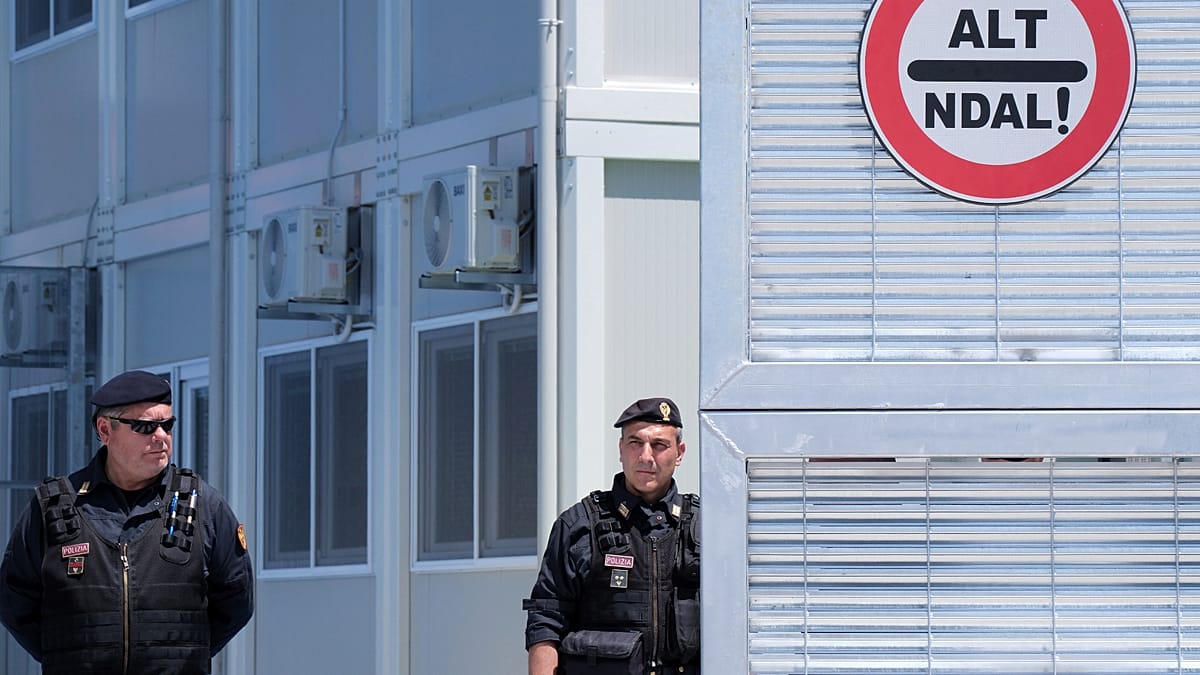
Italy is already operating two deportation centres in Albania under a five-year agreement with Tirana, widely seen as a model for return hubs. Initially intended to process asylum seekers, the centres in Shengjin and Gjadër were converted into deportation facilities in March 2025 after legal challenges. Prime Minister Giorgia Meloni declared: “The Italian approach to migrant flows management has become Europe’s approach.”
The new regulation is part of a broader hardening of EU migration policy, which has also seen the approval of tougher deportation rules and the expansion of detention powers. Critics argue that these measures risk undermining the EU's commitment to human rights, while supporters insist they are necessary to manage irregular migration effectively.