When European Council President António Costa and other top EU officials arrive in Tivat, Montenegro, this Thursday for the EU-Western Balkans summit, the agenda will be dominated by a stark reality: enlargement is no longer about romantic visions of a united continent. It is a hard-nosed calculation of economic advantage and strategic necessity.
The Western Balkans—Albania, Bosnia and Herzegovina, Kosovo, Montenegro, North Macedonia, and Serbia—are at varying stages of accession. Geographically, they are already an island surrounded by EU territory. For nearly two decades, relative stability kept their membership bids on the back burner. Russia's full-scale invasion of Ukraine in 2022 shattered that complacency, transforming enlargement into a critical security priority for Brussels.
The €87 Billion Reason
Yet security is only part of the story. The EU is already the region's dominant economic partner. In 2024 alone, two-way trade in heavy machinery, chemicals, and metals exceeded €87 billion. Crucially, the balance heavily favours the Union: EU member states exported far more than they imported, generating a substantial surplus. This is not charity; it is a profitable commercial relationship that Brussels is keen to lock in.
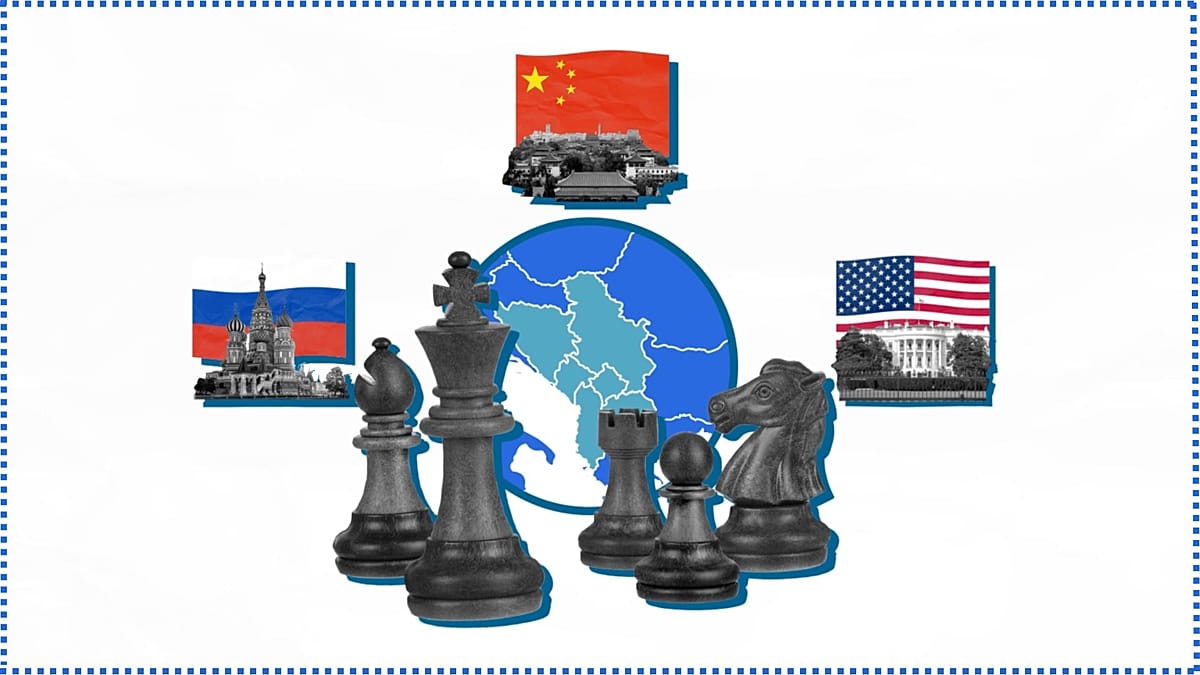
But the EU is not the only power eyeing the Balkans. Moscow, Beijing, and Washington are all actively competing for influence. Serbia, for instance, has refused to align with EU sanctions against Russia, highlighting how the region has become a new frontline in geopolitical tensions. If Europe leaves a power vacuum on its doorstep, others will fill it—whether through Chinese infrastructure loans, Russian energy leverage, or American security guarantees.
The economic stakes are underscored by recent investment flows. While the EU remains the top investor, Chinese-backed projects in transport and energy have grown, and Russian influence persists through energy dependencies and disinformation campaigns. The summit in Tivat is partly about reaffirming that the EU's offer of membership remains the most credible path to prosperity and stability.
To address fears that adding more members would paralyse decision-making under current voting rules, Albania and Serbia have proposed a phased integration model. Under this plan, new members would temporarily waive their veto rights in certain areas, allowing them to join the bloc without immediately complicating its internal dynamics. This pragmatic approach reflects a broader shift away from the idealism that once drove earlier enlargements.
As Costa travels through the region, the message is clear: the EU is acting to secure its borders and economic interests. The alternative, as some officials have warned, is a region politically dependent on Russia, economically reliant on Chinese investment, or potentially drawn into the orbit of the United States—a scenario that would undermine the Union's own strategic autonomy.
The summit in Tivat will not produce a final decision on membership. But it will signal that Brussels is no longer waiting for the perfect moment. The calculus has changed, and the Western Balkans are now central to Europe's future.



