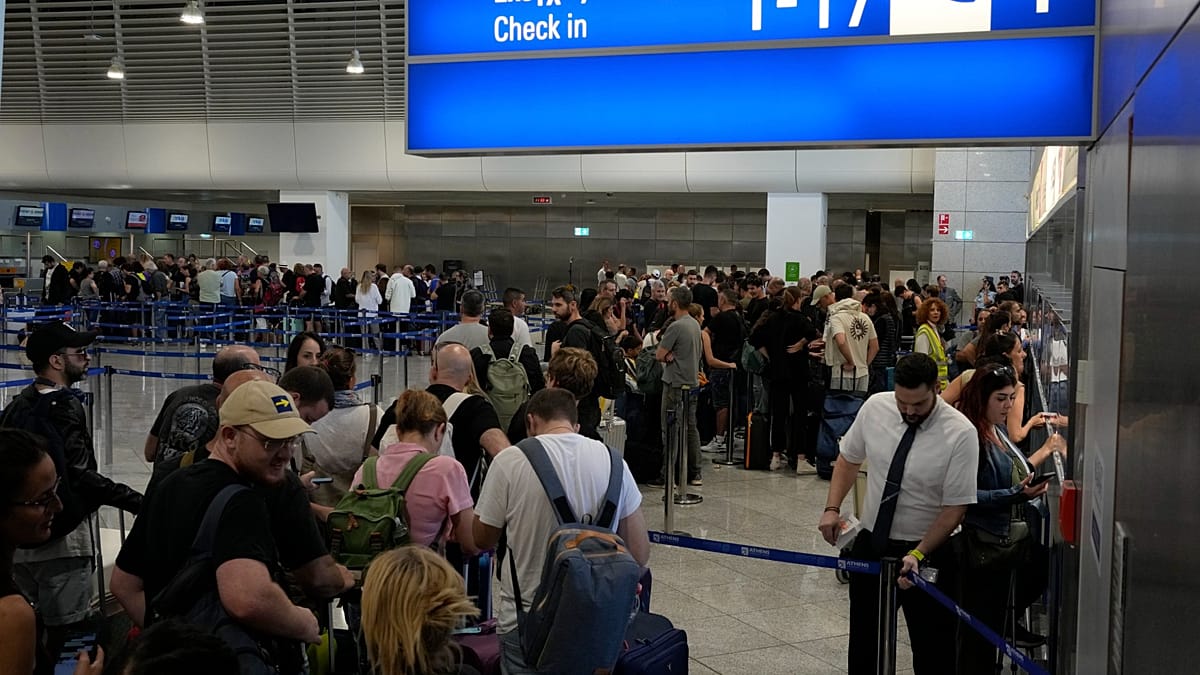
The European Union's Entry/Exit System (EES) is now fully operational across the Schengen Area, marking the most significant overhaul of external border management in a generation. As of 10 April, the automated IT system has replaced manual passport stamps with digital registration for all non-EU citizens entering the bloc for short stays.
A New Digital Frontier for European Borders
The EES will digitally record the name, travel document details, and biometric data—including facial images and fingerprints—of travellers from outside the EU and Schengen zone each time they cross an external border. This data is stored for three years. The system's primary goals are to strengthen security, combat identity fraud, and accurately monitor compliance with the 90-day visa-free limit. The European Commission reports that since the phased rollout began last October, the system has already flagged over 24,000 refusals of entry and identified more than 600 individuals as potential security risks.
"This represents a fundamental modernisation of our border control," a Commission spokesperson stated. "It moves us from a reactive, paper-based system to a proactive, digital one." The change is most immediately visible at major transit hubs like Amsterdam Schiphol, Rome Fiumicino, and Madrid Barajas, where manned booths and new self-service kiosks have been installed.
Who Is Affected and Who Is Exempt?
The new rules apply to all "third-country nationals" requiring a short-stay visa or travelling visa-free for stays up to 90 days within any 180-day period. This notably includes British citizens post-Brexit, as well as Americans, Canadians, Australians, and other visa-exempt visitors. It also covers non-EU property owners in countries like Spain or Italy who lack formal residence permits.
Exemptions are granted to several categories. Citizens of EU and Schengen member states are not subject to EES checks. Non-EU nationals holding long-term residence permits or visas from an EU country are also exempt, as are their family members. Other exemptions apply to crew members, military personnel on NATO duties, and nationals of European microstates like Andorra and Monaco. Crucially, Ireland and Cyprus—which are not part of the Schengen Area—are not implementing the EES and will continue manual checks.
Anticipated Travel Disruption and the Push for Flexibility
The transition has sparked serious concerns about border delays. Industry bodies Airport Council International (ACI) Europe and Airlines for Europe (A4E) have warned that processing times at peak hours are already stretching to two hours or more. They attribute this to the mandatory registration of all eligible travellers since 31 March, coupled with the end of a grace period that allowed authorities to suspend EES checks during congestion.
"Waiting times are now regularly reaching up to two hours at peak traffic times, with some airports reporting even longer queues," ACI Europe and A4E said in a joint statement.
Travellers are advised to arrive at airports an extra 90 to 120 minutes early to accommodate the new process. The associations are urging the European Commission to grant border authorities the power to partially suspend the system if necessary throughout the entire 2026 summer season to prevent gridlock. This call for operational flexibility highlights the tension between enhanced security and the practical flow of people, a balance Europe continually negotiates, as seen in the evolving situation on Poland's border with Belarus.
Practicalities for Travellers: Passports and Pre-Registration
A biometric passport (containing a chip) is not mandatory for entry but is essential for using the faster self-service kiosks. Travellers with standard passports must use manned booths for their first registration to provide fingerprints and a photo. This initial enrolment is a one-time requirement per passport; subsequent entries within the three-year data retention period will be quicker. Refusal to provide biometric data results in an automatic denial of entry. Children under twelve are exempt from fingerprinting but still require a photograph.
While advance registration is not required, the EU has developed the 'Travel to Europe' mobile app to speed up the process. This official application allows users to upload their passport data and a facial image up to 72 hours before travel. However, it does not replace the physical border check, where fingerprints are verified and a final interview takes place. The app is currently available in pilot nations like Portugal and Sweden, with a broader EU rollout planned. This digital push mirrors wider European trends in governance, similar to Kazakhstan's digital welfare system, though on a vastly different scale.
The EES represents a foundational step toward the broader European Travel Information and Authorisation System (ETIAS), a visa-waiver programme scheduled for introduction in mid-2025. Together, they form the digital backbone of the EU's "Smart Borders" initiative. For now, travellers bound for Europe's beaches, cultural capitals, and business hubs must factor in this new layer of border procedure, a tangible sign of a continent fortifying its external frontiers in the digital age.