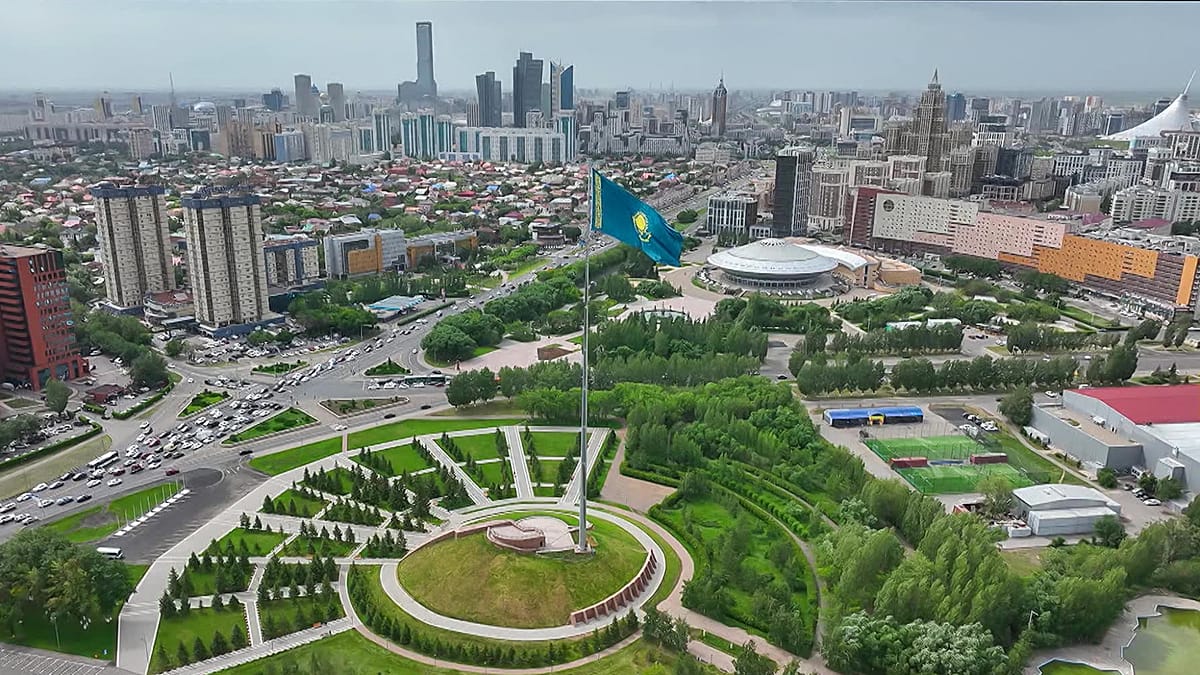
Kazakhstan is methodically constructing what analysts describe as one of the most comprehensive social welfare frameworks in Central Asia, integrating financial aid, public services, and digital platforms to support citizens from infancy through old age. This systematic approach has propelled the country into the global top five for social support and to 33rd place in the World Happiness Report, reflecting a significant state-led investment in public welfare.
A Lifecycle Approach to Social Support
State assistance begins at birth, with Kazakh families receiving a one-time birth allowance followed by monthly childcare payments until a child is 18 months old. Benefit levels are structured to increase with the number of children, a deliberate policy to support larger families. Since introducing specific allowances for such families in 2020, their number has more than doubled, from 252,000 to over 630,000 today. In total, approximately 1.7 million families with children currently benefit from state programmes.
"Kazakhstan is a socially oriented state. We provide support from birth through to end-of-life care," explains Asiya Kurmankulova, Head of the Targeted Social Assistance Department at the Ministry of Labour and Social Protection.
Alongside these universal benefits, Kazakhstan operates a Targeted Social Assistance (TSA) programme for low-income households. This scheme provides monthly payments to families whose income falls below the poverty line. As of early 2026, around 30,000 families, or roughly 163,000 individuals, receive this aid. Officials note a 22% decrease in recipients compared to the previous year, attributing the drop to both rising incomes and more precise, digitally-enabled targeting mechanisms.
"The goal is not only to provide financial support, but to help families increase their income and move out of poverty," Kurmankulova states.
The TSA system is bifurcated, offering unconditional aid for families unable to work due to caregiving or disability, and conditional assistance linked to participation in employment programmes, underscoring a focus on long-term economic mobility over simple subsidy.
Investing in Education and Healthcare
Education forms a cornerstone of Kazakhstan's long-term social strategy, with particular emphasis on bridging the gap between urban and rural areas. Over the past five years, the government has built more than 1,100 new schools nationwide, with hundreds located in rural communities. A parallel modernisation drive saw 3,000 rural schools upgraded between 2023 and 2025, with further work ongoing.
"Reducing the gap between rural and urban education is a key priority," says Roza Sembayeva, Deputy Director of the Infrastructure Development Department at the Ministry of Education. To attract educators to remote regions, authorities offer salary supplements of at least 25%, alongside relocation and housing support.
Healthcare represents another fundamental pillar. Kazakhstan guarantees a free package of medical services covering preventive care, vaccinations, and treatment for chronic and rare diseases. More than 90% of the population is now covered by health insurance, facilitating access to a broad spectrum of care.
"Ensuring accessibility and quality of healthcare remains a top priority, first and foremost for the people of Kazakhstan," emphasises Minister of Healthcare Akmaral Alnazarova.
The Digital Backbone of Welfare
A defining characteristic of Kazakhstan's evolving system is its digital infrastructure. Most social benefits are accessible online via the national e-government portal. In many instances, the system proactively identifies eligible families, minimising bureaucracy and accelerating support delivery. Digital tools are also deployed to verify eligibility for targeted aid and to monitor social programmes in real time, enhancing efficiency and transparency.
This focus on technological modernisation aligns with broader national ambitions, such as Kazakhstan's goal to become Central Asia's food processing powerhouse and its efforts to attract global talent with tech hubs and academic freedom. While primarily a domestic policy story, the development of sophisticated digital governance tools in Kazakhstan offers a case study for European policymakers grappling with similar modernisation challenges in their own welfare states. The European debate around digital public services and online safety, evidenced by moves like social media bans for minors in some EU nations, shows a parallel, though distinct, engagement with technology's role in society.
Kazakhstan's concerted push to build a robust, digitally-enabled social safety net marks a significant domestic policy direction. It highlights a strategic investment in human capital and social stability, elements crucial for the country's long-term economic and political trajectory, including its complex relationships with major powers like Russia and China, and its growing engagement with European partners on trade and energy.