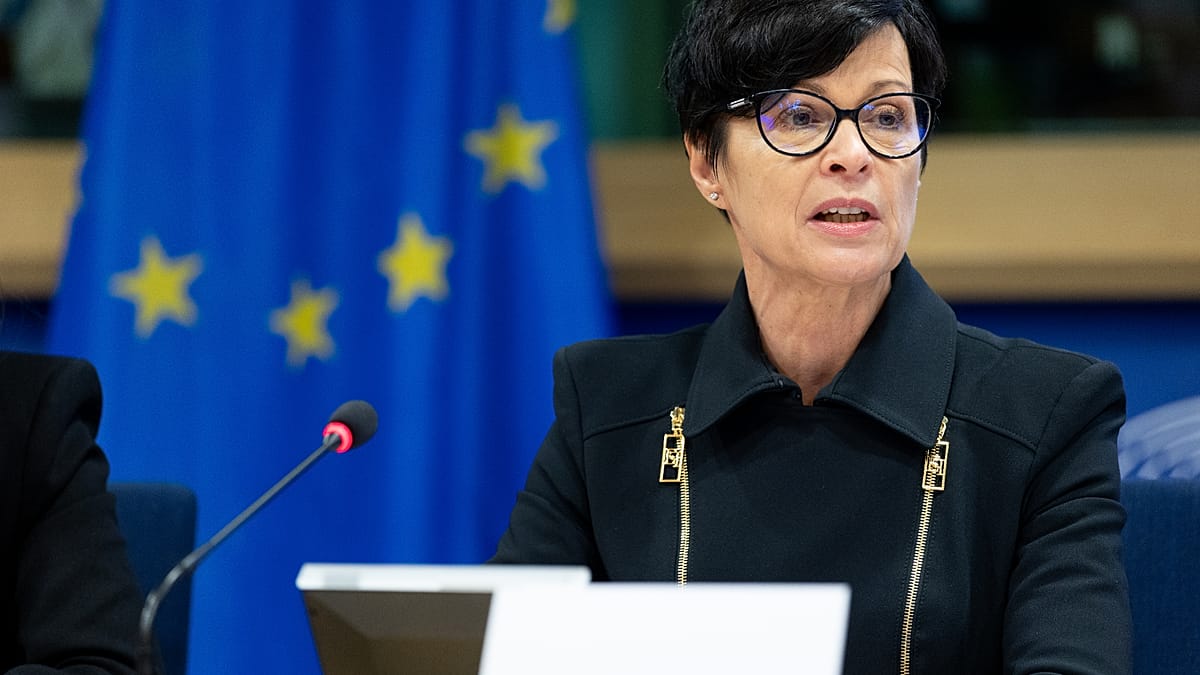
Representatives of Serbia's election-winning Student List held their first high-level meeting with the European Union this week, but the conversation was less about Brussels' enlargement agenda and more about the country's internal democratic health. European Commissioner for Enlargement Marta Kos received a four-member delegation from the party on Monday afternoon in Brussels, at her invitation.
The Student List, a grassroots movement born out of months of student protests, secured an absolute majority in Serbia's parliament last month, ending the 14-year rule of Aleksandar Vučić's Serbian Progressive Party (SNS). The movement's rise has raised hopes in Brussels for a reset with the Western Balkans' most influential country, but the immediate focus remains on stabilizing democratic institutions at home.
Domestic priorities take precedence
According to Kos, the talks centered on how the Student List sees its primary role: "to become a democratic country again." The Commissioner told the European Parliament's Foreign Affairs Committee on Wednesday that the meeting covered a range of issues, including the party's plans for restoring the rule of law and fighting corruption.
"The protesters in Serbia want the same as the European Union is asking from Serbia, meaning anti-corruption, free and independent media, free and independent judiciary. Good neighbourly relations and, of course, also strategic alignment with the European Union," Kos said. "We are ready to help the new government to do all the necessary reforms."
The decision to focus on domestic affairs rather than enlargement reflects the unresolved situation on the ground. Irregularities at several polling stations have delayed the finalization of election results, and with it the formation of a new government. The Student List has yet to clarify its leadership structure or government plans, so the delegation acted as a group, and the Commission declined to confirm who took part.
The movement emerged after a concrete canopy collapsed at a railway station in Novi Sad, killing 16 people and fueling public anger over widespread corruption and negligence under the SNS. The tragedy sparked months of protests that ultimately coalesced into a political force. The Student List's ticket includes professors, doctors, and students—political novices who now face the challenge of governing.
Kos's meeting with the Student List comes as the European Commission finalizes its annual assessment of candidate countries. The report, which was prepared before the elections, points to negative trends in fundamental rights and persistent anti-EU rhetoric from Serbian authorities. However, it does not reflect the recent political shift.
"Serbia has the chance for a fresh start. The new Serbian government has an opportunity to turn the page, strengthen democratic institutions and fundamental rights, and take the necessary steps to advance on Serbia's accession path," Kos told MEPs.
Beyond forming a government, the Student List faces another test: presidential elections due by late December. The party's ability to navigate these challenges will be closely watched in Brussels, where the broader debate on EU enlargement and strategic alignment continues to shape policy toward the Western Balkans.
Albanian Prime Minister Edi Rama has cautioned that the new Serbian government is unlikely to recognize Kosovo, a key sticking point in Serbia's EU path. Meanwhile, the EU has been urged to move faster on enlargement, with some voices calling for a quicker reunification of the continent. The Student List's commitment to democratic reforms could provide a window for progress, but the road ahead remains uncertain.