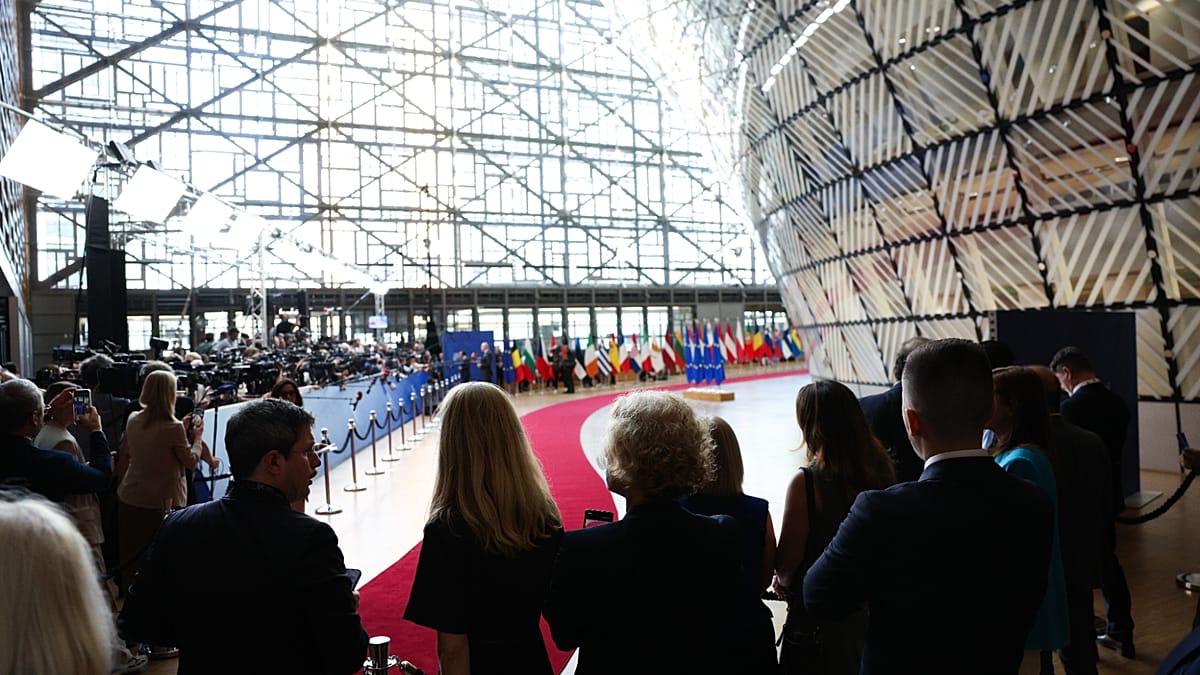
The second day of the European Union summit in Brussels has shifted squarely to the bloc's next long-term budget, a seven-year financial framework that the European Commission has estimated at €2 trillion. The debate pits member states with competing visions of how the Union should allocate its resources, with positions still far apart despite a shared deadline to reach a final agreement by December.
Cyprus Proposes Modest Cuts
Cyprus, which holds the rotating presidency of the Council of the EU, has tabled a proposal to reduce the original draft by a "moderate" 2%, equivalent to €32.8 billion. This proposal is intended as a compromise between the two main camps: those who want to preserve traditional spending on agriculture and cohesion funds, and the so-called "frugal" states—now rebranding themselves as "modernisers"—who argue that the budget must be significantly trimmed to reflect new priorities such as digitalisation, defence, and climate action.
For countries like Poland, Hungary, and many southern European states that rely heavily on cohesion and agricultural subsidies, even a 2% cut is seen as a step too far. They argue that these funds are essential for reducing economic disparities across the continent and for maintaining the viability of rural communities. On the other hand, the frugal camp—led by the Netherlands, Austria, Sweden, and Denmark—insists that the budget must be modernised and that the current proposal does not go far enough in cutting what they view as outdated or inefficient spending.
Red Lines and Demands
Friday's discussions are expected to see leaders double down on their red lines. The frugal states are pushing for a reduction of at least 10% from the Commission's original proposal, while the cohesion advocates are resisting any significant cuts. The debate is further complicated by the need to fund new priorities, including the EU's strategic autonomy in defence, the green transition, and digital transformation, all of which require substantial investment.
As EU leaders target an October draft for the €2 trillion budget deal, the pressure is mounting to find common ground. The summit is also taking place against the backdrop of broader geopolitical tensions, including the war in Ukraine and the need to reduce dependence on Russian energy, which add urgency to the budget negotiations.
Internal Divisions and External Pressures
The budget battle is not just about numbers; it reflects deeper ideological divisions within the EU. The frugal states advocate for a more efficient, results-oriented budget that prioritises innovation and competitiveness, while the cohesion camp emphasises solidarity and convergence. These differences were evident in the EU budget battle that loomed as leaders clashed over spending and Russia ties earlier this year.
Meanwhile, the European Parliament is also weighing in, with MEPs demanding a more ambitious budget that includes new own resources, such as a digital levy or a carbon border adjustment mechanism, to reduce the reliance on national contributions. The Parliament has warned that it will not approve a budget that fails to meet the Union's long-term goals.
The summit is also being watched closely by markets and international partners, as the EU's budget decisions have implications for global trade, investment, and climate policy. The outcome of these negotiations will shape the EU's ability to act as a cohesive global player in the coming years.
What's at Stake
At stake is not just the allocation of €2 trillion, but the future direction of the European project. The budget will determine how the EU invests in research, infrastructure, and social cohesion, and whether it can meet its ambitious climate targets. It will also affect the Union's ability to respond to crises, such as the ongoing energy crisis and the need to support Ukraine.
As the summit continues, the leaders are acutely aware that failure to reach a deal by December would trigger a political crisis and undermine the EU's credibility. The coming months will test the Union's ability to balance national interests with collective goals, a challenge that has defined European integration since its inception.