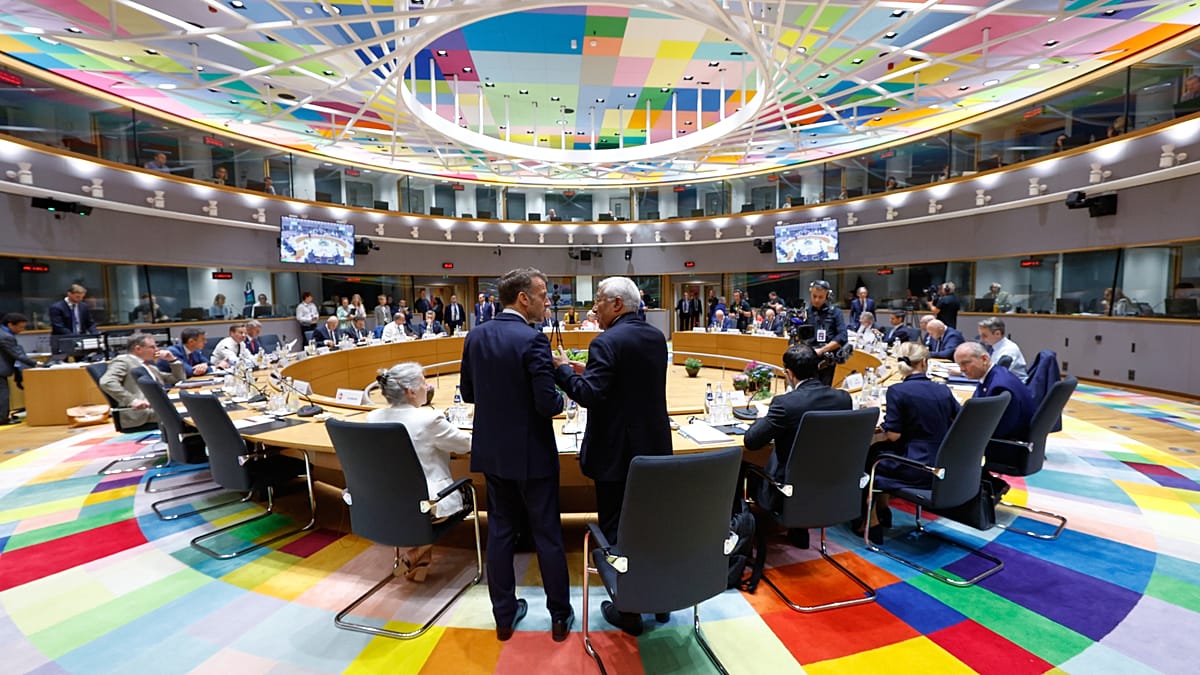
European Union leaders meeting in Brussels have set an October deadline for a draft agreement on the bloc's next long-term budget, a €2 trillion framework covering 2028–2034. The decision, outlined in a draft statement published Friday, marks the beginning of a sensitive phase in negotiations over both expenditure and revenue.
The talks, which took place over Thursday and Friday, revealed a delicate balancing act among the 27 member states. A group of net payers, led by Germany and the Netherlands, is pushing to reduce overall spending, while southern and eastern European countries fear that funding for agriculture and regional development will be cut to make room for increased defence expenditure.
European Commission President Ursula von der Leyen and European Council President António Costa urged the bloc to reach a consensus, particularly on financing, by the end of the year. The budget was originally proposed by the Commission in July 2025. Leaders have now tasked the incoming Irish presidency, which will chair discussions from 1 July, to present a new negotiating text in October, according to an EU official. This text will cover both expenditure and the bloc's own resources—its revenue streams.
Two Camps, Deep Divisions
Negotiations are coalescing around two main blocs: the Friends of Cohesion and the Frugals. In late May, the Friends of Cohesion—including Bulgaria, Croatia, Estonia, Greece, Italy, Latvia, Lithuania, Malta, Poland, Portugal, the Czech Republic, Romania, Slovenia, Slovakia, Spain, and Hungary—signed a document calling for increased agricultural and regional funding. On the other side, the frugal countries—Germany, the Netherlands, Denmark, Sweden, Finland, and Austria—have stated that any increase in spending is unacceptable.
A revised text presented last week by the Cypriot authorities, who currently chair the talks, proposed a €32.8 billion cut to the overall €2 trillion budget, framing it as a compromise. However, the European Parliament, which must approve the budget alongside national leaders, rejected the Cypriot proposal, deeming it insufficient, particularly for agriculture and regional funding.
The debate over budget revenues remains unresolved. The European Commission's initial proposal included revenue from the Emissions Trading System, the Carbon Border Adjustment Mechanism, non-collected e-waste, tobacco excise duties, and a corporate tax. During negotiations, the European Parliament suggested additional sources, such as a gambling tax, a digital levy, and a tax on crypto assets. According to several EU diplomats, these have attracted interest among leaders, but frugal countries remain hesitant, with Sweden opposing any new own resources, arguing they would place a disproportionate burden on wealthier member states.
Countries including Italy, France, and Greece have proposed repaying NextGenerationEU recovery funds through rolling debt—reissuing debt rather than raising new revenue. This idea is strongly opposed by Germany, the Netherlands, and others, who reject any form of new common borrowing. Two EU diplomats indicated that the outcome on rolling debt will depend on the agreement reached on own resources.
The bloc aims to finalise the budget by the end of 2026, avoiding an extension into 2027, a major election year in several key countries, including France, Italy, and Poland. The stakes are high, as the budget will shape EU priorities for the next seven years, from defence to climate action.
For more on the broader context of EU budget negotiations, see our analysis of how frugal states are clashing with cohesion advocates.