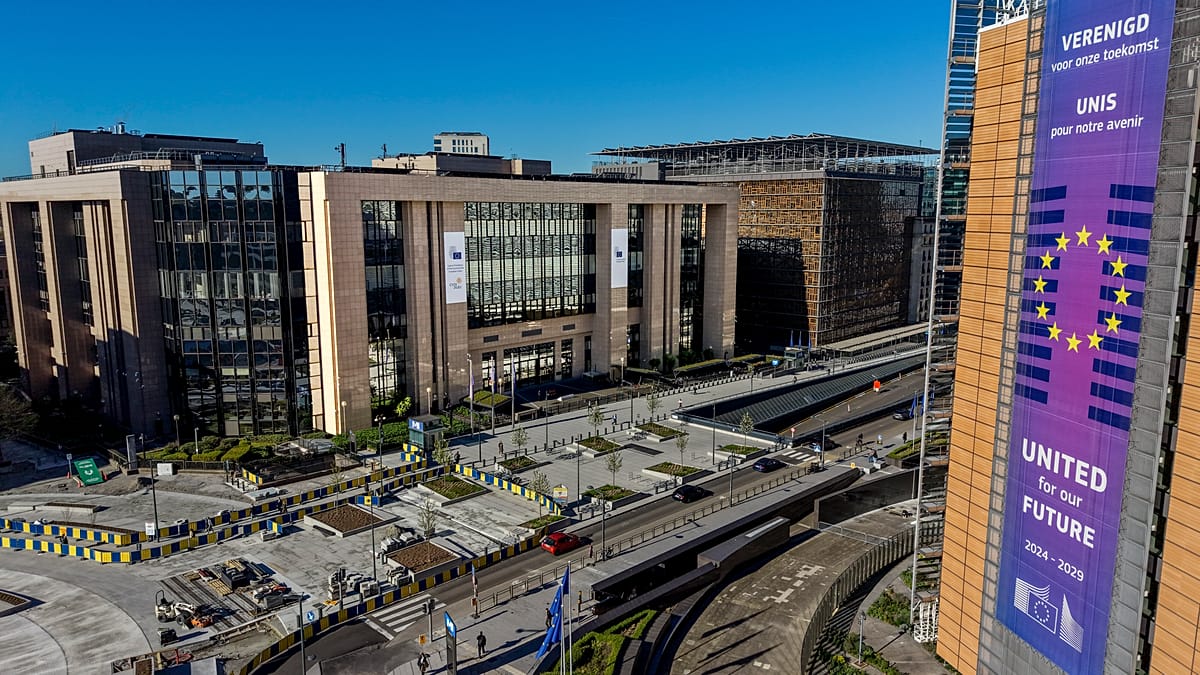
European Union leaders are gathering in Brussels on Friday for what promises to be a contentious summit, as they begin formal negotiations on the bloc's long-term budget for 2028–2034. The stakes are high: the multiannual financial framework (MFF) totals approximately €2 trillion, and member states are deeply divided over spending priorities and revenue sources.
The core tension pits a group of net contributors—led by Germany, the Netherlands, Denmark, Sweden, Finland, and Austria—against a coalition of 16 countries that have branded themselves the "Friends of Cohesion." The frugal camp insists on overall spending cuts, while the Friends of Cohesion, which includes Bulgaria, Croatia, Estonia, Greece, Italy, Latvia, Lithuania, Malta, Poland, Portugal, the Czech Republic, Romania, Slovenia, Slovakia, Spain, and Hungary, demand that funding for agriculture and regional development be preserved or increased.
Shifting Priorities: Agriculture and Defense
Under the European Commission's proposed framework, the share of the budget allocated to agriculture and regional funding would decline from roughly 60% in the current period to 44%. This shift reflects a growing emphasis on defense, innovation, and climate-related expenditures. However, the Friends of Cohesion argue that such cuts would undermine economic convergence and rural livelihoods across southern and eastern Europe.
The Cypriot presidency, which currently chairs the Council of the EU, has tabled a revised text that proposes a €32.8 billion reduction from the Commission's initial €2 trillion proposal. This is presented as a compromise between the two blocs. EU leaders will begin their discussions based on this Cypriot draft.
The European Parliament, which must approve the budget alongside the Council, has already rejected the Cypriot proposal, calling it insufficient—particularly regarding agriculture and regional funding. This sets the stage for a protracted negotiation process that could extend into 2027, a year that will see major elections in France, Italy, and Poland.
Revenue Disputes and the Ghost of NextGenerationEU
Beyond spending, the question of how to finance the budget remains unresolved. The Cypriot presidency did not include revised revenue proposals in its text. The Commission had earlier suggested new own resources, including revenues from the EU Emissions Trading System (ETS), the Carbon Border Adjustment Mechanism (CBAM), non-collected e-waste, tobacco excise duties, and a corporate tax.
During negotiations, the European Parliament floated additional ideas, such as a gambling tax, a digital levy, and a tax on crypto assets. According to EU diplomats who spoke on condition of anonymity, these proposals have generated interest among some leaders but face resistance from frugal states, particularly Sweden. The frugal countries argue that as some of the wealthiest member states, they would bear a disproportionate share of any new tax burden.
Another flashpoint is the repayment of NextGenerationEU, the pandemic recovery fund. Italy, France, and Greece have proposed rolling over the debt through a mechanism known as rolling debt—essentially reissuing bonds to extend repayment. Germany and the Netherlands strongly oppose this, rejecting any form of new common borrowing. The debate echoes broader tensions over fiscal solidarity and the EU's long-term financial architecture.
EU leaders aim to reach a political agreement by the end of 2026. The co-legislators are keen to avoid dragging negotiations into 2027, when election campaigns in several key countries could complicate decision-making. The outcome will shape the EU's capacity to act on defense, climate, and cohesion for the next seven years.
As the summit unfolds, the battle for cash is only just beginning. The frugal-versus-cohesion divide, combined with unresolved revenue questions, suggests that the path to a final deal will be arduous. For now, all eyes are on Brussels.