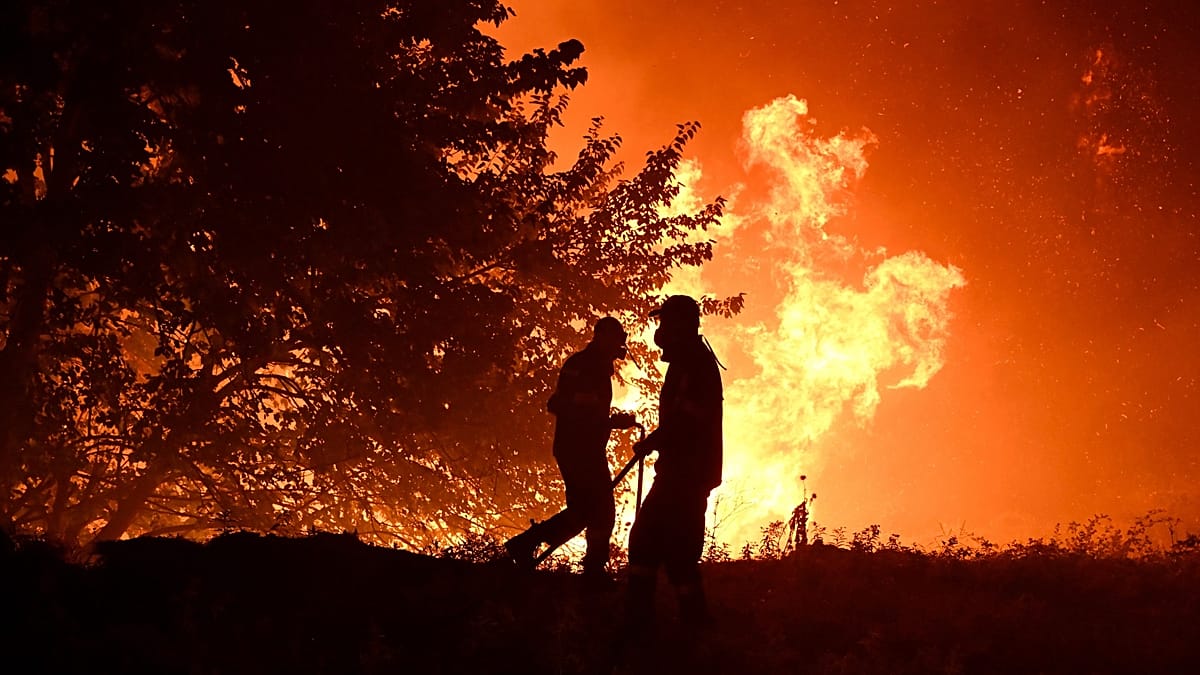
This summer, as flames have swept through forests and hillsides from the Algarve to the Peloponnese, the European Union has rolled out its most extensive firefighting operation to date. Aircraft from the rescEU fleet, backed by hundreds of ground personnel, have been shuttling between hotspots in France, Spain, Greece and Italy. Yet the scale of the emergency has reignited a long-running argument in Brussels: should the bloc pour more money into putting out fires, or into making sure they never start?
The current EU toolkit is layered. On the response side, rescEU maintains a pool of firefighting planes and helicopters, supplemented by 777 firefighters pre-positioned across 14 member states and a new aerial coordination hub in Cyprus. The Emergency Response Coordination Centre, operating around the clock, matches these assets to countries under pressure in real time. Meanwhile, Copernicus satellites track active blazes and burn scars, and the European Forest Fire Information System (EFFIS) issues danger forecasts up to ten days ahead, giving national authorities a crucial early-warning edge.
But the European Commission’s own strategy, published in March 2026, marked a clear shift in emphasis. The document prioritises prevention: better land management, firebreaks, stricter building codes in fire-prone zones, and restoration of degraded ecosystems. Officials have been blunt about the limits of aerial firefighting. Once a fire front stretches for kilometres, they argue, aircraft can only contain it, not extinguish it. That reality was on display again this week as Greece battled multiple wildfires while French authorities declared earlier blazes contained.
Prevention versus response: a false dichotomy?
Some experts say the choice is not either-or. “You need both,” says Dr. Elena Papadopoulou, a wildfire researcher at the National Observatory of Athens. “But the balance has been skewed towards response for too long. Every euro spent on prevention saves several in suppression costs and, more importantly, saves lives.”
Others point to the political appeal of visible action. Sending water-bombing aircraft to a burning region makes for compelling television; funding controlled burns or thinning forests does not. Yet the evidence increasingly suggests that well-managed landscapes are far less vulnerable. In Portugal, where devastating fires in 2017 killed over a hundred people, a national programme of rural land clearance and firebreak construction has helped reduce the area burned in recent years, despite hotter, drier summers.
The debate also touches on solidarity. The EU’s Civil Protection Mechanism, which coordinates cross-border aid, has been tested repeatedly this season. The limits of that mechanism are becoming apparent as national fleets are stretched thin. Some member states, particularly in the north, question whether they should fund firefighting assets that are mostly used in the south. Others argue that climate change is making wildfires a continental issue, not a regional one.
Brussels has tried to square the circle by expanding rescEU’s permanent fleet and encouraging joint procurement. But the March strategy suggests a longer-term bet on prevention. The Commission has proposed new funding streams for landscape restoration and for training local firefighting units, which are often the first to respond and can make the difference between a small blaze and a catastrophe.
For readers, the question is practical: what should the EU prioritise? More planes and helicopters? More investment in forest management and rural development? Stricter planning laws? Or a combination, with a clear funding shift towards prevention? The choice will shape not only next summer’s fire season but the continent’s ability to adapt to a warming world.
We want to hear from you. Cast your vote in our poll and tell us in the comments what you think Brussels should do first. The results will be shared with EU policymakers ahead of the next budget review.