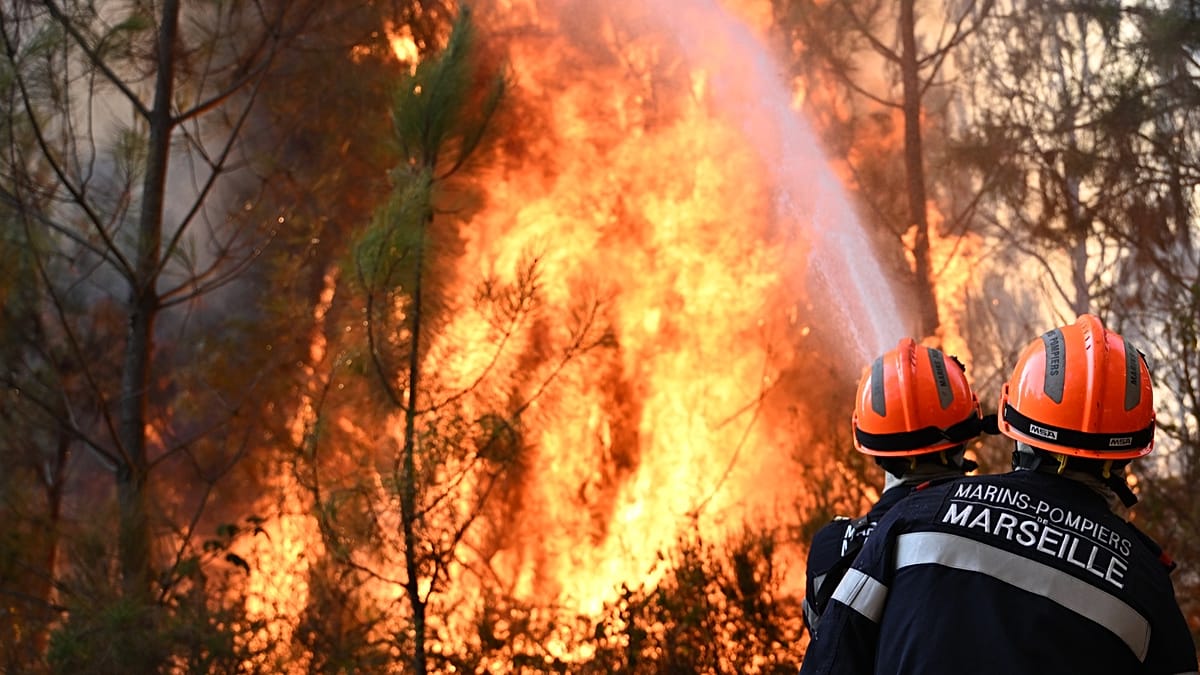
As summer wildfires scorch parts of southern Europe, the European Union has activated its most extensive cross-border firefighting operation to date. The blazes, which have hit France, Spain, Greece and Italy, have prompted Paris to trigger the EU Civil Protection Mechanism, leading to the deployment of seven planes and four helicopters to France, and six planes, 134 personnel and 41 vehicles to Spain.
The response is coordinated through a layered system. At its core is the Emergency Response Coordination Centre in Brussels, which operates around the clock to match requests from affected countries with offers of assistance from other member states. When national resources are stretched, the EU's own reserve, known as rescEU, steps in with firefighting aircraft.
For the 2026 season, the EU has pre-positioned 777 firefighters from 14 countries, with 22 planes and five helicopters on standby. A new firefighting hub in Cyprus adds to the network. The bloc is also investing roughly €600 million in 12 permanent rescEU aircraft, a significant upgrade to its aerial firefighting capacity.
Satellite technology plays a crucial role. The Copernicus programme maps fire zones in real time, while the European Forest Fire Information System (EFFIS) provides danger forecasts up to ten days ahead. These tools help authorities anticipate and respond to outbreaks more effectively.
Limits of aerial firefighting
Despite these capabilities, Brussels is candid about the constraints. In extreme heat, when a fire front stretches for kilometres, aircraft can contain the flames but cannot extinguish them entirely. This reality underpins the European Commission's March 2026 strategy, which emphasises prevention, land management, firebreaks and early warning systems alongside firefighting.
The current crisis has been particularly severe in Greece, where multiple wildfires have forced evacuations and strained local resources. Greece's ongoing battle highlights the need for robust EU-wide coordination. Similarly, in France, blazes in the Var region have flared anew, driven by strong mistral winds pushing flames toward Correns, as reported in recent coverage.
The EU's crisis management chief has called the wildfires a wake-up call, noting that climate change is making such events more frequent and intense. The official's remarks underscore the political and social tensions surrounding the issue, as some deny the link between climate change and extreme weather.
Beyond the immediate response, the EU is looking at longer-term solutions. The Commission's strategy includes restoring traditional land management practices, creating firebreaks, and investing in early warning systems. These measures aim to reduce the likelihood of catastrophic fires and to protect communities and ecosystems.
The scale of this year's operation is unprecedented, but it also reveals the limits of what even a well-coordinated union can do in the face of extreme weather. As the climate continues to warm, European countries will need to adapt not only their firefighting tactics but also their approach to land use and disaster preparedness.
For now, the focus remains on containing the blazes and supporting affected regions. The EU's response, while impressive, serves as a reminder that prevention and resilience are just as important as the ability to fight fires.