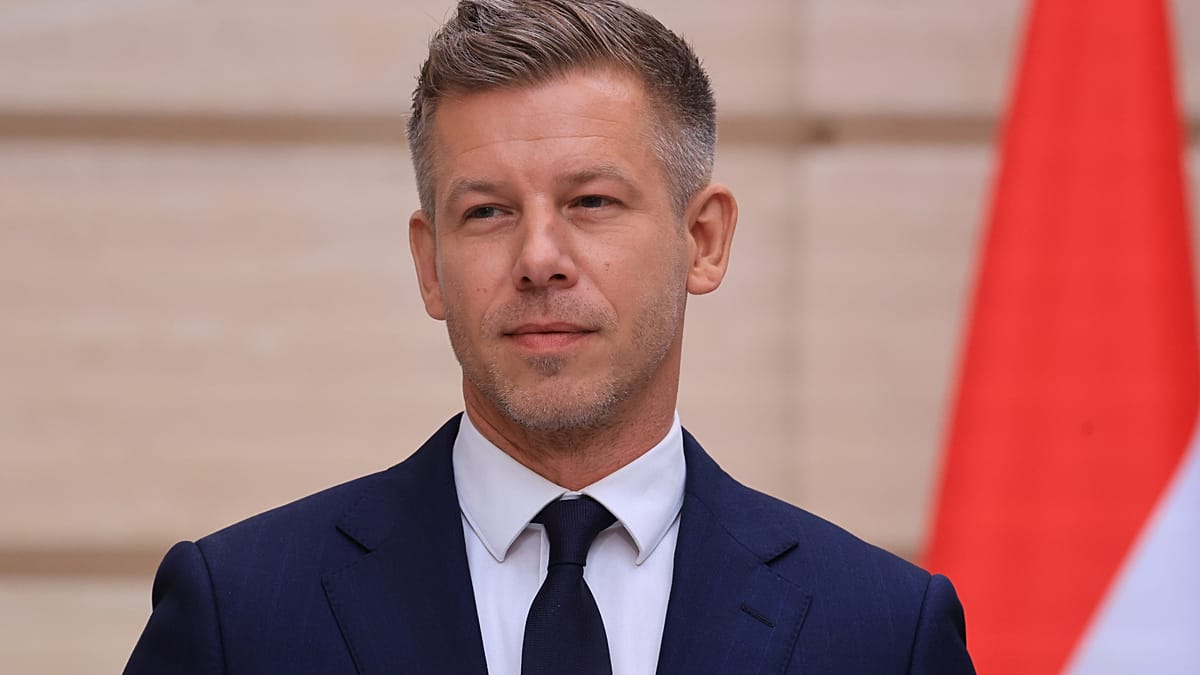
On the night of 12 April, Viktor Orbán, Hungary's prime minister for 16 years, made a brief phone call to his challenger, Péter Magyar, to concede defeat. The centre-right Tisza Party had just won a landslide victory, securing a two-thirds parliamentary majority — the threshold needed to amend the constitution and pass 'cardinal laws' that govern key institutions. For Orbán, the call marked the beginning of the end of a political, legal, and economic system he had meticulously built to entrench Fidesz's power.
Magyar, who had campaigned on a promise not just to change the government but to overhaul the system itself, moved quickly. Within months, the pillars of Orbán's regime — the presidency, the prosecution service, and the state media apparatus — were dismantled or neutralised. The speed and decisiveness of this transformation have surprised even seasoned observers.
The System of National Cooperation
Orbán's system, known by its Hungarian acronym NER (Nemzeti Együttműdés Rendszere), was introduced after his 2010 supermajority. Presented as a new social contract, it was in practice a centralised apparatus designed to advance Orbán's vision of 'illiberalism' — a model he touted as an alternative to classical European liberal democracy.
Political analyst Szabolcs Dull described NER as a rigged board game: 'One player can rewrite the rules at any moment to suit his own interests — moving forward five squares if necessary, sending an opponent back to the start, or removing them from the board altogether.' Orbán governed largely by decree after 2020, first under a COVID-19 state of emergency, then citing the war in Ukraine. Loyalists were placed in key institutions, while the public broadcaster MTVA and the KESMA media holding — with around 500 outlets — ensured a steady stream of pro-government messaging.
Dull noted that Magyar's pledge to dismantle NER and remove its figures was his most popular campaign promise. 'This is what brought him the greatest popularity. This is what voters now expect of him,' he said.
President and chief prosecutor forced out
Magyar's most significant political victory came in July, when President Tamás Sulyok left office after a constitutional amendment — which he himself signed — declared his mandate terminated. The same amendment capped MPs' mandates at 12 years and introduced a retirement age of 70 for constitutional judges, effectively removing Péter Polt, a longstanding Orbán ally and head of the Constitutional Court.
Balázs Orbán, Viktor Orbán's former political adviser, criticised the move: 'They terminated the mandate of the sitting president without any legal argument — simply because they politically disagree with him. I find that unacceptable.' Magyar had argued that Sulyok was unfit for office, representing party interests rather than the nation. Dull explained the practical significance: 'The Hungarian president has the right to pardon convicted people. Magyar has promised to hold those linked to the old system accountable — he cannot risk the president pardoning them.'
The new government also dismissed four secret service chiefs, the head of the counterterrorism police (TEK) János Hajdu, Orbán's former spokesperson Bertalan Havasi, and the head of the Government Audit Office. The Sovereignty Protection Office, which targeted foreign-funded media and NGOs and drew heavy criticism from the European Commission, was shut down.
In June, Chief Prosecutor Gábor Bálint Nagy resigned under political pressure. In his statement, Nagy said: 'The prosecution service must not become an instrument in political struggles, nor a stage for day-to-day power games.' Dull called his departure another milestone, noting that 'in certain cases, investigations were either never opened or were suspended — cases that were plainly inconvenient for the Orbán government.'
Accountability and corruption
At the end of July, parliament established the Asset Recovery and Asset Protection Office to investigate Orbán-era corruption and recover state assets. Hungary has long ranked among the EU's most corrupt member states, with businessmen close to Orbán — such as Lőrinc Mészáros, his childhood friend and Hungary's richest man — benefiting from lucrative state contracts. The new office is expected to pursue high-profile cases, and the European Commission has already signalled support for Magyar's anti-corruption drive, as reported in this analysis of the EU's reaction.
Magyar has also sought to reclaim EU funds that were frozen due to rule-of-law concerns, and has asked for a refund of migration fines, as detailed in this report on his EU funding requests. The European Commission's latest rule-of-law report hailed a 'radical change' in Hungary, a stark contrast to the previous years of criticism, as noted in this EU assessment.
While the dismantling of NER has been swift, the long-term stability of Hungary's new political order remains uncertain. Magyar's government faces the challenge of rebuilding institutions that were hollowed out over a decade and a half, and of ensuring that the new system is genuinely democratic and accountable. For now, the speed of change has been remarkable — a system built to last was gone in months.