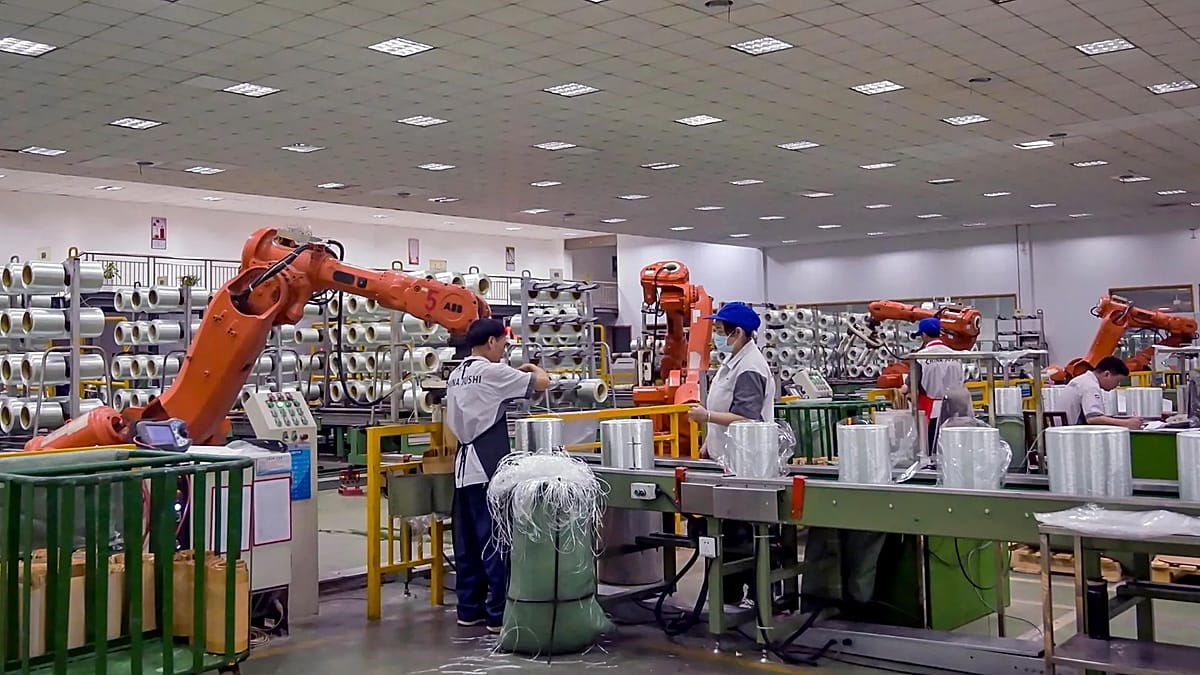
The European Commission is preparing to open an investigation into imports of certain construction materials from several Balkan countries, according to sources familiar with the matter. The probe will focus on so-called open mesh fabrics, which are used in thermal insulation systems, over suspicions that they are manufactured using low-cost Chinese glass fibre already subject to EU anti-dumping and anti-subsidy duties.
The move comes as Brussels intensifies its scrutiny of Chinese imports, which have contributed to the EU's record-high trade deficit with China — currently running at roughly €1 billion per day. In June, the Commission launched negotiations with Beijing aimed at rebalancing trade ties, with hopes of securing tangible results by October. EU Trade Commissioner Maroš Šefčovič is expected to travel to China that month.
At the same time, the Commission has warned that it will deploy its trade defence instruments before any deadline to counter low-cost Chinese imports, arguing that Beijing uses unfair practices to gain access to the EU market — including strategies to circumvent EU tariffs.
How the circumvention is believed to work
Open mesh fabrics are often produced using Chinese glass fibre. The Commission has previously accused Chinese producers of selling glass fibre at unfairly low prices on the EU market, causing injury to European manufacturers. The EU has imposed additional duties on Chinese glass fibre several times in recent years, including on imports from Egypt that are produced by Chinese companies.
But Chinese producers are now suspected of bypassing those duties by relying on local manufacturers in several Balkan countries to assemble open mesh fabrics using low-cost Chinese glass fibre. The investigation will examine whether these imports should be subject to the same anti-dumping and anti-subsidy measures.
The case highlights a broader challenge for the EU's trade defence system. According to Glass Fibre Europe, which represents the industry in Brussels, Chinese glass fibre overcapacity exceeds 100 percent of total EU market demand. This raises the risk of further harm to European producers unless the EU strengthens its trade defence measures. The EU produces around 1 million tonnes of melted glass annually from installations in eight countries, including Germany, France and Italy.
Over the past year, the number of cases involving alleged Chinese unfair trade practices across several industrial sectors has increased. The Commission has faced criticism for the length of its investigations. At a summit in mid-June, EU leaders gave the Commission a mandate to review and update its trade defence instruments.
However, the EU's current trade regulation toolbox remains limited. The Commission can only address unfair trade practices on a product-by-product basis. Additional safeguard measures — including tariffs and quotas — are also under consideration, Euronews has learned, to protect the European chemicals sector from intense Chinese competition.
The investigation into Balkan imports is the latest sign of the EU's growing willingness to use its trade defence tools. It also underscores the complexity of policing global supply chains, where goods can be routed through multiple countries before reaching the EU market. For a broader look at how the EU is tackling unfair trade practices, see our analysis of Hungary's corruption probe and the bloc's rule-of-law mechanisms.