European Union transport ministers are set to approve new guidance designed to tighten controls over foreign investment in the bloc's ports, according to a draft Council document seen by Euronews. The move reflects growing concern about Chinese state-linked companies acquiring stakes in critical maritime infrastructure across Europe.
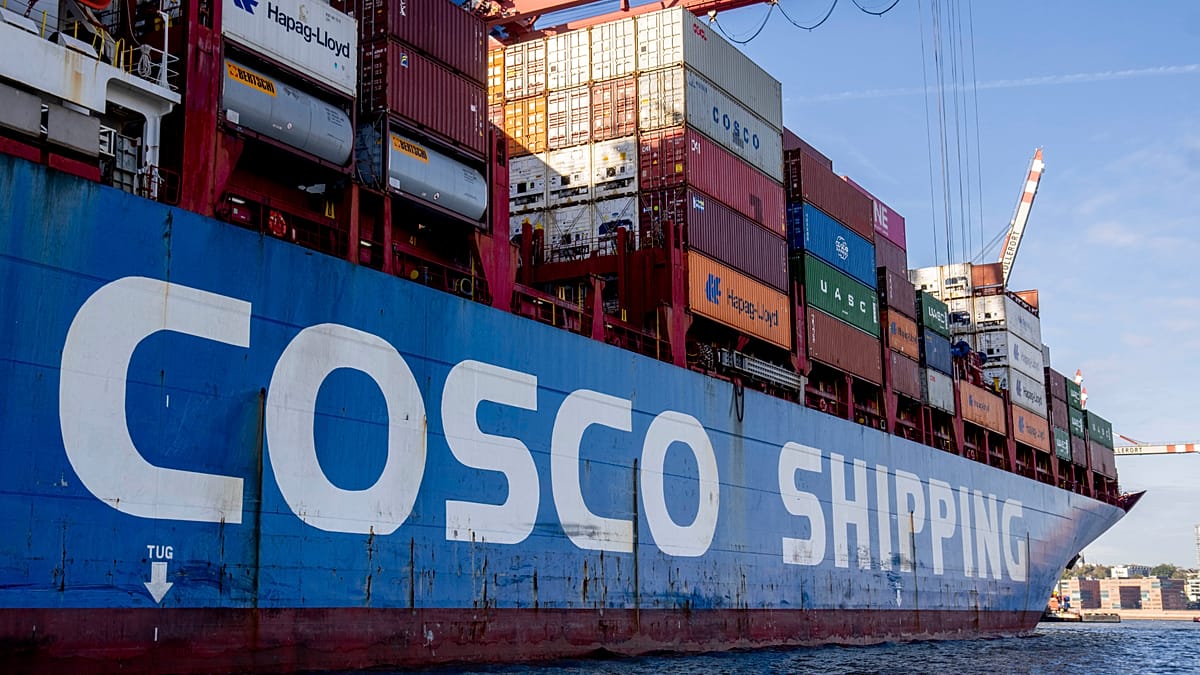
While the document does not name China directly, its references to foreign investment screening, ownership of critical infrastructure, geopolitical threats, and strategic autonomy leave little doubt about the underlying target. Chinese firms such as COSCO Shipping already hold significant stakes in major EU ports, including Hamburg and Rotterdam in Germany, and the Port of Piraeus in Greece—often described as Beijing's "gateway to Europe."
From Commercial Gateways to Strategic Assets
The draft Council conclusions, proposed by the European Commission last December and due for approval by transport ministers on Monday, mark a fundamental shift in European thinking. Ports are no longer seen merely as commercial gateways but as strategic assets that underpin supply chains, energy security, and military mobility.
The Commission proposal states that the nascent strategy "addresses competition with third countries and foreign ownership and strengthens logistics security." Transport ministers will back declarations "aiming to avoid undue foreign ownership or control of critical port infrastructures and operations, including risks related to organised crime infiltration, especially those relevant for military mobility and the Union's economic security," according to the Council document.
For more than a decade, Chinese state-linked companies have expanded their presence across European maritime networks, acquiring terminals and logistics assets from the Mediterranean to Northern Europe. What once appeared to be a straightforward investment and trade issue is now increasingly viewed through a security lens.
The Port of Hamburg deal was supported by former German Chancellor Olaf Scholz between 2021 and 2022, who argued it would strengthen Germany's trade position and maintain the city's competitiveness. However, several German government figures warned at the time that Chinese ownership of critical infrastructure could create economic and political dependencies similar to Germany's previous reliance on Russian energy, which left it badly exposed to price shocks after Russia's invasion of Ukraine in 2022.
German MEP Jens Gieseke, spokesperson for the transport and tourism committee in the European Parliament on behalf of the European People's Party (EPP), welcomed the Commission's proposal. "China today holds stakes in more than twenty European ports—including the Port of Hamburg and the Port of Rotterdam," he said. "The Port of Piraeus is even fully controlled by Chinese operators. This level of exposure in critical infrastructure cannot be ignored."
EU leaders now appear concerned that ownership stakes could translate into strategic leverage over infrastructure increasingly important for both economic and military purposes. At the heart of the Council document is a call for stronger scrutiny of foreign investments in ports, particularly the "intention to provide guidance on assessing foreign investment" in EU ports as well as "applying controls." Nonetheless, transport ministers are cautious not to spoil the "investment environment for European ports" and to "avoid deterring trustworthy investors."
The geopolitical backdrop is hard to ignore. Russia's full-scale invasion of Ukraine, conflict in the Middle East, and growing concerns over economic coercion have pushed European governments to reassess vulnerabilities in critical infrastructure. Ports, which handle nearly three-quarters of the EU's external trade, sit at the centre of those concerns.
The Mercator Institute for China Studies (MERICS) has warned that the problem with the Port of Piraeus is not Chinese concession rights per se—which the think tank said "would be irrelevant in a state of war"—but Chinese-fitted commercial port infrastructure that could be used for intelligence gathering.
The Council's draft conclusions also signal unease about foreign influence beyond EU borders. Member states are calling for closer monitoring of investments in ports located in neighbouring third countries, warning that developments outside the EU can affect the competitiveness, security, and resilience of European supply chains. This reflects growing awareness that influence over maritime routes does not stop at the EU's external frontier.
This initiative aligns with broader EU efforts to safeguard strategic autonomy. As EPP Chief Weber warned, the EU must act now or risk China crippling European industry. The port guidance is a concrete step in that direction.